



The Costs Draining Childcare Centers is illumine's USA cost benchmark report for childcare center leaders, with exclusive insights from Tim Seldin, President of the Montessori Foundation. It explains why childcare costs keep rising, why quick fixes rarely solve the problem, and what directors and the wider field can do to make high-quality programs affordable, sustainable and resilient.
Key findings
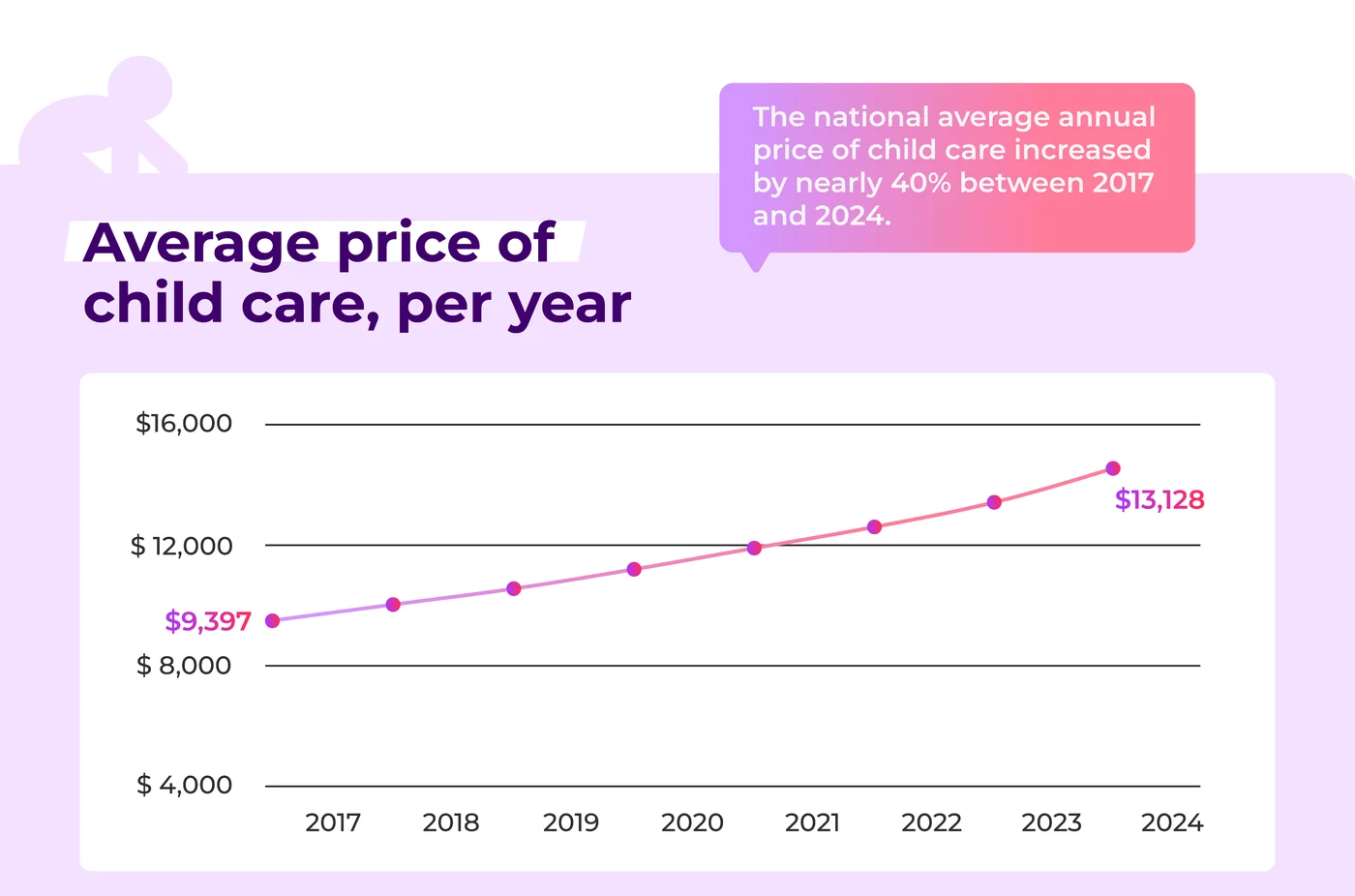
- The national average price of child care rose by nearly 40% between 2017 and 2024, from $9,397 to $13,128 a year, according to CNN's analysis, with the 2024 figure from Child Care Aware of America.
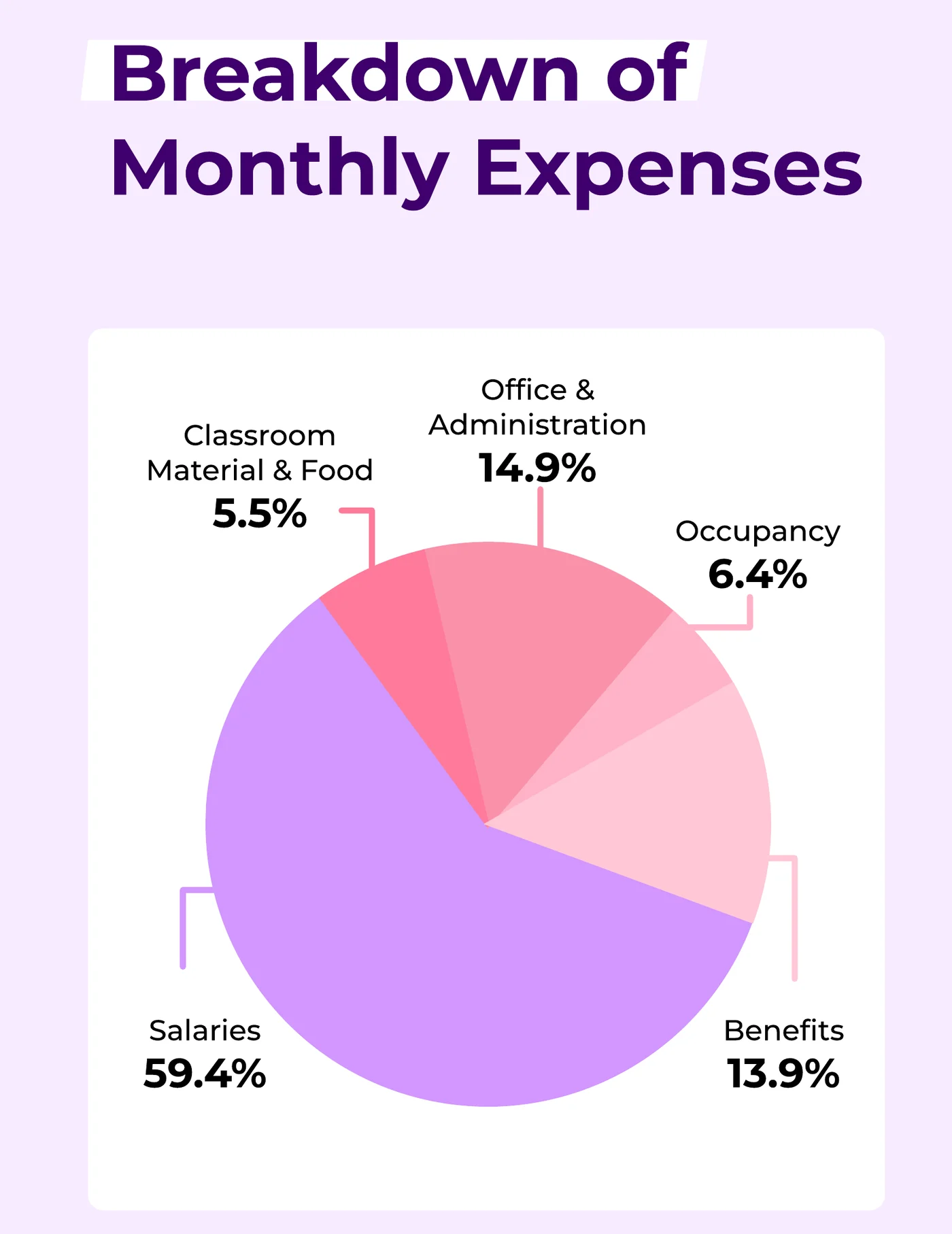
- In the Center for American Progress model of a high-quality child care center serving infants, salaries make up 59.4% of monthly costs and benefits a further 13.9%, so almost three quarters of the cost of care is people.
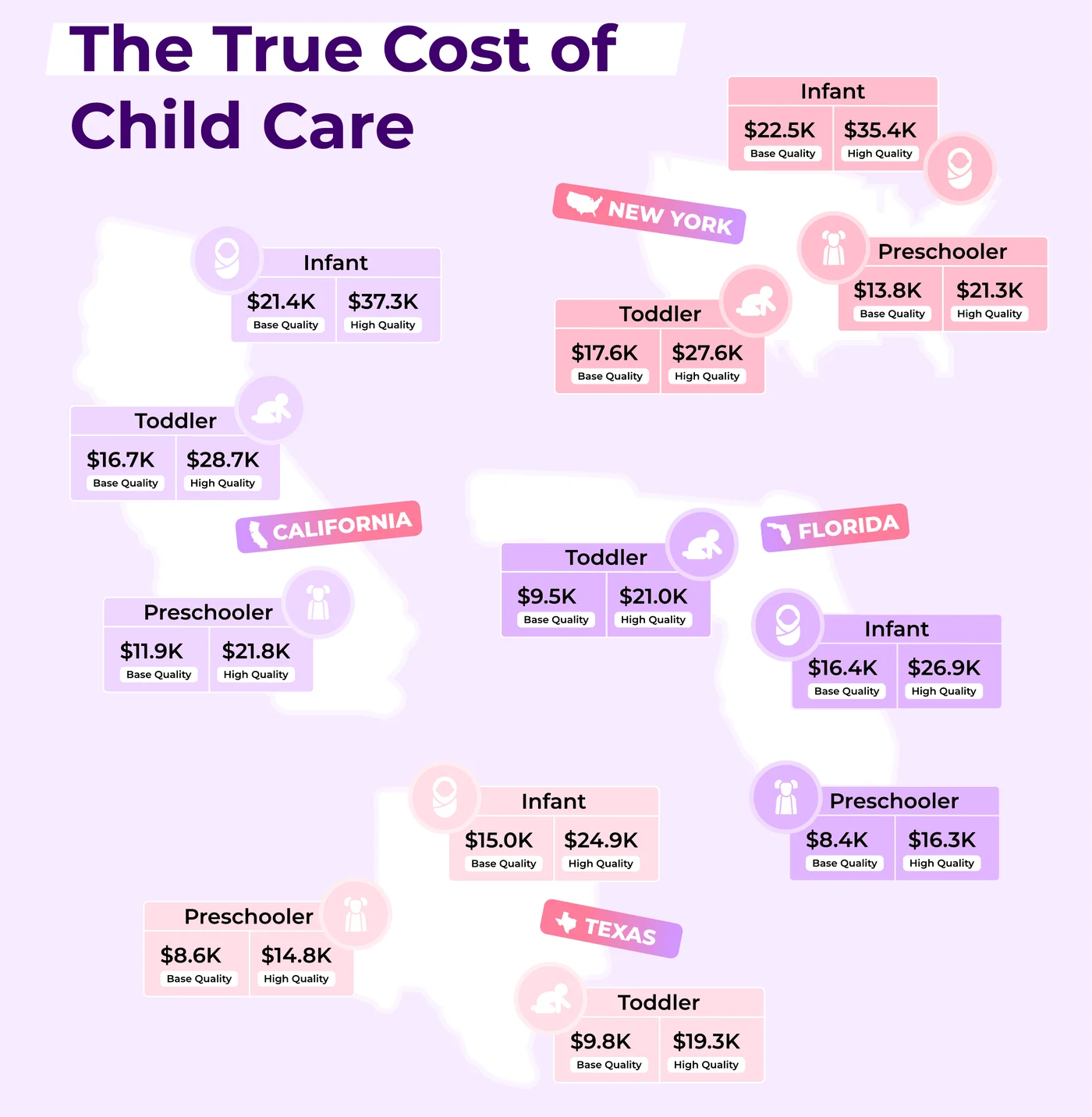
- The true cost of high-quality infant care reaches $37,300 a year in California and $35,400 in New York, according to the Center for American Progress.
- From 2019 to 2022, child care workers' wages grew 3.1%, compared with 8.7% for food and beverage serving workers, according to a National Women's Law Center analysis of Department of Labor data.
- 22% of early childhood educators are considering leaving the field within the next year, according to NAEYC's January 2026 survey.
- 80% of center directors and family child care owners said they would be more likely to serve families using subsidies if states paid based on enrollment rather than attendance, according to NAEYC's August 2023 survey.
Why is child care so expensive to run?
Do families complain about rising tuition when they talk to you? For center leaders, every budget cycle feels like a balancing act between quality and survival.
Tuition is not high because anyone is profiting. It is high because quality care is labor-intensive, highly regulated and increasingly expensive to deliver. Wages, compliance costs, facility upkeep, insurance and benefits continue to rise, while parents' ability to pay does not. Meanwhile, hybrid and remote work give some families the flexibility to delay or avoid child care altogether. But centers cannot simply lower prices: legal ratios, safety standards and fixed overhead make that impossible. The result is programs caught between rising costs and shrinking margins.
Quality early education depends on people, not products. You cannot automate empathy, supervision or connection. That human element, combined with strict regulations and increasing operational expenses, makes child care inherently expensive to deliver.
What drives a center's operating costs?
- It is people's work. One adult can safely and effectively support only so many children. Even if your model emphasizes independence and peer learning, some children will need more connection. That individual attention is the core of quality, and the core of the cost.
- Baumol's cost disease. As productivity rises in other sectors, wages rise across the economy. But in child care, the work cannot be sped up. Children still need the same level of human attention, so labor steadily becomes a larger share of the budget over time.
- Regulatory layers. Licensing, safety audits and documentation all serve important purposes. Stacked together, they create significant administrative overhead and financial pressure for center leaders.
- Facilities and insurance. Licensing requirements for child care facilities are rigorous and often raise both capital and operating costs. Insurance premiums and deductibles continue to climb in many regions.
- Administration drag. Admin tasks like billing and staff scheduling eat leadership time. Most centers scale admin linearly, so operational costs rise as they grow. If you cannot scale admin efficiently with child care management tools, you inevitably scale cost.
What does high-quality child care really cost in each state?
The Center for American Progress estimated what it actually costs to deliver licensed child care in every state, comparing a base-quality program that meets state licensing regulations with a high-quality program that includes all the quality variables in its interactive model at costofchildcare.org. In the four most populous states, the annual cost per child is:
- California: infant $21,400 base / $37,300 high quality; toddler $16,700 / $28,700; preschooler $11,900 / $21,800.
- New York: infant $22,500 / $35,400; toddler $17,600 / $27,600; preschooler $13,800 / $21,300.
- Florida: infant $16,400 / $26,900; toddler $9,500 / $21,000; preschooler $8,400 / $16,300.
- Texas: infant $15,000 / $24,900; toddler $9,800 / $19,300; preschooler $8,600 / $14,800.
For what families pay in each market, see illumine's guides to child care costs in California, New York, Florida and Texas, and the state-by-state overview.
Why is the child care workforce so hard to recruit and keep?
- Status and career ladders. Many assistants see no clear pathway to becoming lead teachers or program leaders. Without structured training and advancement, talented educators look elsewhere for growth.
- Pay and parity. Retail and hospitality roles often pay better, involve fewer licensing hurdles and less emotional strain, which makes them more attractive to potential hires. From 2019 to 2022, child care workers' wages grew 3.1% while food and beverage serving workers' wages grew 8.7%, according to the National Women's Law Center.
- Credential friction. Specialty credentials and competency-based pathways are undervalued, while degree-first mandates deter strong candidates who bring practical skills but lack formal qualifications.
- Onboarding complexity. New hires face a maze of requirements such as first aid training, food handling certifications and long orientation modules, which discourages people from entering the profession.
- Burnout and family life. Split shifts, little prep time and inconsistent coverage make it hard for staff to balance work and family life, raising stress and accelerating attrition.
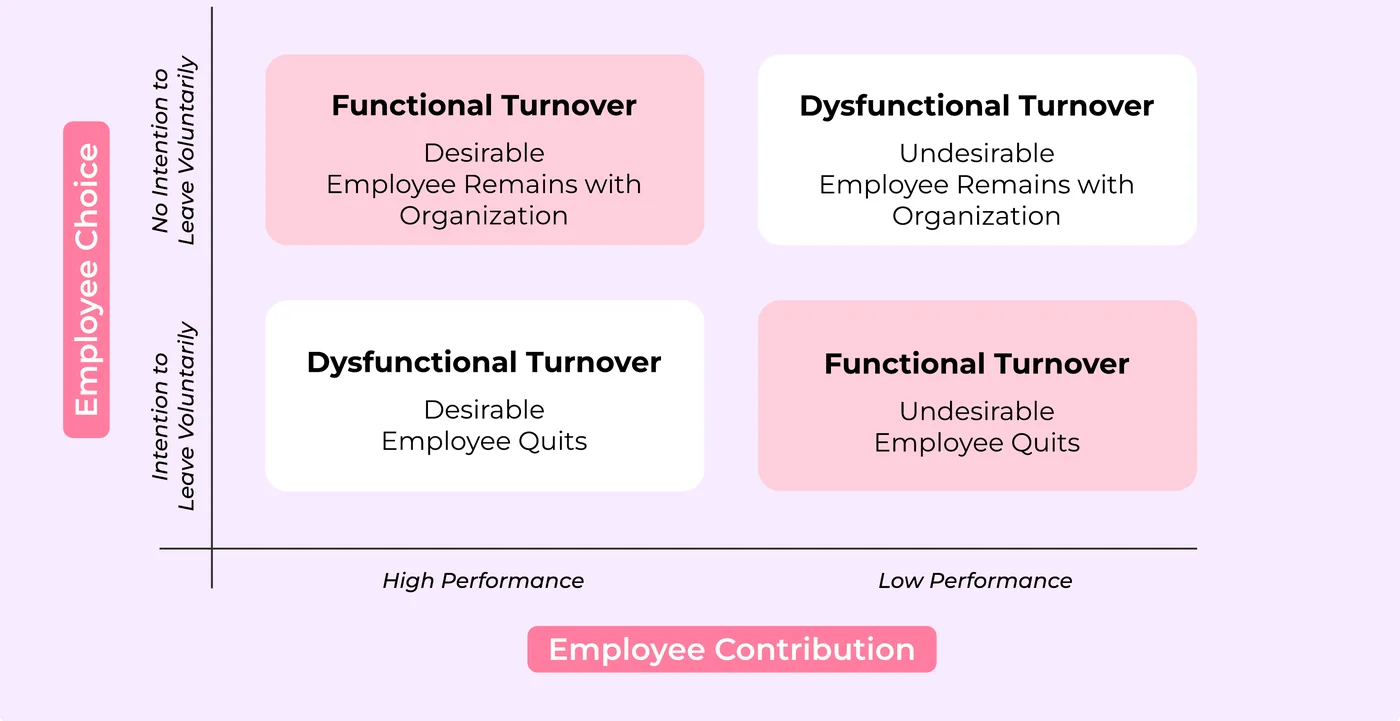
- The turnover tax. Every resignation brings recruitment expenses, onboarding time and lost continuity for children. The cycle becomes a hidden tax on the entire operation, which is why staff retention strategies matter as much as recruitment.
The evidence points the same way. In a study of Head Start and Early Head Start programs published in the Early Childhood Education Journal, higher pay elsewhere was the most common reason staff gave for not returning. Among under-enrolled programs in NAEYC's January 2025 survey of more than 10,000 educators, 37% said pay is too low to recruit and retain qualified staff and 36% said they do not have enough staff. And in NAEYC's January 2026 survey, 22% of early childhood educators said they are considering leaving the field within the next year.
Why don't subsidies, discounts and cost cutting fix the problem?
These challenges are not unnoticed. Policymakers, funders and operators have all tried to ease the pressure with different fixes: subsidies, tuition adjustments, and cutting back in certain areas. Most of these solutions treat symptoms rather than root causes, and they create short-term systems that wobble as soon as a center faces any disruption.
How subsidies are paid matters as much as whether they exist. In NAEYC's August 2023 survey of 4,634 early childhood educators, 80% of center directors and family child care owners said they would be more likely to serve families using subsidies if the state paid based on enrollment rather than attendance, and 73% said they would be more likely to accept families using subsidies if the state paid programs prospectively, in advance.
- Subsidies. Public subsidies do not lower the true cost of delivering care. Strict reporting requirements, prescriptive curriculum rules and delayed payments tighten cash flow.
- Tuition discounts and underpricing. Many directors lower tuition to stay competitive or to serve families they care deeply about. While well-intentioned, this erodes margins and leaves no room to build reserves or offer competitive salaries. When an unexpected repair or enrollment dip hits, underpriced programs are the first to wobble. Discounts do not make care more affordable long term; they push instability onto the operator.
- Cutting corners. Some centers try to save money by reducing classroom budgets, but this creates new costs in the form of higher staff turnover, compliance risks and declining family satisfaction.
- Overreliance on word of mouth. Reputation and referrals are not predictable enough to sustain enrollment. They leave a leaky enrollment funnel, which leads to unpredictability and losses.
The smarter stance is not to reject public investment or quick fixes altogether, but to recognize their limits. Subsidies and stop-gap measures can help in the moment, but they do not change the underlying math of running a center. Real progress comes when leaders pair outside support with model-neutral funding policies and, more importantly, with strategies inside their own programs that make quality sustainable.
What can childcare directors do to make their programs sustainable?
Directors cannot control every regulation or funding stream, but they can take steps inside their centers and within their wider networks that make child care more sustainable. The levers fall into five areas: workforce and culture, scheduling and program design, unit economics and pricing, admin efficiency, and family communication.

1. Workforce and culture
- Create a pathway from assistant to lead. Paid apprenticeships, release time for training and stackable micro-credentials show assistants that there is a future in your center.
- Build compensation ladders tied to skills. Publish clear pay bands based on competencies like classroom management, family partnership, or health and safety leadership.
- Plan for predictable coverage. A rotating floater team or a shared substitute pool keeps classrooms stable, makes sure staff get their breaks and reduces burnout.
- Make onboarding a priority. Streamline requirements such as fingerprinting, TB tests and first aid. Then pair every new hire with a buddy and a 30/60/90-day coaching plan, as part of a structured staff induction.
2. Scheduling, capacity and program design
- Align staff hours with family demand. Look closely at arrival and departure peaks to see when coverage is most critical, then plan flexible schedules that give teachers a better work-life balance.
- Protect long, child-led work blocks. Transitions add stress for both staff and children. If your model allows, longer uninterrupted learning periods reduce behavioral incidents and lighten staff workload.
- Consider mixed-age groupings where licenses allow. Blending ages is not just a teaching strategy; it is a staffing one. Older children mentor younger peers, while teachers gain more flexibility to balance ratios.
3. Unit economics and pricing
- Run zero-based classroom budgets. Instead of guessing, calculate costs for each room: wages and benefits (including substitutes), materials, training, food, facilities, insurance and admin time. Know your true cost per seat and your break-even enrollment. illumine's guide to preparing a childcare budget walks through the process.
- Price for true cost, then fund access. Tuition has to cover operations and leave room for a small reserve. To increase affordability, use scholarships, sliding scales and state supports rather than underpricing your program. See how to price child care in six steps.
- Diversify your revenue mix. Income streams like extended day, summer camps, wraparound care, parent workshops and rentals give you a buffer against enrollment dips and unexpected expenses.
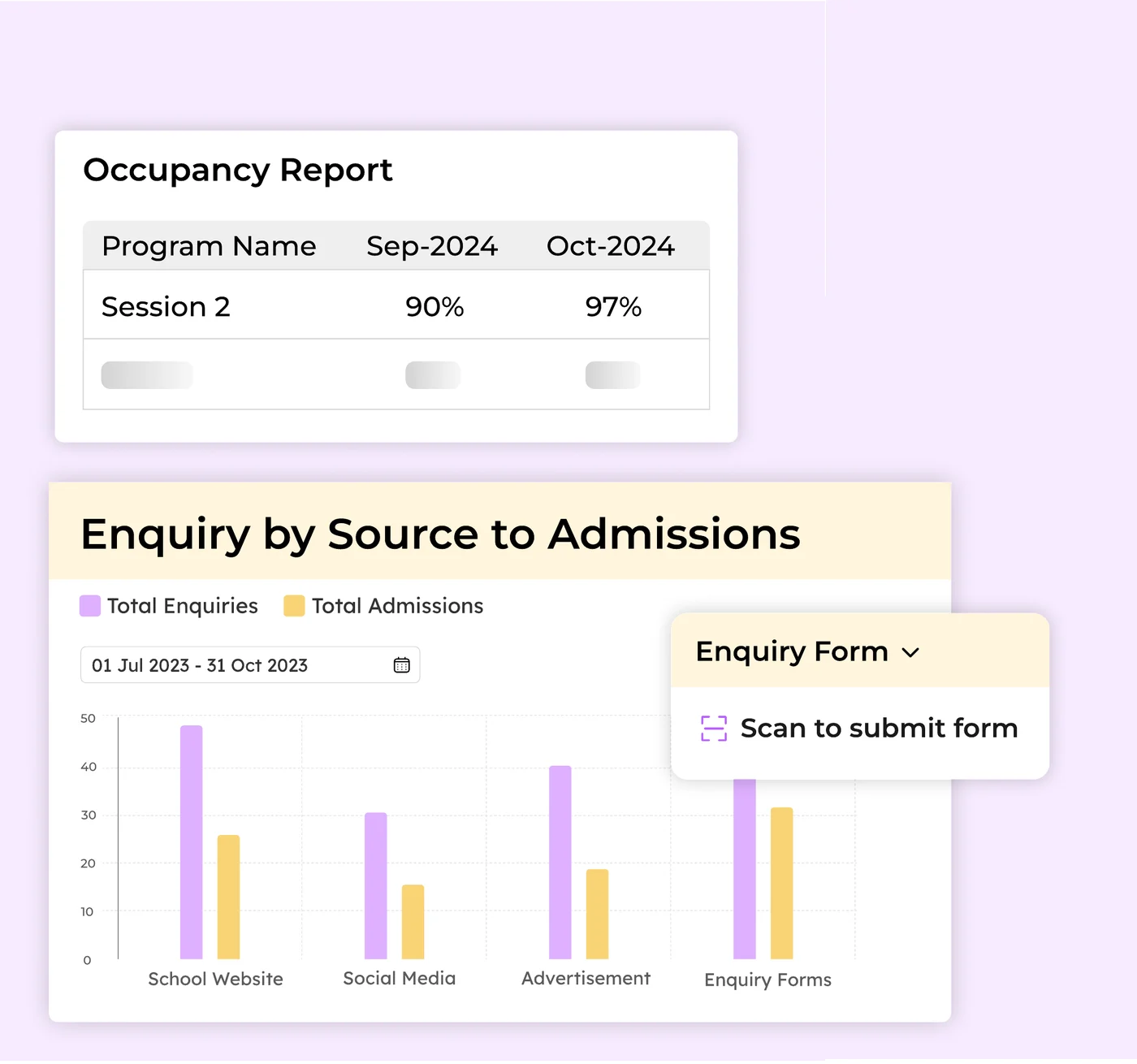
- Track your waitlist and yield. Do not just chase new inquiries. Measure enrollment and 90-day retention. Fixing leaks in that funnel is far more cost-effective than pouring money into fresh marketing, and a well-run waiting list keeps seats filled.
4. Admin efficiency
Center directors cannot do it alone without child care management tools.
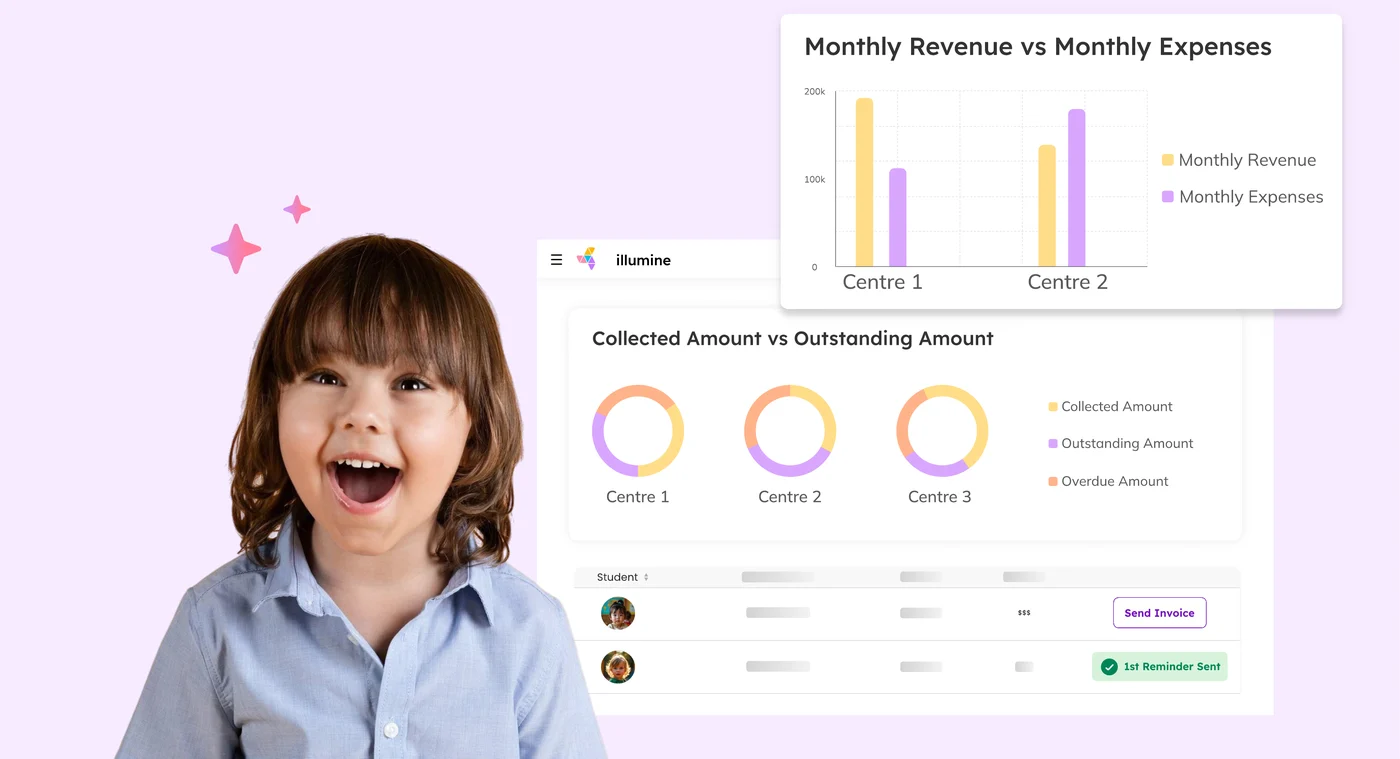
Billing and tuition collection. illumine's billing system lets directors set up customizable fee plans that account for subsidies, discounts and attendance-based charges. Branded invoices are generated automatically, with late fees calculated and applied by the system. Because payments are made directly within the platform, directors spend less time chasing collections and more time on staff and classrooms.
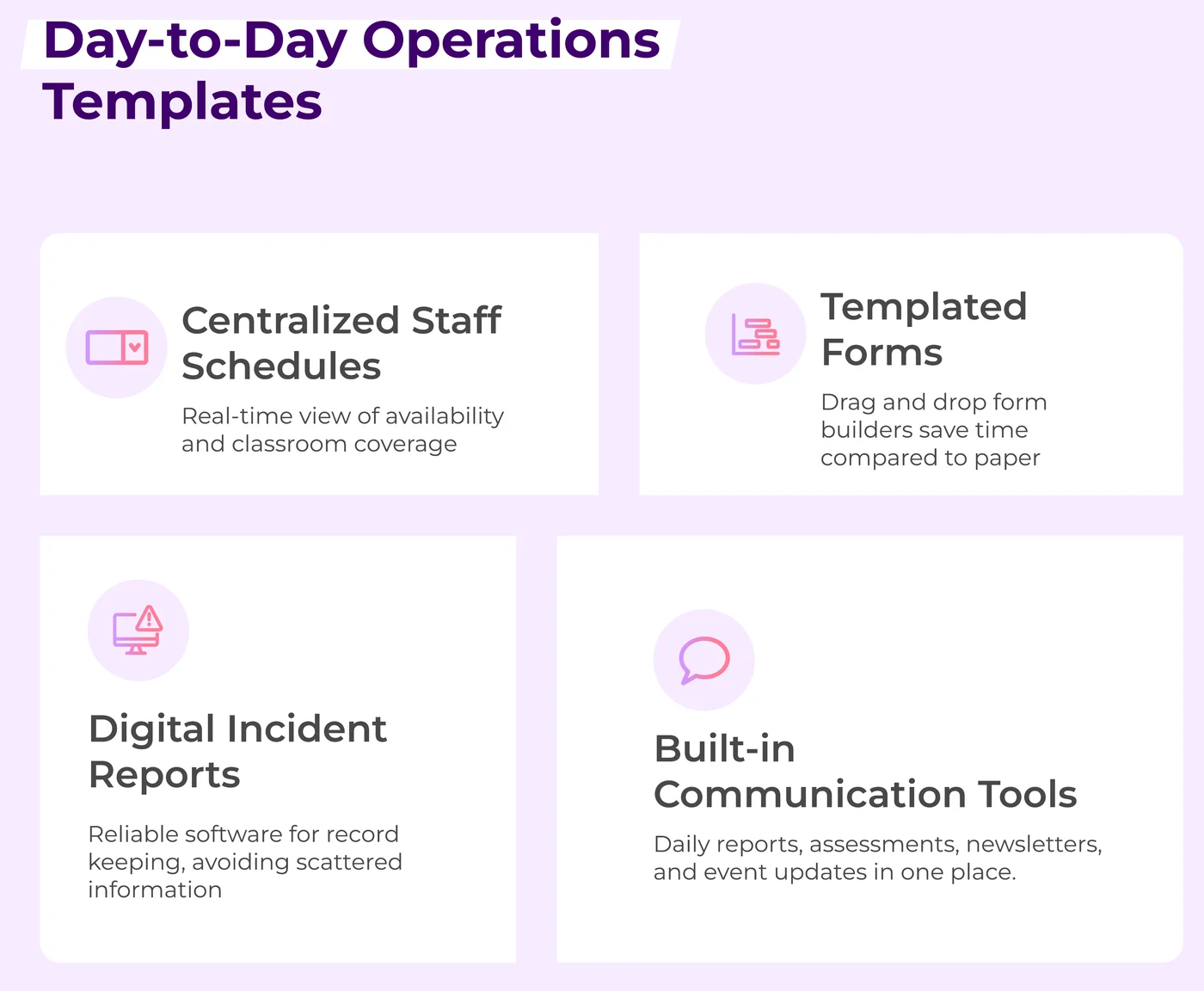
Templates everywhere. With illumine, recurring tasks can be templatized, reducing the cognitive load on directors and staff: centralized staff schedules with a real-time view of availability and classroom coverage, drag-and-drop form builders that save time compared with paper, digital incident reports that keep records in one place, and built-in communication tools for daily reports, assessments, newsletters and event updates.
5. Family communication
Communication with families should flow through a single, reliable system. illumine provides a central hub where teachers can log activities and incident reports. Over time, these records create a detailed archive that is invaluable for parent trust and during compliance audits.
- Practice radical transparency. Break tuition down into clear categories like wages and benefits, facilities, financial aid and classroom supplies.
- Teach the "why." Use short videos, classroom walkthroughs or open days to explain why independence, peer learning or guided interventions matter.
- Publish real outcomes. Share data points like attendance, family satisfaction scores or kindergarten readiness benchmarks. This kind of reporting demonstrates accountability and reassures parents with measurable impact for their children.
"You gotta think about what leads a parent to come to your school. It's the location, the hours you're operating." Tim Seldin, Author, Educator and President, The Montessori Foundation
What should childcare leaders ask at their next leadership meeting?
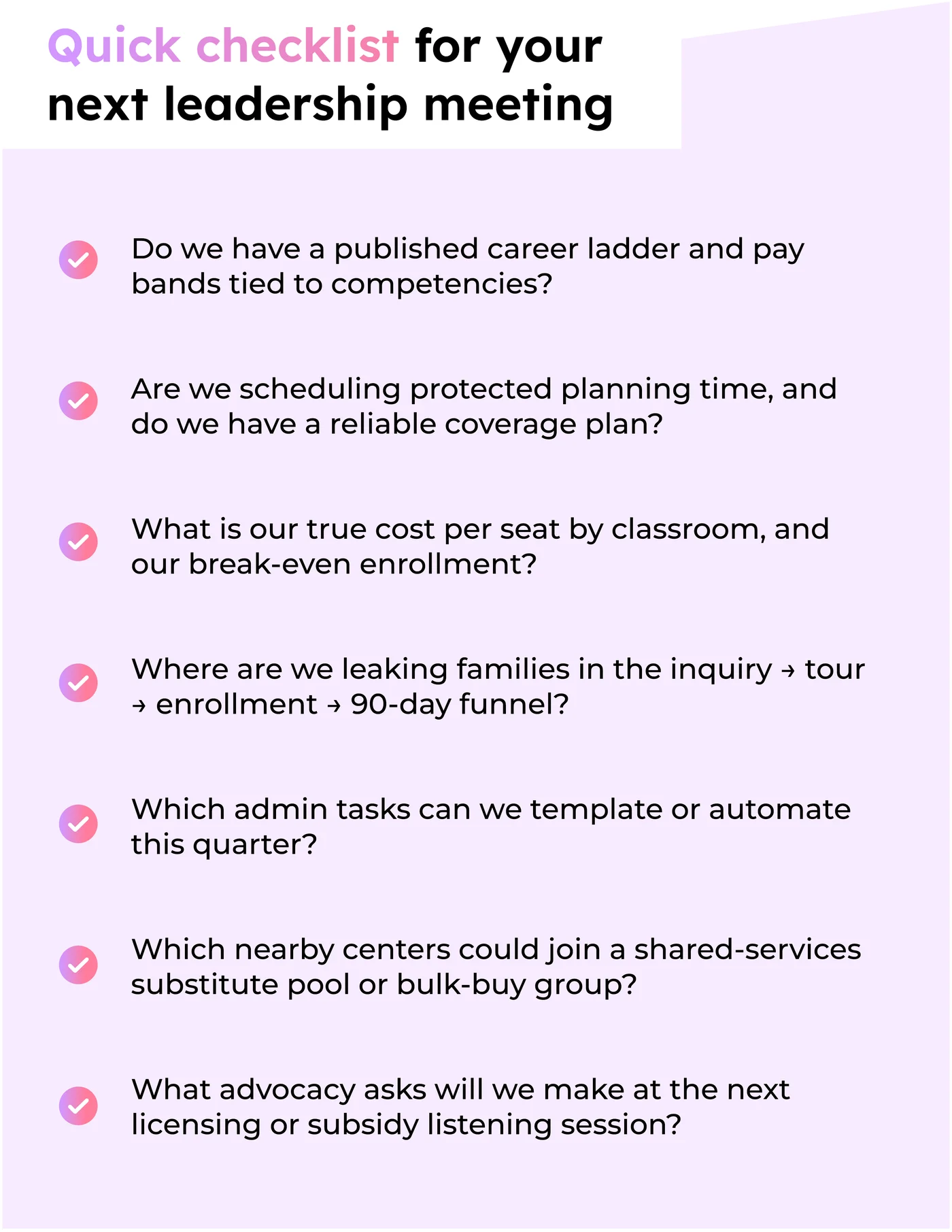
- Do we have a published career ladder and pay bands tied to competencies?
- Are we scheduling protected planning time, and do we have a reliable coverage plan?
- What is our true cost per seat by classroom, and our break-even enrollment?
- Where are we leaking families in the inquiry, tour, enrollment and 90-day funnel?
- Which admin tasks can we template or automate this quarter?
- Which nearby centers could join a shared-services substitute pool or bulk-buy group?
- What advocacy asks will we make at the next licensing or subsidy listening session?
What system-level changes would make child care more sustainable?
Some challenges are bigger than any single director can solve. Workforce shortages, regulatory bottlenecks and funding models require collective action. When leaders band together through advocacy, partnerships or shared services, the entire field benefits.
- Expand the workforce. National policies with expanded visa slots and recognition of international credentials can bring in more skilled teachers. Locally, partnering with workforce boards and community colleges to create earn-while-you-learn apprenticeships builds a steady pipeline of new educators.
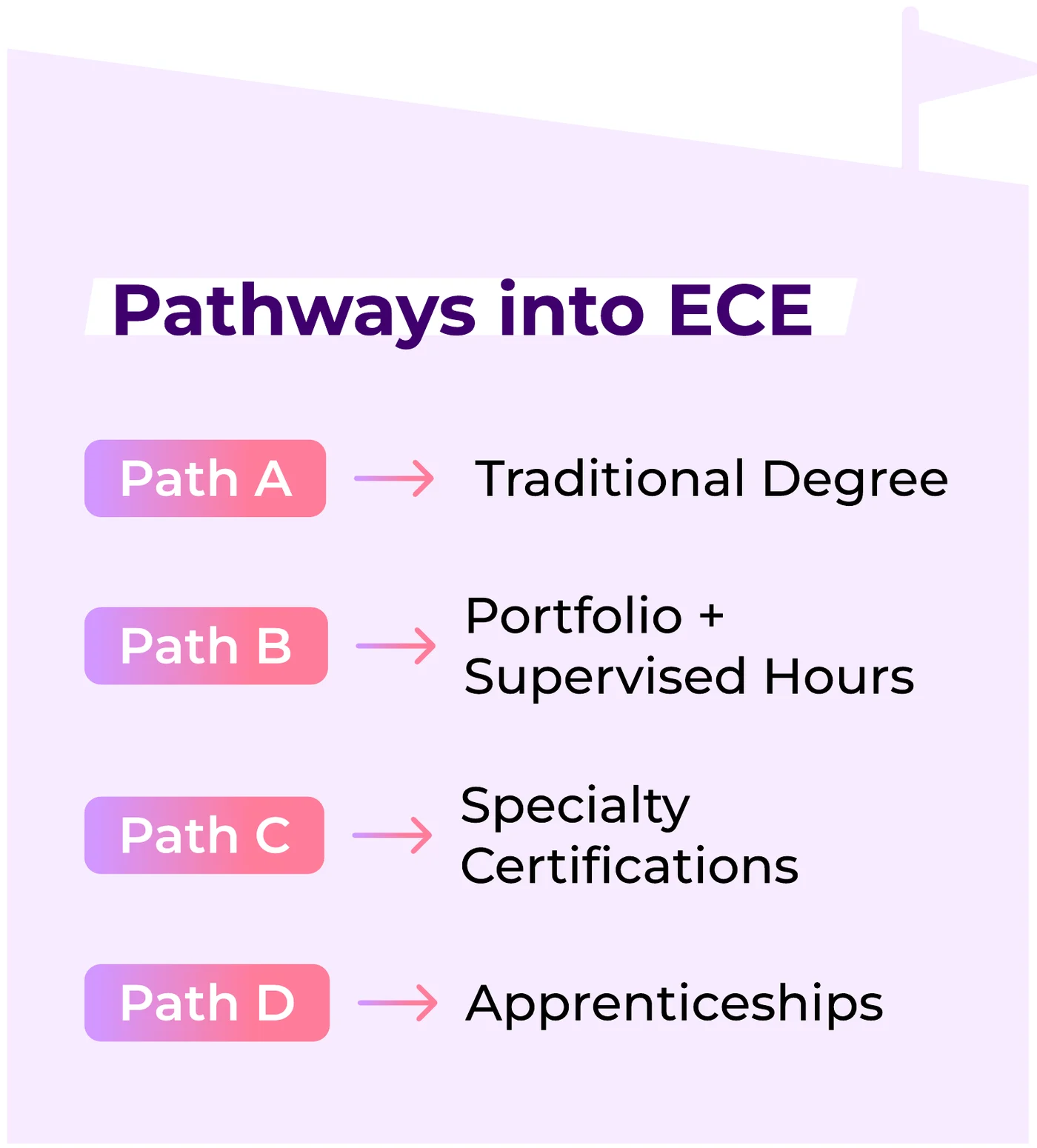
- Right-size credential rules. Degree-first mandates can lock out talented practitioners who have the skills but not the formal paperwork. Advocate for multiple competency routes, such as portfolios, supervised practice or specialty certifications, to broaden access to the profession.
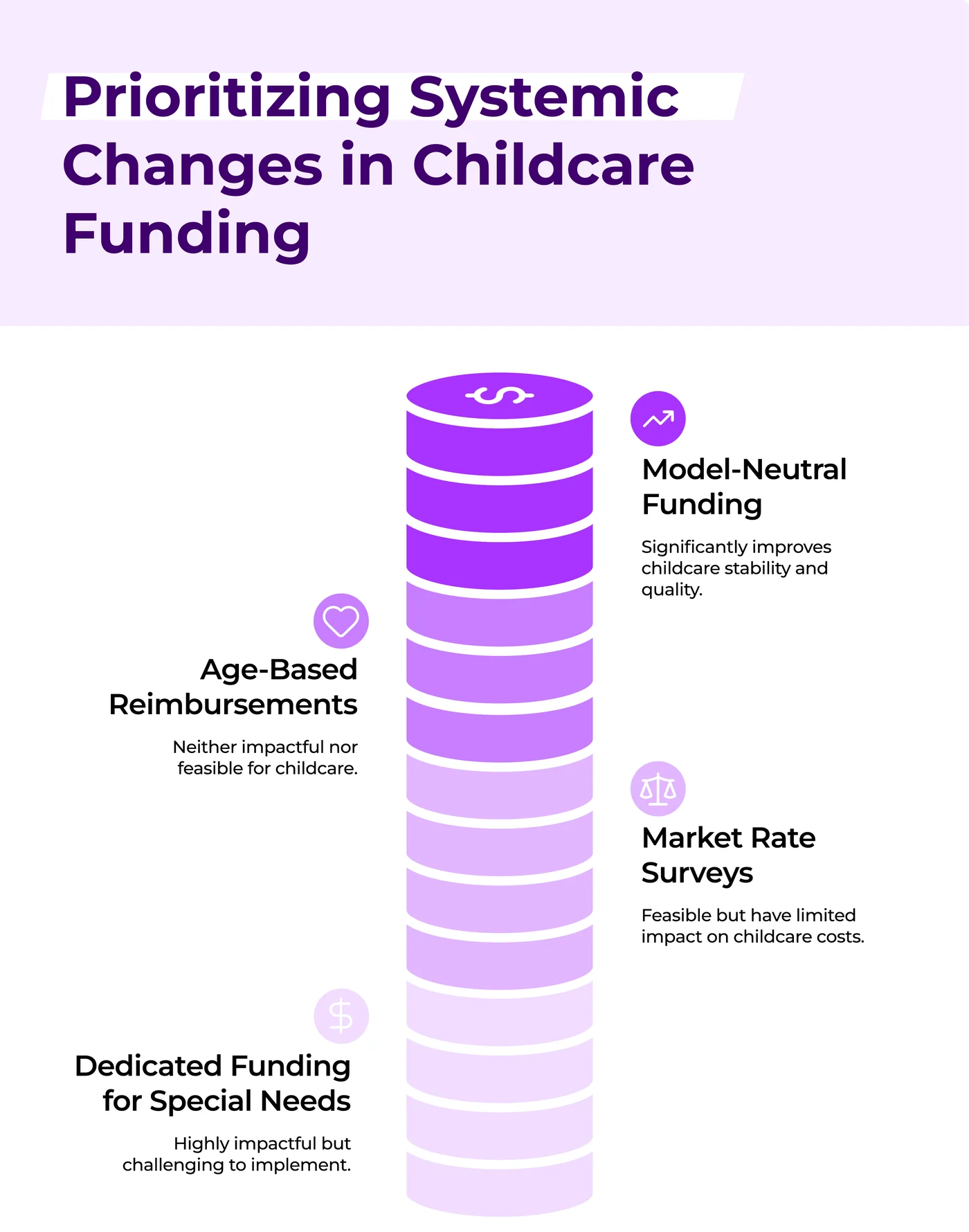
- Advocate for smarter public funding. Subsidies matter, but how they are structured makes all the difference. The field needs model-neutral funding that supports staff competencies and child outcomes without dictating pedagogy.
- Streamline compliance. Directors often face layers of inspections, forms and background checks that vary by county or state. Asking regulators for consolidated inspections, digital reporting and reciprocity across jurisdictions cuts duplication, and error-tolerant documentation rules keep centers from being punished for small mistakes. Streamlining oversight reduces cost and stress without sacrificing accountability.
- Form shared-services alliances. Not every center can afford a full HR team or a dedicated grant writer, but together several can. By pooling payroll, substitutes, purchasing, grant writing and even meal prep, directors scale administration without scaling classrooms, lowering overhead and freeing savings to reinvest in staff and children.
Why should families see tuition as an investment?
The early years shape everything: attention, self-regulation, language and social skills. High-quality care at this stage reduces future remediation, lowers discipline issues and eases family stress.
When directors run financially honest programs and explain the true value of tuition, parents stop seeing it as a luxury and start seeing it as an investment in their child's future. A director's role is to make that investment transparent and sustainable, so families feel confident and teachers feel supported.
"So many of us in education feel guilty at the idea of charging what it costs to do the job right." Tim Seldin, Author, Educator and President, The Montessori Foundation
Frequently asked questions
How much has the price of child care risen in the US?
The national average price of child care rose by nearly 40% between 2017 and 2024, from $9,397 to $13,128 a year, according to CNN's analysis, with the 2024 figure from Child Care Aware of America.
What is the biggest cost in running a child care center?
People. In the Center for American Progress model of a high-quality child care center serving infants, salaries make up 59.4% of monthly costs and benefits a further 13.9%, so almost three quarters of the cost of care is staff.
How much does high-quality infant care cost per year?
It depends on the state. The Center for American Progress estimates the true annual cost of high-quality infant care at $37,300 in California, $35,400 in New York, $26,900 in Florida and $24,900 in Texas.
Why is it so hard to recruit and keep child care staff?
Pay is a major factor. From 2019 to 2022, child care workers' wages grew 3.1%, compared with 8.7% for food and beverage serving workers, according to the National Women's Law Center, and 22% of early childhood educators are considering leaving the field within the next year, according to NAEYC's January 2026 survey.
What can childcare directors do to make their programs sustainable?
The report groups the levers into five areas: workforce and culture, scheduling and program design, unit economics and pricing, admin efficiency, and family communication. Practical steps include publishing pay bands tied to skills, calculating the true cost per seat for each classroom, pricing for true cost and funding access through scholarships and sliding scales, and templating recurring admin work.
Contributors
- Tim Seldin, President, The Montessori Foundation, and Chair, International Montessori Council (LinkedIn, Circle Time with Tim articles)
Methodology
The Costs Draining Childcare Centers is illumine's USA cost benchmark report, with insights from Tim Seldin of the Montessori Foundation. Price, cost, wage, workforce and subsidy figures are drawn from CNN, Child Care Aware of America, the Center for American Progress, the National Women's Law Center, NAEYC and the Early Childhood Education Journal, as cited. State cost estimates are the Center for American Progress's 2021 modeled estimates, rounded to the nearest hundred dollars. Product screens are illustrative and show sample data. The funding priorities chart reflects this report's assessment.
Sources
- CNN, Child care costs still rising as the Trump administration eyes incentives to boost falling birthrates (May 2025)
- Child Care Aware of America, Child Care in America: 2024 Price and Supply
- Center for American Progress, The True Cost of High-Quality Child Care Across the United States (Simon Workman, 2021), using the costofchildcare.org model
- National Women's Law Center, Early Educators' Wage Growth Lagged Behind Other Low-Paid Occupations (July 2023)
- Vicente, Venegas and Guerrero, Turn-over and Retention Among Head Start Educators, Early Childhood Education Journal (2024)
- NAEYC, An Unsustainable Status Quo: January 2025 survey
- NAEYC, January 2026 child care affordability survey
- NAEYC, Comments on Improving Child Care Access, Affordability, and the CCDF (August 2023)
- AIHR, Employee retention rate (turnover and retention matrix)
Further reading
- Jordan McGillis, Why child care costs so much, and how to fix it, The Washington Post (August 2025)
- William J. Baumol and William G. Bowen, Performing Arts: The Economic Dilemma (1966), the foundation of the cost disease concept
- Child Care Aware of America, Affordability Analysis 2024
- National Institute for Early Education Research, State of Preschool Yearbook
- OECD, Early Childhood Education and Care
Related reports: Scaling Smart: How Multicenter Childcare Networks Scale Without Breaking, Rethinking Montessori Operations, Childcare Enrollment Report 2026 and What Will Montessori Leadership Look Like in 2030?