



What Will Montessori Leadership Look Like in 2030? is a report developed by illumine in collaboration with The Montessori Foundation. It examines a question most Montessori leaders are already being asked by their boards, their staff, and increasingly their families: what role, if any, should artificial intelligence play in a Montessori organization? It features perspectives from Dr. Lindsey Pollock (Sarasota University) and Dr. Bisa Batten Lewis (Ideal Early Learning LLC).
Key findings
- AI belongs in the work around the guide and the child, not in the relationship itself. Observation, empathy, ethical judgment and knowledge of the individual child stay human.
- Growth creates a paradox: as Montessori networks expand, leaders move further from each school while enrollment, attendance, billing, communication and progress records sit in different tools, often five or six across teams.
- Digitization made information available. AI changes how it is used, and the measure that matters is not automation but capacity.
- AI creates the most leverage in four functions: enrollment, finance and billing, guides and classroom administration, and leadership.
- Adoption works best when guides are involved in evaluation, not just training, and when AI replaces a task rather than adding one.
- Every AI-generated output should be reviewed and approved by a person before it reaches a child, family or staff member.
What role should AI play in a Montessori organization?
Artificial intelligence is already part of the world Montessori schools operate in. The question is whether it can be used deliberately to make school life more human, more responsive, and more faithful to Montessori principles.
Montessori education rests on capacities like attentive presence, disciplined observation, empathy, ethical judgment and knowledge of the individual child. Those capacities must remain at the center of the school. AI works behind the scenes, supporting processes, not personal relationships.

This report is organized in three parts. The first makes the case for why the question has become unavoidable. The second examines the four functions where AI creates real leverage, and what remains human in each. The third offers a decision framework for leadership teams.
How does AI fit the Montessori standard?
Montessori has never had a standards problem. Montessori education rests on capacities technology cannot replace: attentive presence, observation, empathy, ethical judgment, knowledge of the child, and trust built over time. These are the qualities that define the Montessori experience, and protecting them is ultimately a leadership responsibility.
That is why the question of administrative work matters. It is not simply about how much work leadership carries, but what that work takes them away from: translating messages, following up on inquiries, reconciling accounts, assembling reports. Each of these consumes time that could be spent on people, decisions, and the work that moves the school forward. Used well, AI can give that time back.
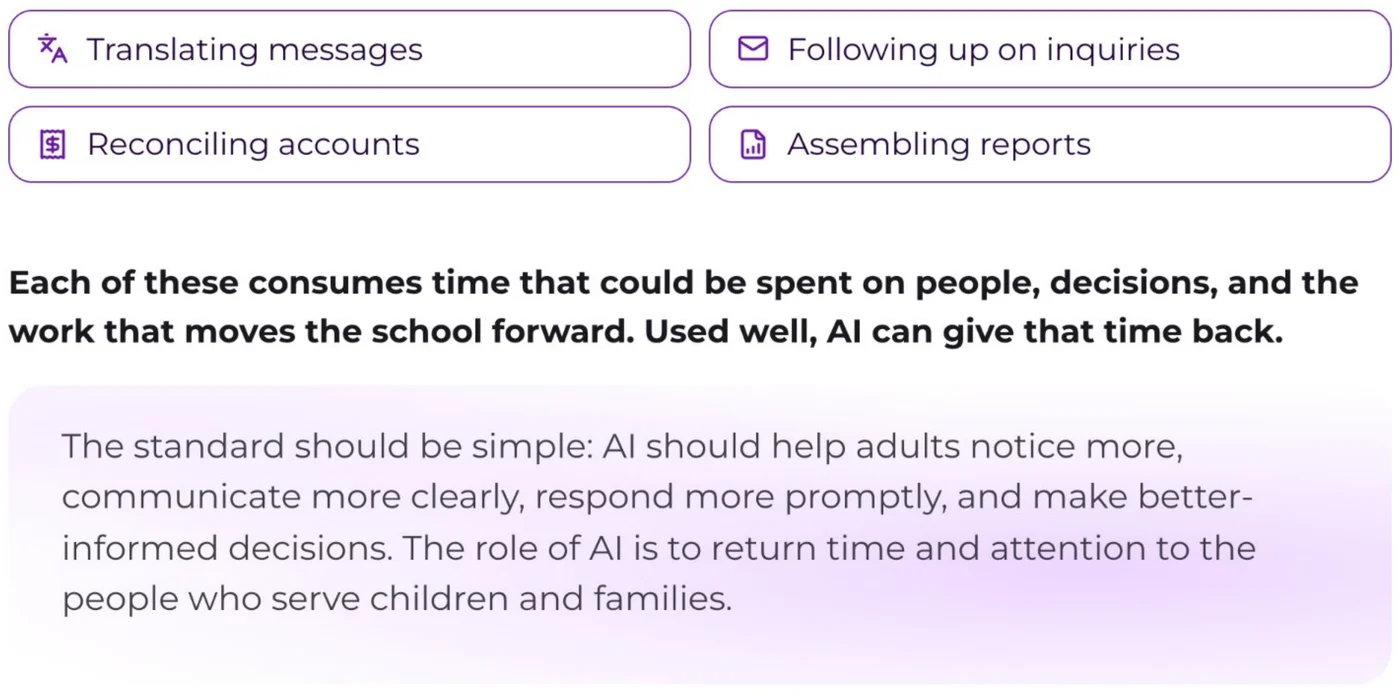
The standard should be simple: AI should help adults notice more, communicate more clearly, respond more promptly, and make better-informed decisions. The role of AI is to return time and attention to the people who serve children and families.
The opportunity is not to make Montessori more technological. It is to build an organization that protects the time and attention of the people responsible for leading it. Montessori has always been intentional about preparing the environment for the child. That same intentionality has to extend to the systems around the adults.
Why does growth make Montessori leadership harder?
As Montessori networks expand, leaders become further removed from the day-to-day reality of each school. With enrollment, attendance, billing, communication and progress records living in different tools, often five or six across teams, information is fragmented, and leadership time is spent finding and piecing together the picture. AI can help close that distance by bringing the right information together, surfacing patterns earlier, and giving leaders more time to focus on what to do next.
The hidden cost of scale
These costs rarely appear on a P&L. They show up in slower decisions, inconsistency, and leadership fatigue.
- Leadership needs visibility. When every campus runs a different set of tools and each report has to be pulled from a separate system, the picture arrives late, making it harder to spot patterns and act on them.
- Campuses operate differently. When campuses create their own workarounds, small differences in how enrollment, communication, and operations are handled begin to compound. Families experience each school in the network differently.
- Retention of the experienced. The leaders and guides with the most institutional knowledge often become the default problem-solvers, putting the people the network most needs to retain under strain.
How is AI different from the last two decades of digitization?
Montessori organizations spent two decades digitizing the work around education. Paper became digital, enrollment moved online, and operational data became easier to access. That era solved an important problem: it made information available. Today leaders can see everything, and must still assemble, interpret, and chase most of it themselves. This is what changes now.
Digitization changed how schools manage information. AI changes how they use it: it surfaces what matters most, carries routine workflows, and notices patterns that would take hours to find.
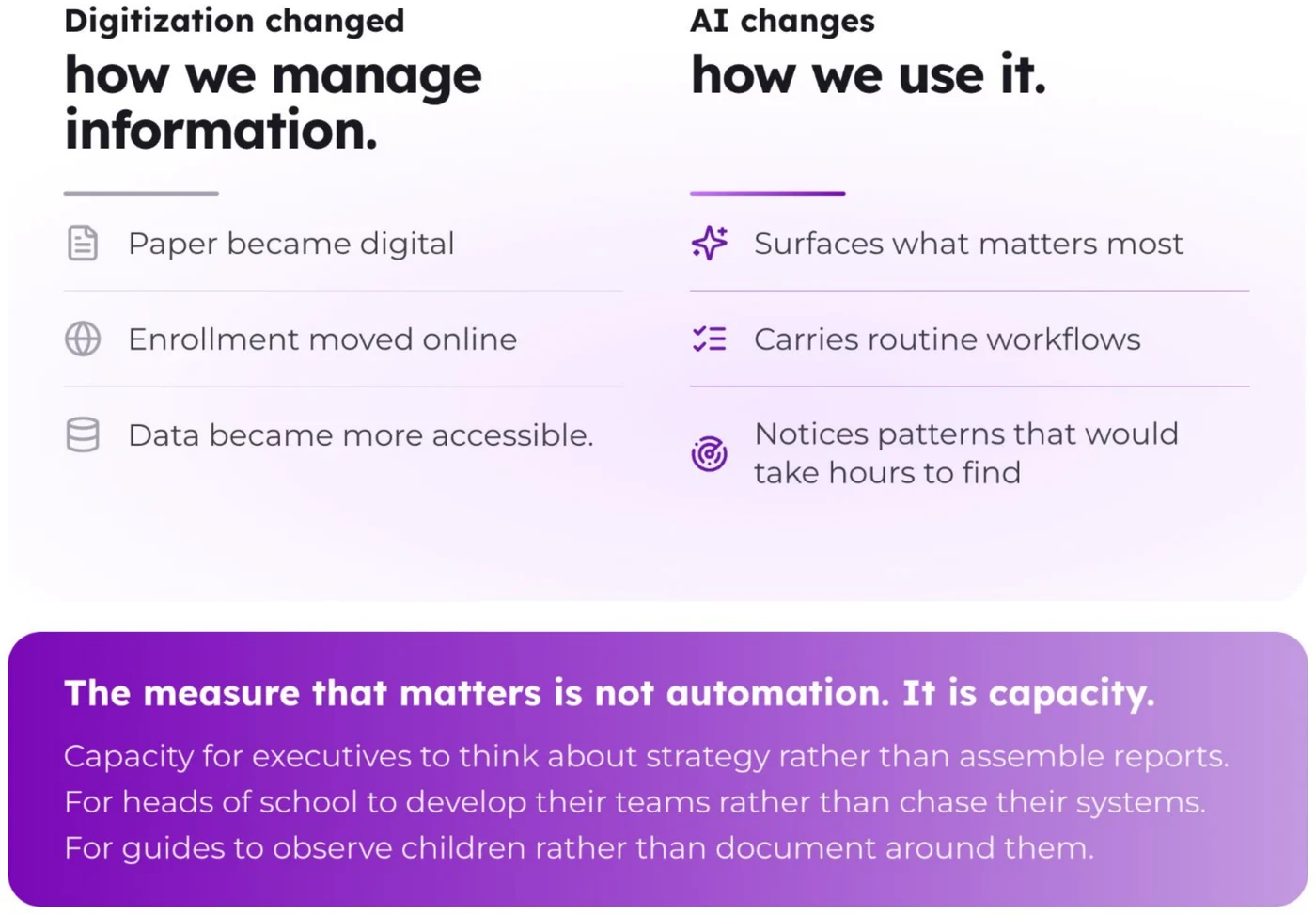
The measure that matters is not automation. It is capacity. Capacity for executives to think about strategy rather than assemble reports. For heads of school to develop their teams rather than chase their systems. For guides to observe children rather than document around them.
Where does AI create the most value for Montessori teams?
The chapters that follow look at each team in turn: enrollment, finance, guides, and leadership. Across every team, AI takes on the routine work that surrounds a decision, never the decision itself. For leadership, that means fewer bottlenecks waiting on one person, one clear picture across campuses instead of six separate systems, and consistency that families feel wherever they enroll.
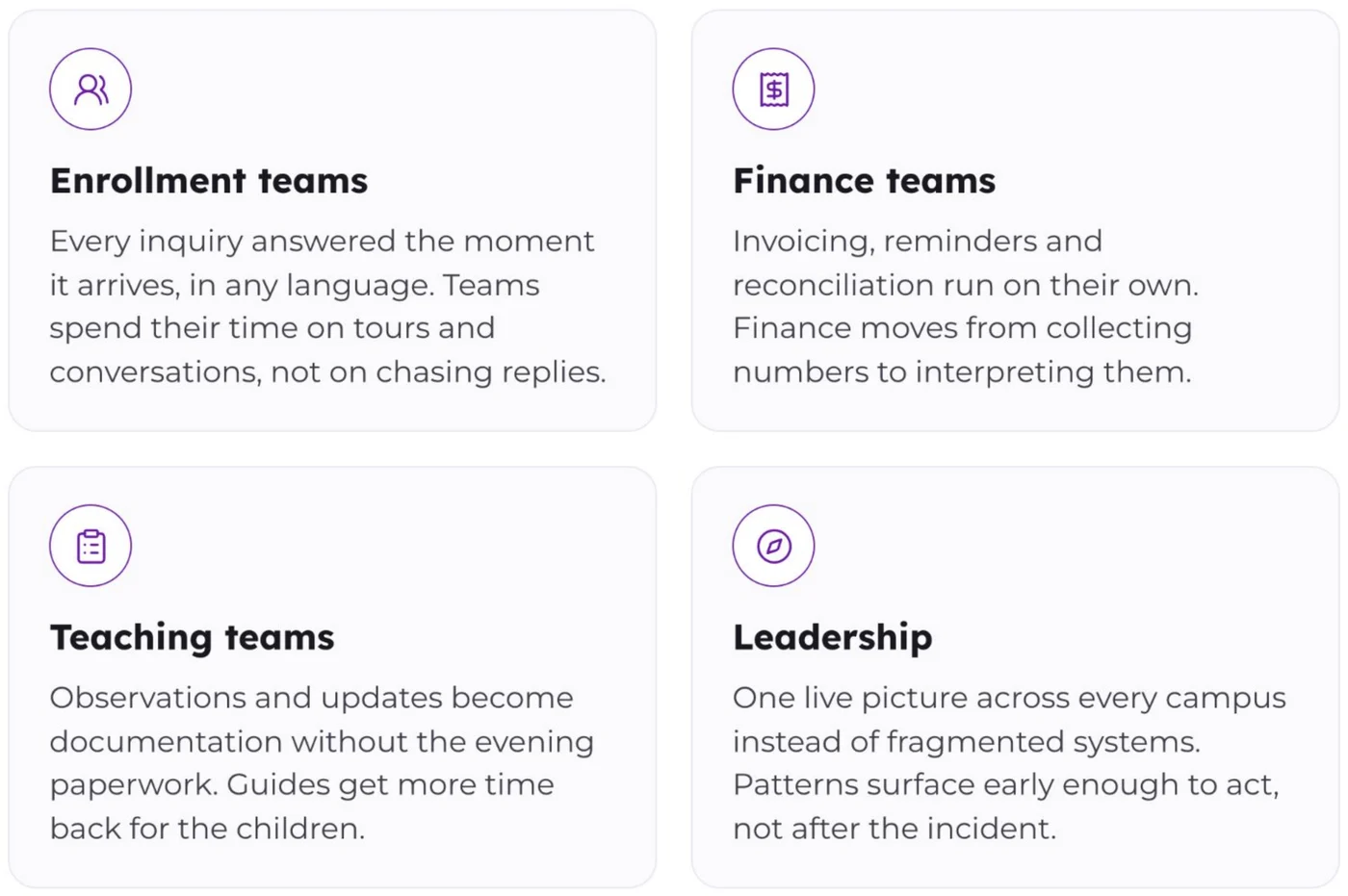
- Enrollment teams: every inquiry answered the moment it arrives, in any language. Teams spend their time on tours and conversations, not on chasing replies.
- Finance teams: invoicing, reminders and reconciliation run on their own. Finance moves from collecting numbers to interpreting them.
- Teaching teams: observations and updates become documentation without the evening paperwork. Guides get more time back for the children.
- Leadership: one live picture across every campus instead of fragmented systems. Patterns surface early enough to act, not after the incident.
How can AI improve the family enrollment journey in a Montessori school?
Every enrollment journey begins with a moment of intent. A parent may discover a school through a search, a referral, or a conversation at the playground. From there, they visit the website, submit an inquiry, or request a tour. At this stage, they are not yet evaluating pedagogy. They are evaluating the experience: Was the school easy to reach? Did someone respond? Was the process clear, warm, and unhurried?

These moments may look operational, but they are deeply connected to the Montessori experience. Enrollment is often a family's first encounter with the school's values, before they meet a guide, enter a prepared environment, or see a classroom in action. A philosophy grounded in respect for the child should extend to how the school welcomes and responds to the family. For growing networks, keeping that experience consistent across campuses becomes harder as inquiry volume shifts, admissions teams balance tours and follow-ups, and each campus develops its own way of working.
This is where AI belongs in enrollment: not in the relationship, but in everything that gets in its way. It can provide instant responses to routine inquiries, ensure follow-up never lapses, answer questions at midnight, and help ensure no family is lost because a team member is giving another family their full attention.
How illumine supports enrollment teams
Every inquiry answered and every tour request captured, at any hour, in the caller's own language. A human still builds and closes the relationship. AI makes sure nobody waits for a callback to feel heard.
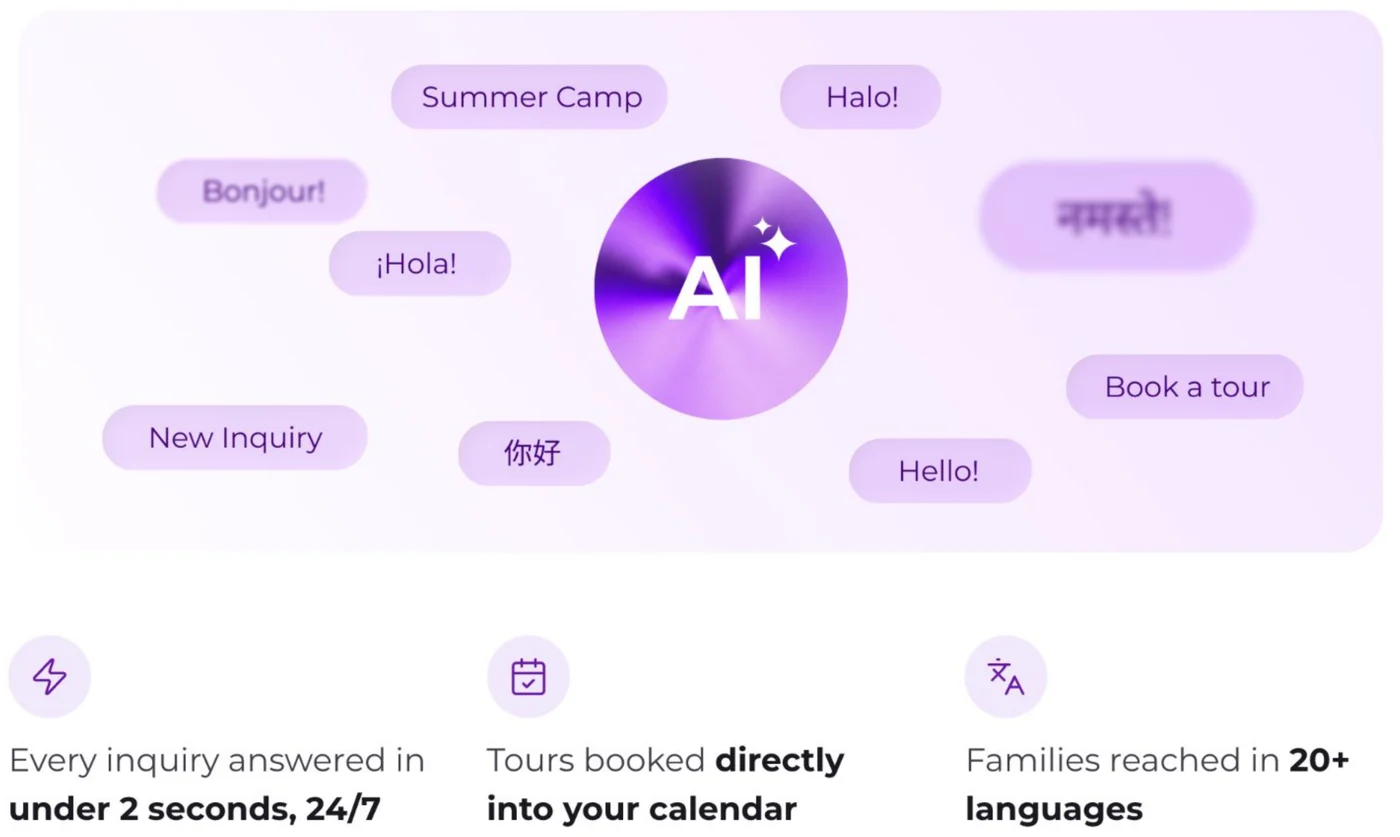
illumine's AI enrollment agent responds to inquiries instantly, answers routine questions, and helps families take the next step at any time. It answers every inquiry in under 2 seconds, 24/7, books tours directly into the school's calendar, and reaches families in 20+ languages. It handles the repetitive conversations, so teams can focus their time on the families who need a human connection. Leadership gains real-time visibility into inquiry volumes, response times, tour conversions, and occupancy trends across the network.
How can AI help Montessori finance and billing teams?
As Montessori organizations grow, more students mean more invoices, tuition plans, payment schedules, subsidies, and discounts across campuses. At a smaller scale, the team's knowledge holds it all together. At network scale, the same work starts to slow everyone down.
AI can organize billing information, summarize it, surface unusual patterns, compare enrollment against revenue, forecast cash pressure, and translate a complex report into questions the leadership team should investigate, such as:
- Which accounts are newly overdue?
- Are particular tuition plans creating recurring problems?
- Where is enrollment below the level needed to sustain costs?
- How would a tuition or staffing change affect the budget?
- Which expense categories need attention?

The real cost is not the administrative work. It is the lack of visibility. This is where AI belongs in finance: not in the judgment behind your policies, but in the work of assembling, reconciling, and watching, so your team spends less time building the picture and more time acting on it.
How illumine supports billing teams
Leaders can ask about occupancy, billing, collections, or outstanding balances in plain language and get the insight in seconds. AI prepares the information; leaders make the financial decisions.
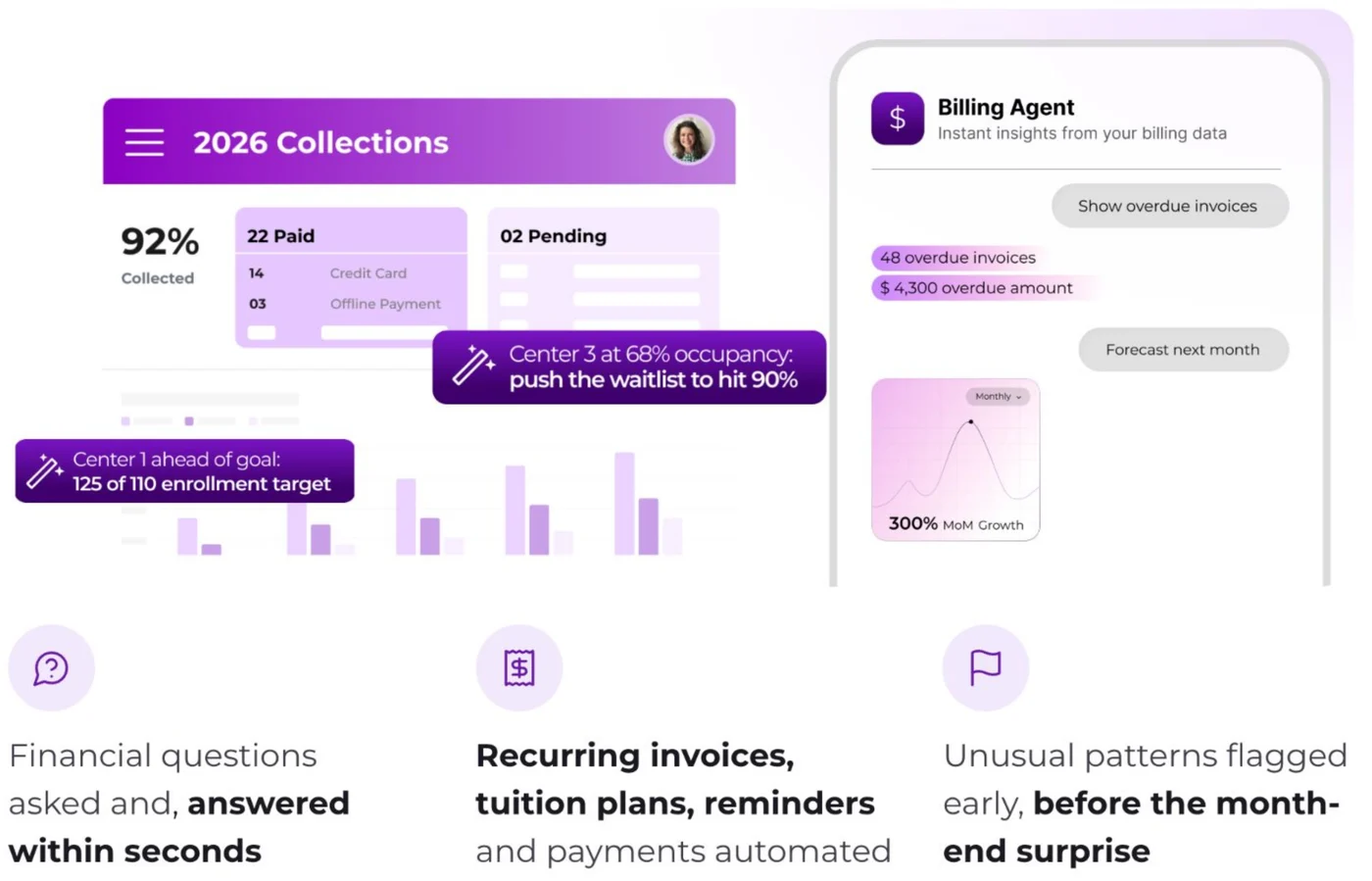
illumine's AI billing agent handles routine billing questions and follow-ups, helping teams stay on top of collections without adding more administrative work. Recurring invoices, tuition plans, reminders and payments are automated, and unusual patterns are flagged early, before the month-end surprise. Leadership gets one consistent view of revenue, collections, balances, and occupancy across every campus, which makes it easier to spot early warning signs and act before small issues grow.
Can AI support Montessori guides without replacing them?
Montessori education depends on something no technology can replicate: the guide's ability to observe, interpret, and respond to a child. Guides do far more than deliver lessons. They observe with intention, prepare environments that foster independence, recognize developmental readiness, and make nuanced decisions about when to step in and when to step back. These are deeply human responsibilities, and they should remain that way.
The difficulty is that the modern guide's day now extends far beyond the classroom. Documentation must be completed. Observations recorded. Conference reports prepared. Families kept informed.
"Strong parent partnerships thrive when communication is multidimensional, predictable, and continuous across every stage of a child's development... parents move from passive observers to empowered partners." Dr. Lindsey Pollock, Provost, Sarasota University
How illumine supports teaching teams
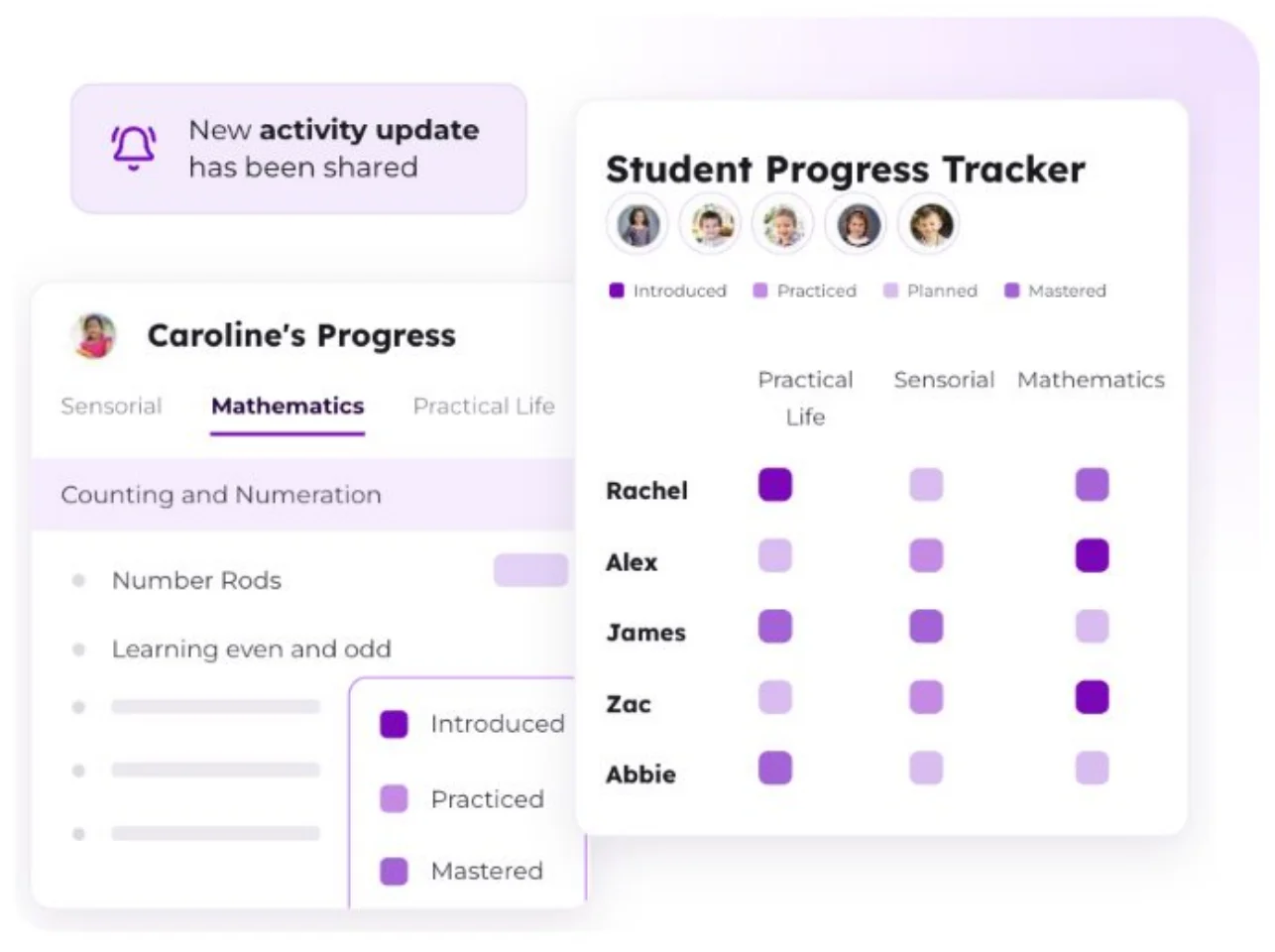
Giving guides their time back. Documentation is where the most experienced guides' hours quietly go. AI takes on two areas, each reviewed by the guide before anything is sent or saved.
Assessments and observations. Observations and milestones become structured, consistent documentation across campuses. Guides get back hours each week that would otherwise go into write-ups, giving them more time with the children.
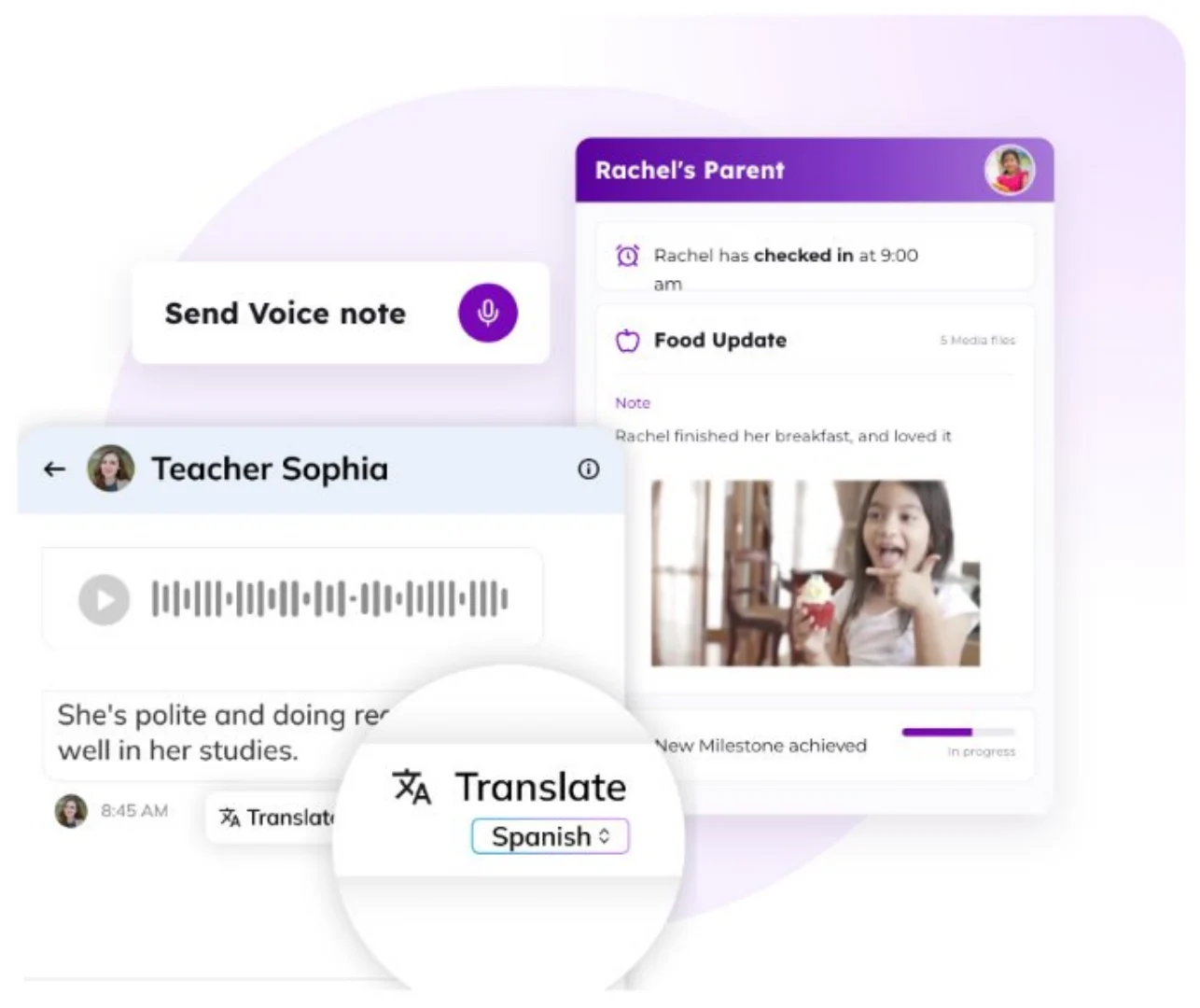
Parent communication. Guides can paraphrase conversations for quick, clear communication and get instant, refined suggestions. They can instantly translate messages, observations and updates into 20+ languages.
How do you bring Montessori guides and staff along when introducing AI?
The most meaningful AI conversations in schools start with the people who will use it. Guides bring valuable perspectives and important questions to the table. Including them early helps schools understand those concerns, build confidence, and introduce AI in a way that works for everyone.
- "Is this going to replace my job?" The work being automated is administrative, not pedagogical. Be specific about which tasks change and which do not, before rollout.
- "Will this tell me how to teach?" AI can surface patterns in observations; a guide decides what they mean for a child. Nobody should encounter a system that grades their judgment.
- "I don't have time to learn another platform." Roll out one function at a time, replace something rather than adding to it, and measure adoption by what stopped being done manually.
- "Nobody asked us." Involve stakeholders in evaluation, not just training: let them test the tool on their own records, and hold the authority to say what works.
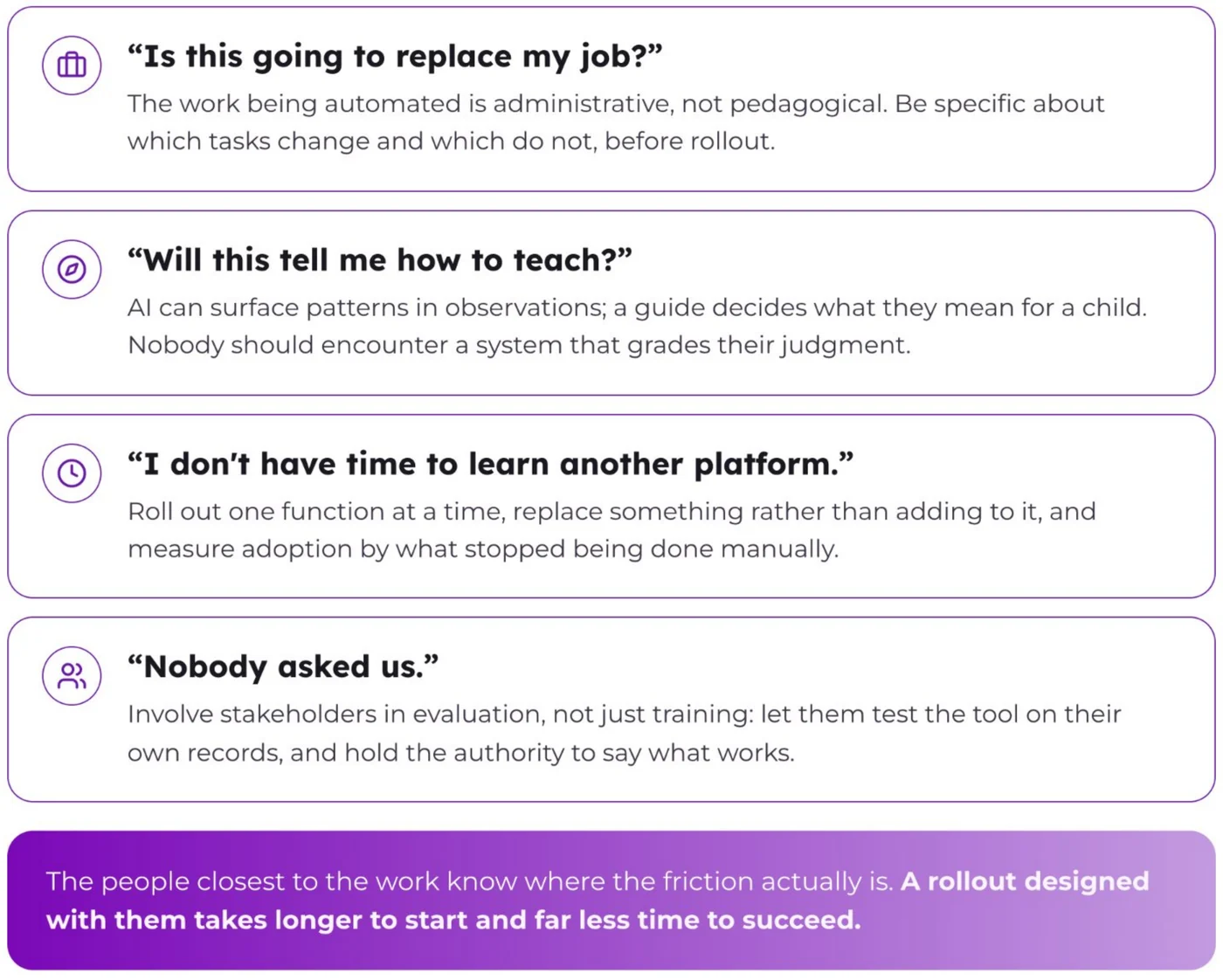
The people closest to the work know where the friction actually is. A rollout designed with them takes longer to start and far less time to succeed.
How can AI help Montessori leaders turn insight into action?
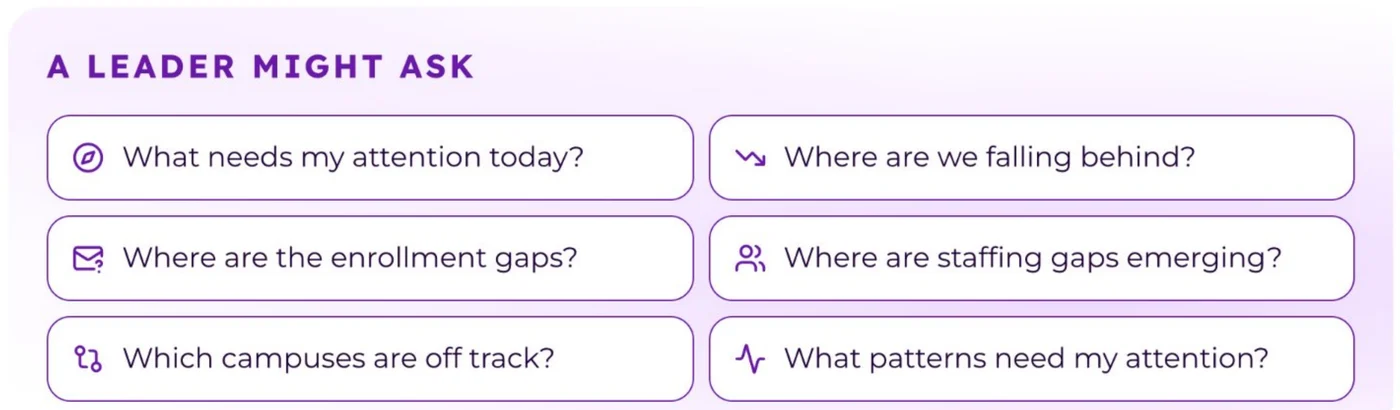
The hardest part of leading a growing Montessori organization is deciding what deserves your attention. AI can give school leadership teams visibility into what needs their attention. Instead of piecing together attendance, staffing, enrollment, tuition, and campus data from multiple reports, leaders can ask a question in plain language and quickly see where patterns, gaps, or emerging concerns warrant a closer look. A leader might ask:
- What needs my attention today?
- Where are we falling behind?
- Where are the enrollment gaps?
- Where are staffing gaps emerging?
- Which campuses are off track?
- What patterns need my attention?
"Leaders of multi-site organizations must stop treating standardization and personalization as competing priorities. The most effective childcare systems standardize developmental goals, assessment practices, and operational systems, while giving educators flexibility in how learning comes to life for the families they serve." Dr. Bisa Batten Lewis, Managing Partner, Ideal Early Learning LLC
How illumine supports leadership teams
One view across every campus, instead of multiple reports chased individually. illumine runs enrollment, classrooms, attendance, billing, communication, staffing, and compliance on one platform, so leaders ask a question in plain language and receive an answer drawn from the entire network in seconds. A human still sets the direction; AI keeps the full picture in front of them.
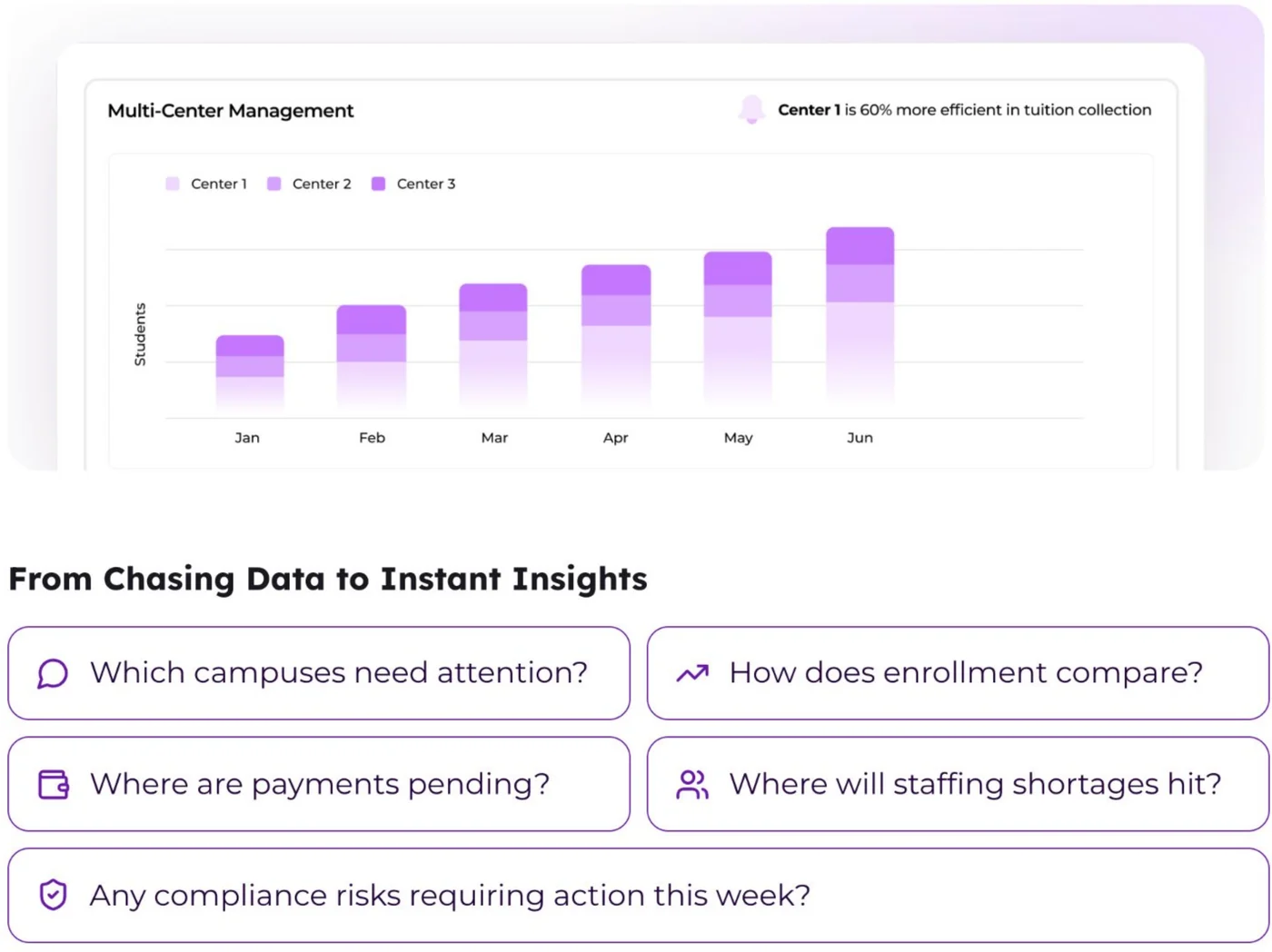
Which campuses need attention? How does enrollment compare? Where are payments pending? Where will staffing shortages hit? Are there compliance risks requiring action this week? Leadership teams receive contextual insights in seconds, solving problems instead of gathering information.
What must AI never compromise in a Montessori school?
Every question in this report ultimately comes back to trust: the trust families place in a school each morning, and the trust guides place in the systems that hold a child's story. AI does not change that responsibility. It makes getting it right even more important.
- Keep human judgment in the loop. AI can assist, but every AI-generated output is reviewed, validated, and approved before it reaches a child, family, or staff member.
- Keep the guide-child relationship human. AI should reduce administrative work around the classroom, never replace the relationships and interactions at its center.
- Keep automation intentional. Leaders decide where AI adds value, where it does not, and where human involvement remains essential.
- Keep people focused on what matters. AI can take on repetitive administrative work so people can focus on observation, relationships, judgment, and the work that requires a human presence.
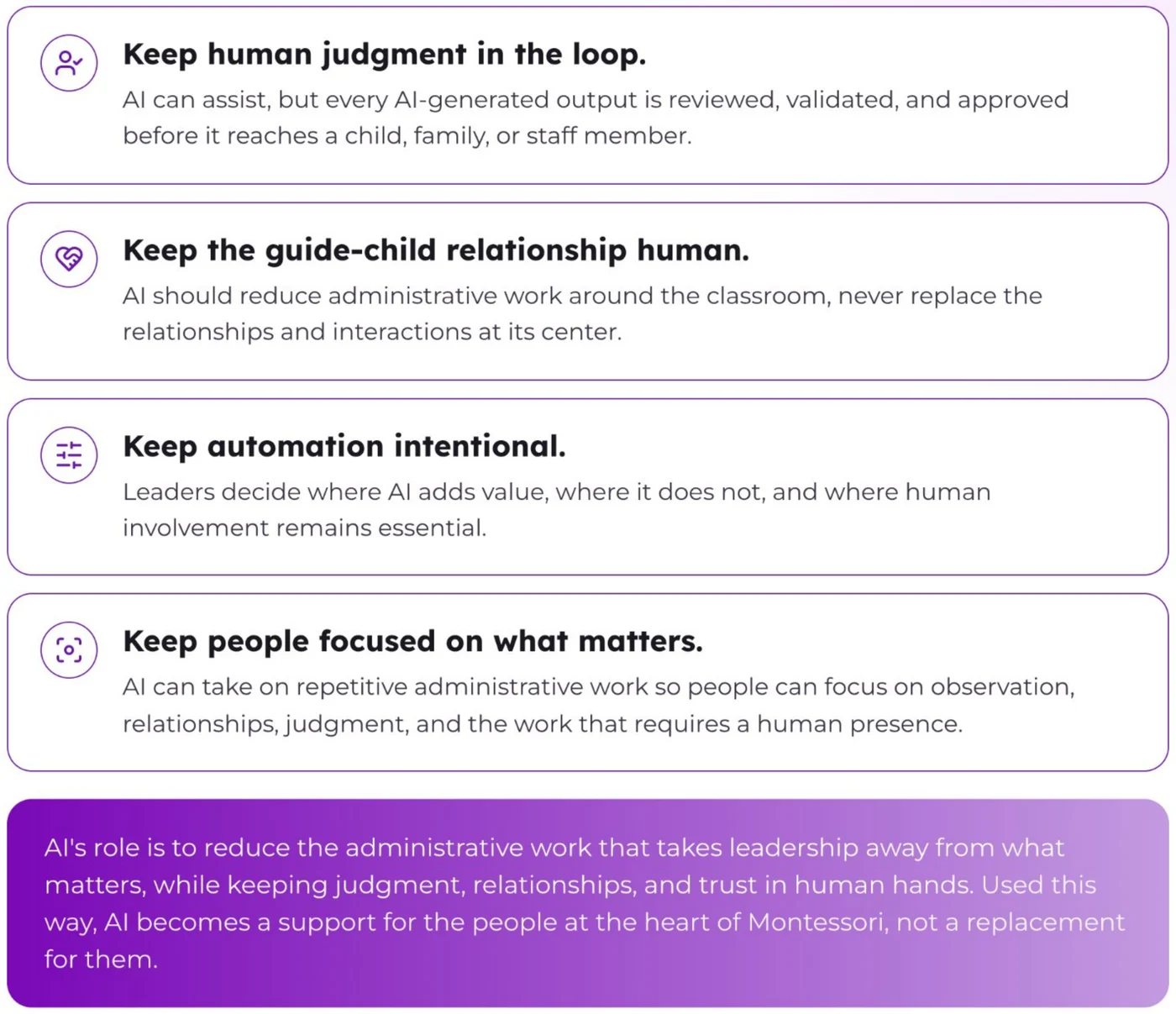
AI's role is to reduce the administrative work that takes leadership away from what matters, while keeping judgment, relationships, and trust in human hands. Used this way, AI becomes a support for the people at the heart of Montessori, not a replacement for them.
What questions should Montessori leadership teams be asking about AI?
As Montessori organizations scale, the questions become more complex. These are the questions illumine hears from Montessori leaders:
- How do we continue growing without adding the same level of administrative overhead?
- Can we deliver the same high-quality family experience across every campus, not just our best-performing ones?
- Why are our most experienced educators spending valuable time on administrative work instead of mentoring?
- Do we know what's happening across every school today, or only after someone prepares a report?
- How can we ensure every campus operates with the same standards and processes as we expand?
- Are leadership teams making strategic decisions, or spending time assembling the information needed to make them?
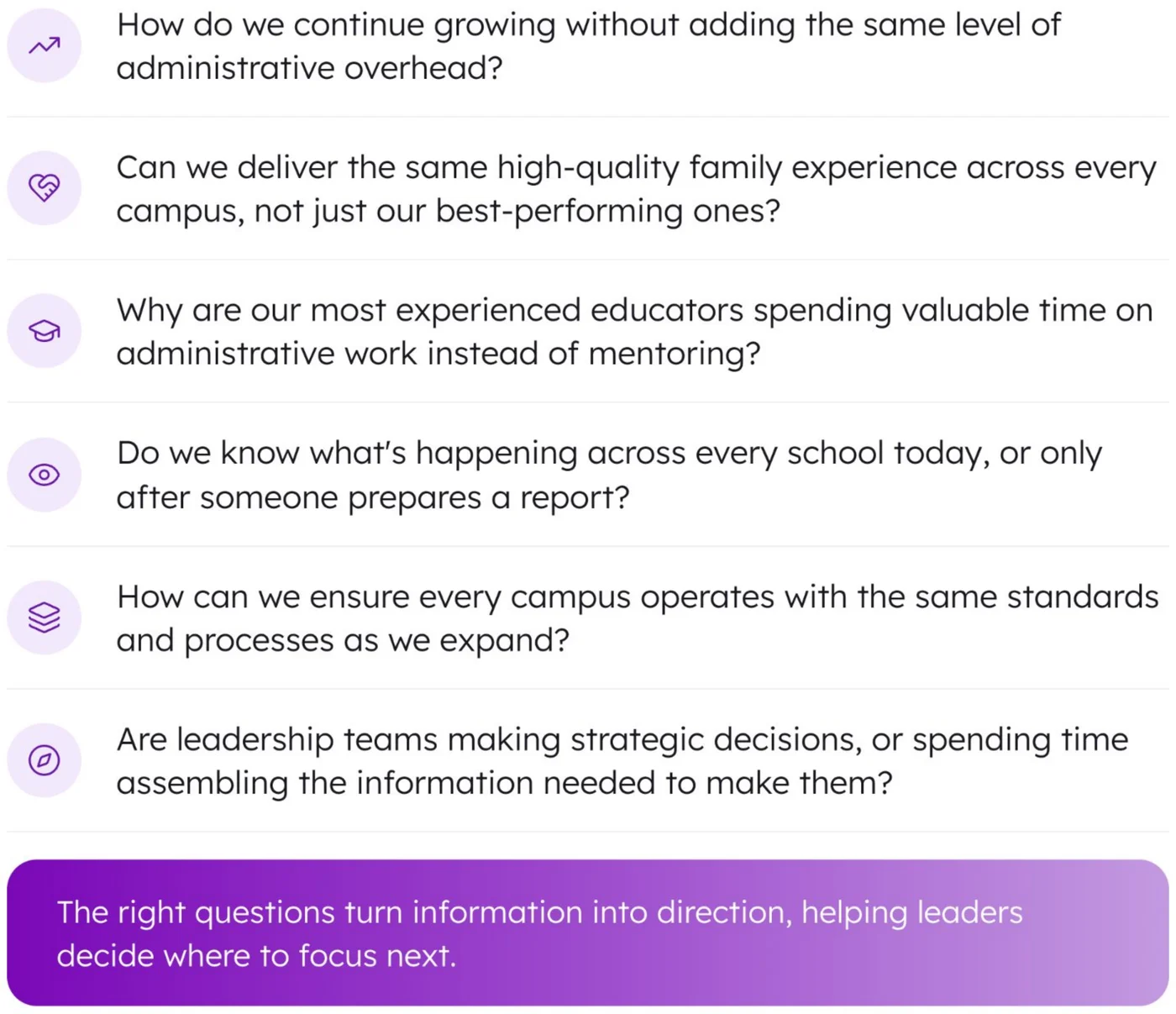
The right questions turn information into direction, helping leaders decide where to focus next.
What do the strongest Montessori organizations do differently with AI?
The organizations best positioned for the next phase of growth are not treating AI as another technology initiative, but as a question about how the organization should operate. Five principles stand out.
- Build on a connected foundation. AI delivers value when systems are connected. A shared foundation across enrollment, billing, communication, and reporting gives leaders a clear view.
- Protect what makes Montessori unique. Use AI to reduce administrative work, not human judgment. Observation, relationships, and decisions about children and families remain human.
- Drive consistent growth. Shared workflows and visibility help create a reliable experience across campuses while preserving each community's identity.
- Turn data into decisions. The goal is not more data, but better visibility. AI can surface patterns, flag risks, and bring the right information to leaders sooner.
- Measure success by capacity created. The measure of AI is what it gives back. Less time on routine work means more capacity for educators to focus on children and leaders to lead.
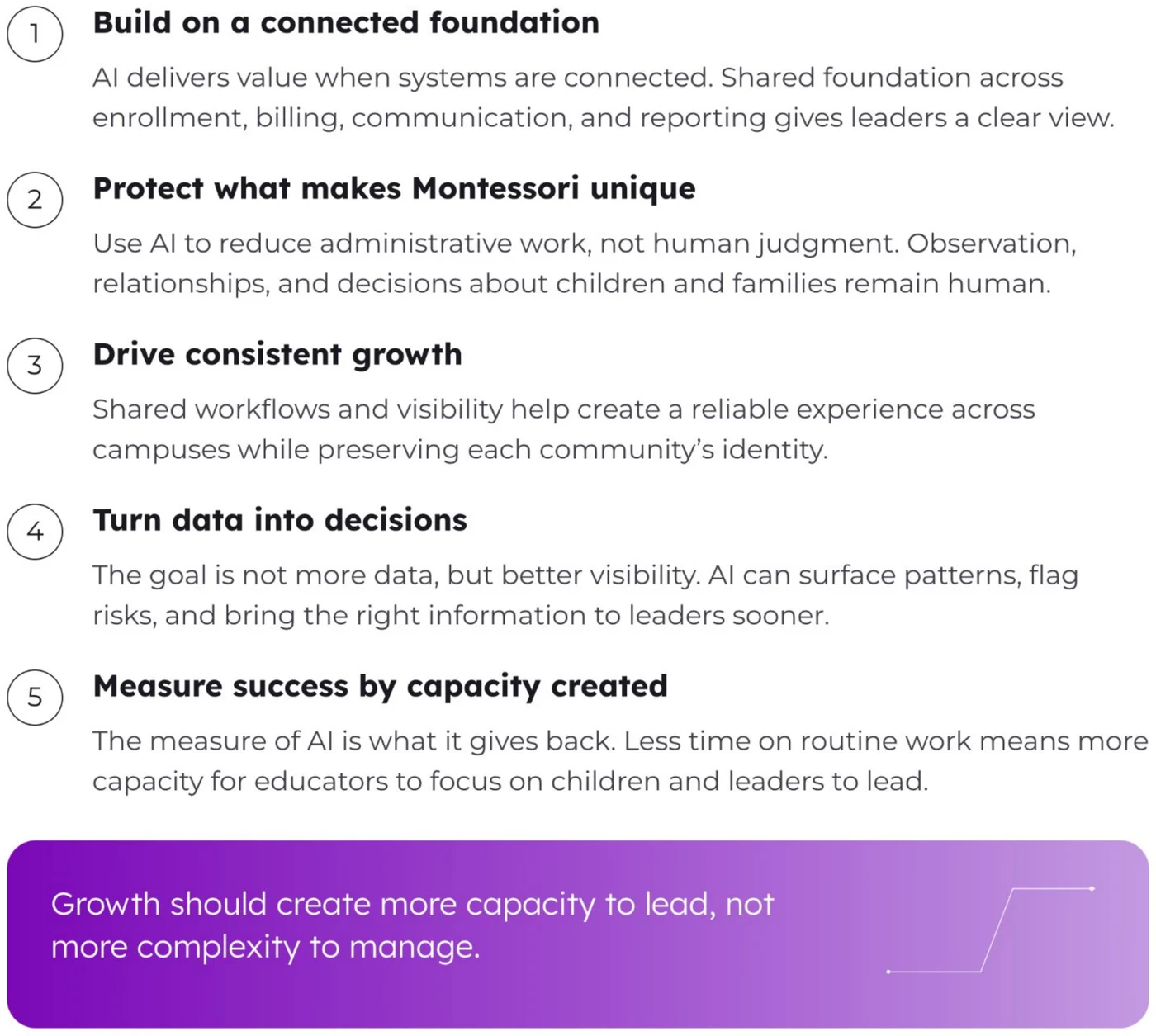
Growth should create more capacity to lead, not more complexity to manage.
Voices from the industry: what do Montessori and early learning leaders say?
Dr. Bisa Batten Lewis on consistency and authenticity
"To deliver a consistent standard of quality while remaining responsive to local communities, leaders of multi-site organizations must stop treating standardization and personalization as competing priorities. The most effective childcare systems standardize children's developmental goals, assessment practices, staff expectations, and operational systems while giving educators flexibility in how learning comes to life for the children and families they currently serve.
Family engagement is intentionally embedded into the foundation of WINGS Curriculum, rather than treated as an add-on. Teachers invite families to share stories, traditions, occupations, and cultural experiences as children explore monthly themes and weekly studies. A lesson becomes richer when a parent shares a favorite childhood book, a grandparent demonstrates a family recipe, or a community member connects classroom learning to real life. The same curriculum can be implemented year after year without ever looking exactly the same, because the content evolves with the children, families, and communities participating in it.
True quality comes from balancing consistency with authenticity. When childcare leaders establish clear expectations while empowering educators to adapt learning experiences to their local communities, they create environments where every child has access to high-quality learning and every family feels valued. Consistency provides the framework. Meaningful relationships and community connections bring the curriculum to life."
Dr. Lindsey Pollock on the Montessori parent journey
"The parent journey in Montessori education often represents a profound mindset shift, a journey into the unfamiliar world of new paradigms, especially for parents new to Montessori. It moves them away from single-age classrooms and standardized assessments toward a holistic, process-oriented understanding of a child's development. A successful journey begins when schools proactively demystify these principles, helping parents view their child's independence, intrinsic motivation, and concentration as core indicators of developmental success.
To build authentic trust, schools must engage parents as true educational partners through consistent, transparent communication, different from parent 'education.' Trust grows when schools clearly articulate how cosmic education, peace curriculum, and individualized learning plans align to support the child. Some strategies to engage parents in all settings include regularly opening classrooms for guided observations, sharing regular pedagogical updates, and offering solution-focused and affirming insights into both achievements and challenges in academic and social-emotional areas of development.
Strong parent partnerships thrive when communication is multidimensional, predictable, and continuous across every stage of a child's development. Today's Montessori schools maintain this connection by utilizing digital portfolios, hosting interactive workshops, and holding collaborative conferences that center on the child's progress. When schools create consistent channels for two-way dialogue, feedback, and active involvement, parents move from passive observers to empowered partners. This shared responsibility creates a stable, cohesive foundation where home and school values intersect and amplify the potential of the child."
Why illumine?
Growing Montessori organizations need more than individual tools for enrollment, billing, communication, or classroom documentation. They need a way to bring these parts of the organization together without creating more work for the people running them.
illumine gives leaders a connected view across the areas that shape the day-to-day operation of a school, from enrollment and family communication to billing, attendance, observations, and reporting. AI then works within those workflows to reduce routine work, surface information sooner, and help teams respond faster.
illumine is a modern childcare management platform purpose-built for large, multi-site preschool and childcare groups, supporting more than 4,000 centers across more than 60 countries. By centralizing data and standardizing workflows, illumine helps organizations operate as one connected system rather than isolated locations. For leaders, that means less time piecing together information, more consistency across campuses, and greater capacity to focus on the decisions, people, and growth that matter.
Your schools are growing. Your capacity to lead should grow with them.
Frequently asked questions
Should Montessori schools use AI?
Yes, in the work around the guide and the child, not in the relationship itself. The report recommends AI for enrollment, finance and billing, classroom administration and leadership reporting, while observation, empathy, ethical judgment and knowledge of the individual child stay human.
Will AI replace Montessori guides?
No. The work AI takes on is administrative, not pedagogical: documentation, translation and routine communication. Guides still observe children and decide what observations mean, and every AI-generated output should be reviewed and approved by a person before it reaches a child, family or staff member.
Where does AI create the most value in a Montessori organization?
In four functions: enrollment, where every inquiry is answered when it arrives, in any language; finance and billing, where invoicing, reminders and reconciliation run on their own; guides and classroom administration, where observations become documentation without the evening paperwork; and leadership, with one live picture across every campus.
How should Montessori schools introduce AI to guides and staff?
Involve guides in evaluation, not just training. Be specific about which tasks change and which do not, roll out one function at a time, and make sure AI replaces a task rather than adding one.
How should Montessori leaders measure the success of AI?
By capacity created, not by automation. The measure of AI is what it gives back: less time on routine work, and more time for educators to focus on children and for leaders to lead.
Contributors
- Lindsey Pollock, EdD, LCSW-S, Provost, Director of the College of Education, Sarasota University (LinkedIn)
- Bisa Batten Lewis, EdD, Managing Partner, Ideal Early Learning LLC; Author and Creator of WINGS Curriculum (LinkedIn)
Methodology
What Will Montessori Leadership Look Like in 2030? was developed by illumine in collaboration with The Montessori Foundation and published in 2026. It draws on illumine's work with multi-site Montessori and early learning organizations and on written perspectives from two education leaders. Product capabilities described reflect illumine's platform; dashboard figures shown in product screens are illustrative sample data. Views quoted by contributors are their own.
Related reports: Scaling Smart: How Multicenter Childcare Networks Scale Without Breaking, Rethinking Montessori Operations, Childcare Enrollment Report 2026 and The Costs Draining Childcare Centers: USA Cost Benchmark Report.
Related webinar: AI and the Future of Montessori Leadership.