



Managing a childcare center means juggling a hundred things at once. Between staffing, safety, and parent communication, subsidy management often falls to the bottom of the list. A missed entry here, a delayed follow-up there. What's the big deal?
Here's the problem: poor subsidy management doesn't announce itself. It quietly drains your revenue until you're facing a cash flow crisis and wondering what went wrong.
Most centers don't realize how much money they're losing until it's too late. Let's break down exactly where the money goes and how to stop the leak.
The Real Cost of Weak Childcare Subsidy Management
Subsidies are meant to make childcare accessible for families. But for providers, subsidy revenue only works when it is managed like a system, not a side task.
Most centers do not “mess up” subsidy management on purpose. It usually starts small. A missed authorization end date. A few attendance entries that get fixed later. A claim that needs follow-up, but no one is sure who is handling it. Things feel fine until they do not.
The cost of weak subsidy management shows up in four very real ways.
#1: Delayed Reimbursements Cause Cash Flow Gaps
Subsidy payments don't arrive overnight. On average, childcare providers wait 30 to 60 days for agency reimbursements. That's two months of care you've already delivered without seeing a dollar.
Meanwhile, your fixed costs don't wait:
- Payroll is due every two weeks
- Rent is due on the first
- Supplies need restocking now
Without a system to track what's owed and when it's expected, problems go unnoticed. Maybe an authorization expired. Maybe attendance wasn't submitted correctly. Maybe the agency never received your invoice.
These issues pile up. When multiple payments are delayed at once, you're suddenly scrambling to cover payroll or delaying supply orders because the money you counted on isn't there.
Bottom line: Delayed reimbursements aren't just inconvenient. They're a direct threat to your center's financial stability.
#2: Underbilling Due to Tracking Errors
Are you billing for every dollar you're owed?
If you're managing subsidies manually with spreadsheets, paper files, and scattered notes, the answer is probably no. And that means money is walking out the door.
Incorrect rate applications are a major culprit. Subsidy rates vary by:
- Child's age
- Hours in care
- Full-time vs. part-time status
- Specific subsidy program
When you're juggling multiple children with different arrangements, it's easy to apply the wrong rate. Agencies won't volunteer to pay you more.
Manual data entry mistakes make it worse. A typo in attendance. A missed day that wasn't logged. A subsidy that expired without anyone noticing.
Let's do the math: Underbilling by just $50 per child per month across 20 subsidized children equals $12,000 per year in lost revenue.
The worst part? Without a centralized system, you might never know it's happening.
#3: Complex Copay Handling and Split Billing
How many hours does your staff spend on subsidy paperwork each week? Tracking authorizations, filling out forms, calling agencies, reconciling records, chasing missing information.
For many centers, this adds up to 5 to 10 hours per week.
Here's what your staff could be doing instead:
- Teaching and engaging with children
- Conducting developmental observations
- Planning activities and curriculum
- Communicating with parents
- Training other staff members
Every hour spent on manual subsidy management is an hour taken from the children and families you serve. That's a real cost, even if it doesn't show up on a balance sheet.
#4: Billing Discrepencies Build Quietly
Most compliance problems don’t start as “big mistakes.” They start as small gaps that feel harmless in the moment.
A missing sign-in here. An authorization document is saved somewhere on someone’s laptop. A copay note that never made it into the right folder. A claim that got resubmitted, but no one kept the full trail.
Then an audit or agency review happens.
And suddenly, it’s not about what you did. It’s about what you can prove.
Common compliance trouble spots include:
- Missing or inconsistent attendance proof
- Unclear copay records
- Authorization dates that don’t match what was billed
- Incomplete claim history (especially after resubmissions or corrections)
- Scattered documentation across paper files, spreadsheets, emails, and staff inboxes
When records aren’t centralized, you lose time reconstructing the story. Even if your center followed the rules, it becomes hard to show that quickly and confidently.
Bottom line: Weak subsidy management increases compliance risk because it turns audits into a scramble. The goal is not just doing things right. It’s having clean records that prove it.
How Subsidy Management Software Helps and How to Pick the Right One
If subsidy management is running on spreadsheets, paper files, and someone’s memory, the biggest problem is not effort. It’s visibility.
You can’t fix what you can’t see. And with subsidies, issues usually show up weeks later, when the money doesn’t arrive, a claim is rejected, or an authorization quietly expires.
The right subsidy management software turns subsidy work into a repeatable system. It gives you a single place to track what each child is approved for, what has been billed, what is still pending, and what needs follow-up. Even better, it catches exceptions early, before they snowball into cash flow gaps or compliance stress.
Here’s what to look for.
1. Features for Cash Flow Visibility
A strong system should make your receivables easy to understand at a glance.
Look for:
- A subsidy receivables dashboard that clearly shows what is owed to you
- Pending vs. overdue tracking so you can prioritize follow-ups
- Aging view (how long payments have been outstanding)
- Claim/payment status tracking (submitted, in review, paid, denied, needs correction)
- Filters by program, payer, child, and date range so you can quickly isolate issues
- Notes and follow-up logging so you know what was done and by whom
2. Features for Fewer Errors
Most revenue leakage happens through small inconsistencies: a wrong rate, a missed attendance day, a coverage window that changed, or a claim that doesn’t match what was authorized.
To solve for these, you need a system with:
- Authorization tracking with start/end dates, approved schedule, and key details tied to each child
- Rate rule support so rates can be applied correctly across common variables (age band, care type, full-time vs part-time, hours)
- Exception alerts for things like expiring authorizations, missing attendance, or incomplete claim data
- Validation checks before submission to reduce preventable rejections and resubmissions
- Centralized child subsidy profile, so details are not spread across email, paper, and spreadsheets
3. Must-Have Features for Compliance Confidence
A good subsidy workflow should help you manage all required documentation through one system.
Look for:
- Audit trail (who updated what, when, and why)
- Document attachments linked to the child, authorization, and claims (so proof isn’t scattered)
- Standardized exports or agency-ready reports for common submission and review needs
- Permissions and approvals so the right people can edit, review, and finalize sensitive entries
- Consistent claim history, including corrections and resubmissions, all in one place
Where Many Childcare Systems Still Fall Short for Subsidies
A lot of childcare software is built primarily for billing parents, staffing, and classroom operations. Subsidies often get treated like a secondary workflow.
That is where gaps show up. Many systems may store subsidy notes, but they do not give you:
- true receivables visibility for subsidy payers
- end-to-end tracking from authorization → attendance → claim → payment
- compliance-grade documentation that stays connected to the claim history
So teams end up stitching together tools: one place for attendance, one for billing, another spreadsheet for tracking approvals, and a folder of documents no one wants to open unless something goes wrong.
Subsidy management works best when it is treated like revenue operations, not admin work. And the right software is the difference between constantly reacting to problems and catching them before they cost you.
Solution: Centralized Subsidy Management with illumine
Most centers don’t lose subsidy money because they forget to bill. They lose it because subsidy tracking is scattered across places: a spreadsheet for approvals, a folder for documents, a note for copays, and a mental checklist for follow-ups.
illumine pulls the whole workflow into one place, so your team can manage providers, child-level entitlements, invoices, and remittance without chasing information.
Here’s how it works.
1) Track Outstanding Subsidy Payments from All Providers
This is one of the most practical wins for teams.
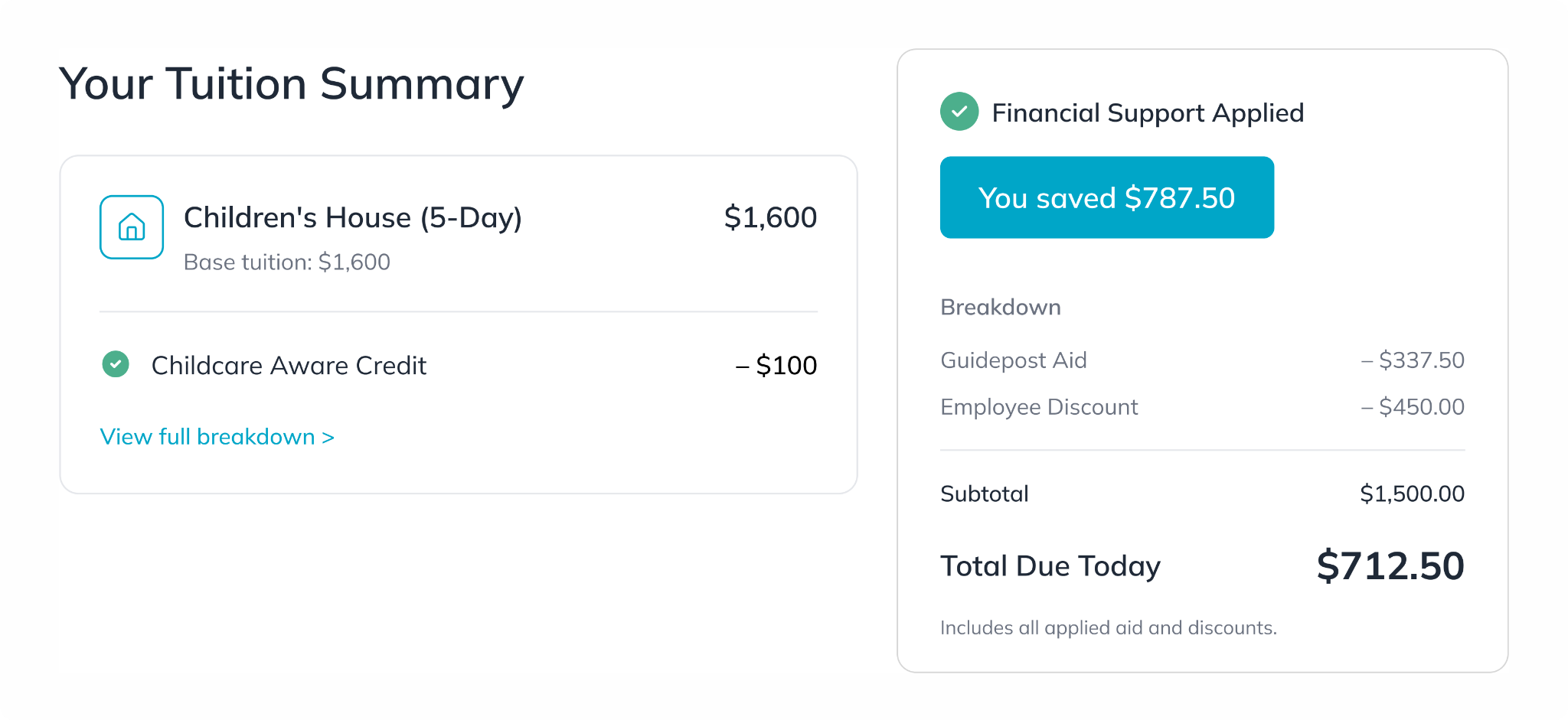
Once the subsidy is set up, illumine lets you apply the subsidy amount directly to the child’s invoice with one click. That means the invoice automatically reflects:
- What the subsidy covers
- What the parent still owes
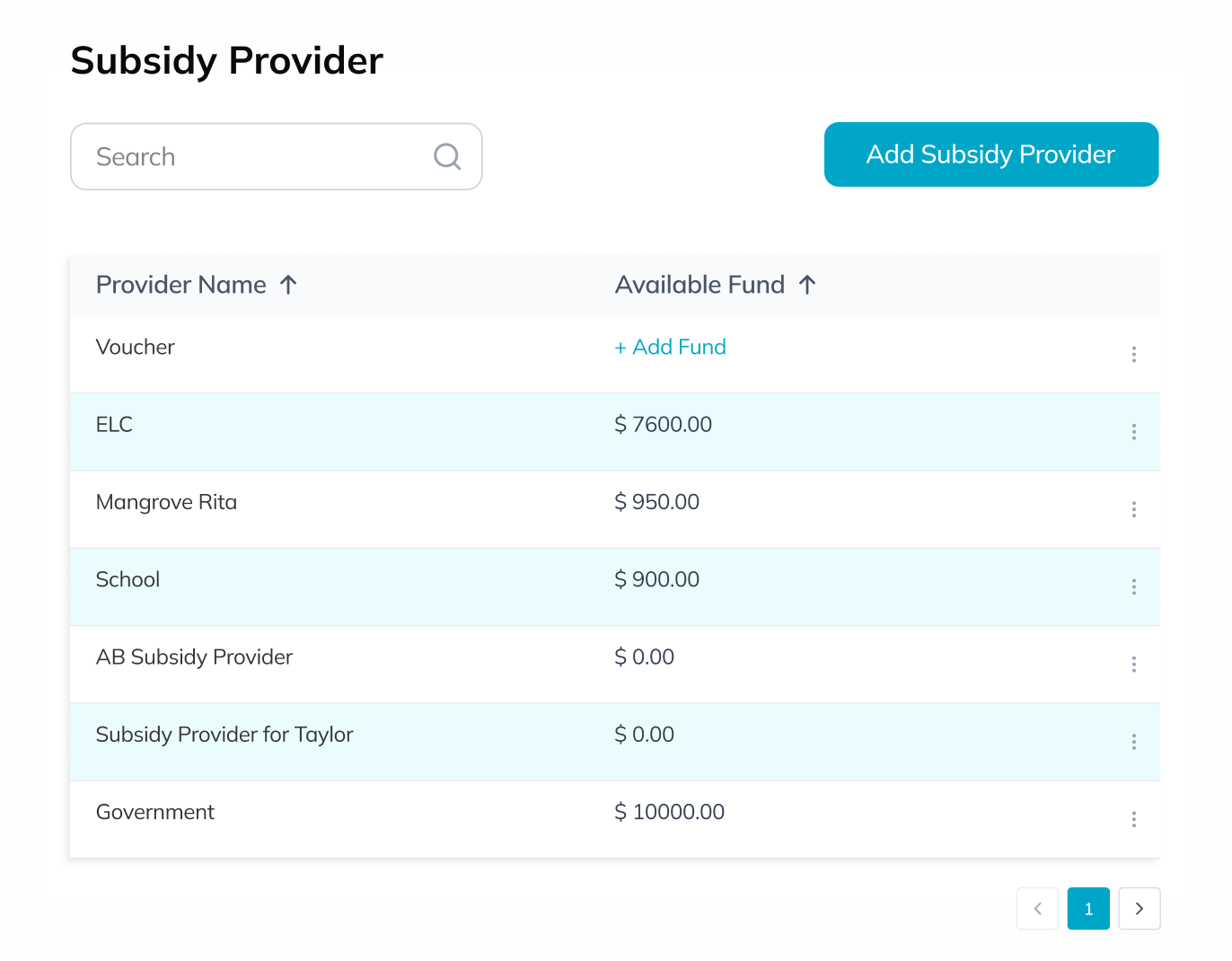
If you work with more than one organization (government program, voucher agency, foundation, employer benefit), you need one screen that answers:
“What’s the available fund for each provider right now?”
With illumine, you can add each subsidy provider and maintain the fund amount tied to that provider, so your team always knows:
- Which organizations are active
- How much funding is available per provider
- Where the money is coming from, without digging through old notes
illumine makes this easier by letting you view each child’s subsidy allocation clearly. So instead of wondering “what is this child approved for again?”, your team can see:
- How much subsidy the child is entitled to
- Which provider is covering it
- What portion belongs to subsidy vs parent pay
No manual recalculation. No “let me update the invoice later.” No accidental underbilling.
Bottom line: You get a clean, centralized list of all subsidy providers and their available funds so your billing stays accurate without extra admin effort.
2) Remittance Tracking in One Place
This is where subsidy management usually breaks. Payments come in late, partial, or in batches, and teams struggle to match them back to invoices and children.
With illumine’s Remittance view, you can track for each provider:
- The invoices covered by that provider
- What amount has been remitted
- What amount is still pending
- What was transferred or written off (when applicable)
- Notes on the remittance entry (so follow-ups don’t get lost)
And when you receive a payment, you can apply remittance directly, log the amount, and keep the remaining balance visible.
Bottom line: you don’t need a separate spreadsheet to track pending subsidy money. It’s already mapped to the invoices.
3) End-to- End Subsidy Tracker
Subsidy is not just “a discount.” It’s a child-specific entitlement tied to:
- A specific provider
- A specific rate or amount (daily or monthly)
- A specific billing cycle
illumine makes this easier by letting you view each child’s subsidy allocation clearly. So instead of wondering “what is this child approved for again?”, your team can see:
- How much subsidy the child is entitled to
- Which provider is covering it
- What portion belongs to subsidy vs parent pay
When rates change by day or month, subsidy math becomes the easiest place for errors to creep in.
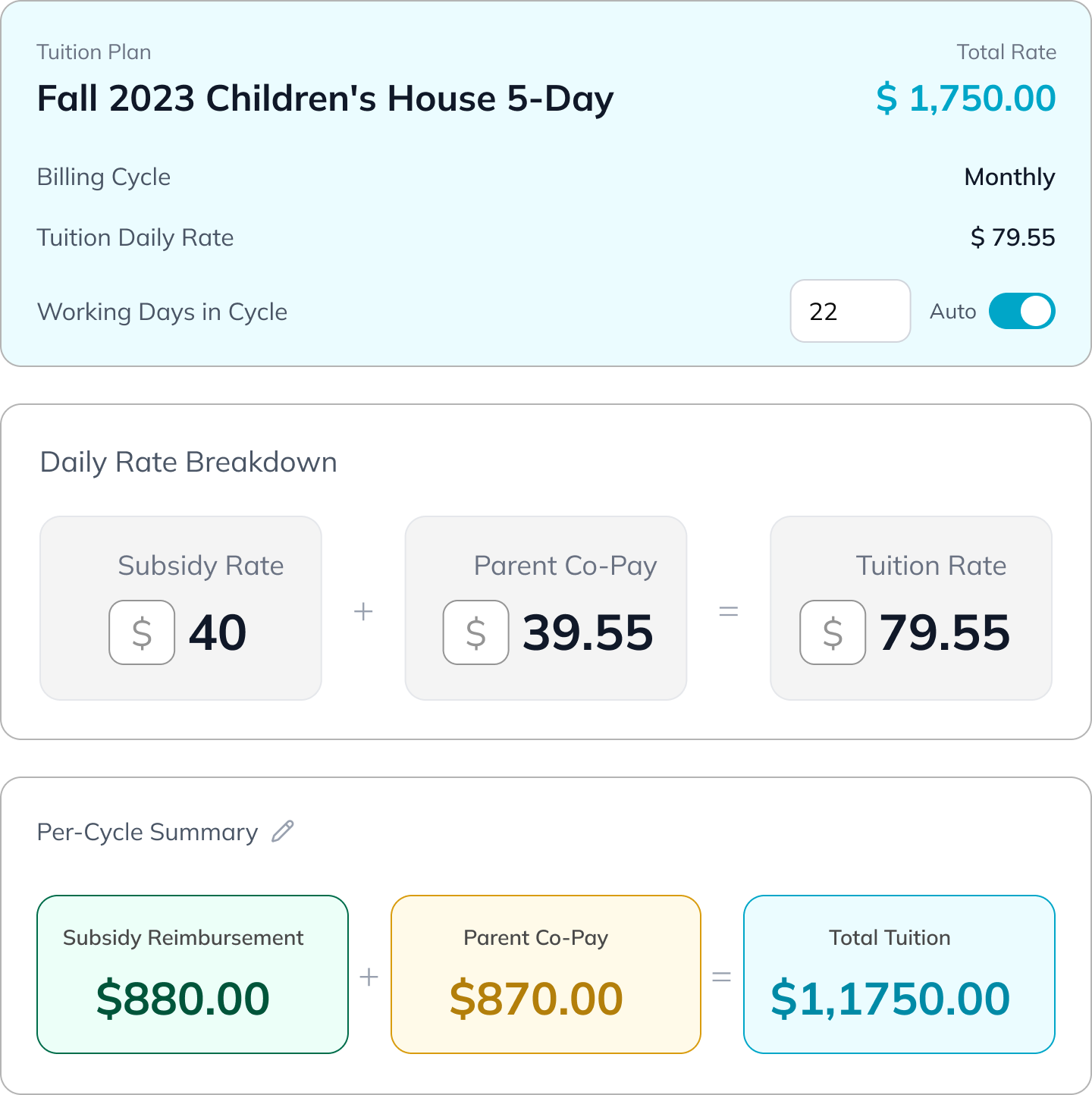
illumine includes a subsidy calculator that helps your team define:
- Subsidy rate (daily or monthly)
- Parent copay
- Total tuition rate
So everyone sees the breakdown clearly and consistently.
Bottom line: subsidy stays connected to the child, so there are fewer corrections, fewer disputes, and fewer missed dollars.
4) Robust Reporting Features
When subsidy data is organized, reporting becomes easier, too.
Instead of pulling numbers from 3–4 places, you can use financial reports to track payments and collections across date ranges and keep records cleaner for audits and reviews.
Bottom line: reporting becomes a by-product of good tracking, not an end-of-month panic task.
Stop the Leak with the Better Subsidy Management Apps
Poor subsidy management rarely looks like one big mistake. It’s the small gaps that quietly add up:
- delayed reimbursements
- underbilling from tracking errors
- hours spent chasing paperwork
- uncertainty around what’s still pending
With illumine, your team gets a single workflow to manage subsidy providers, apply subsidies to invoices, and track remittances without spreadsheets or guesswork.