
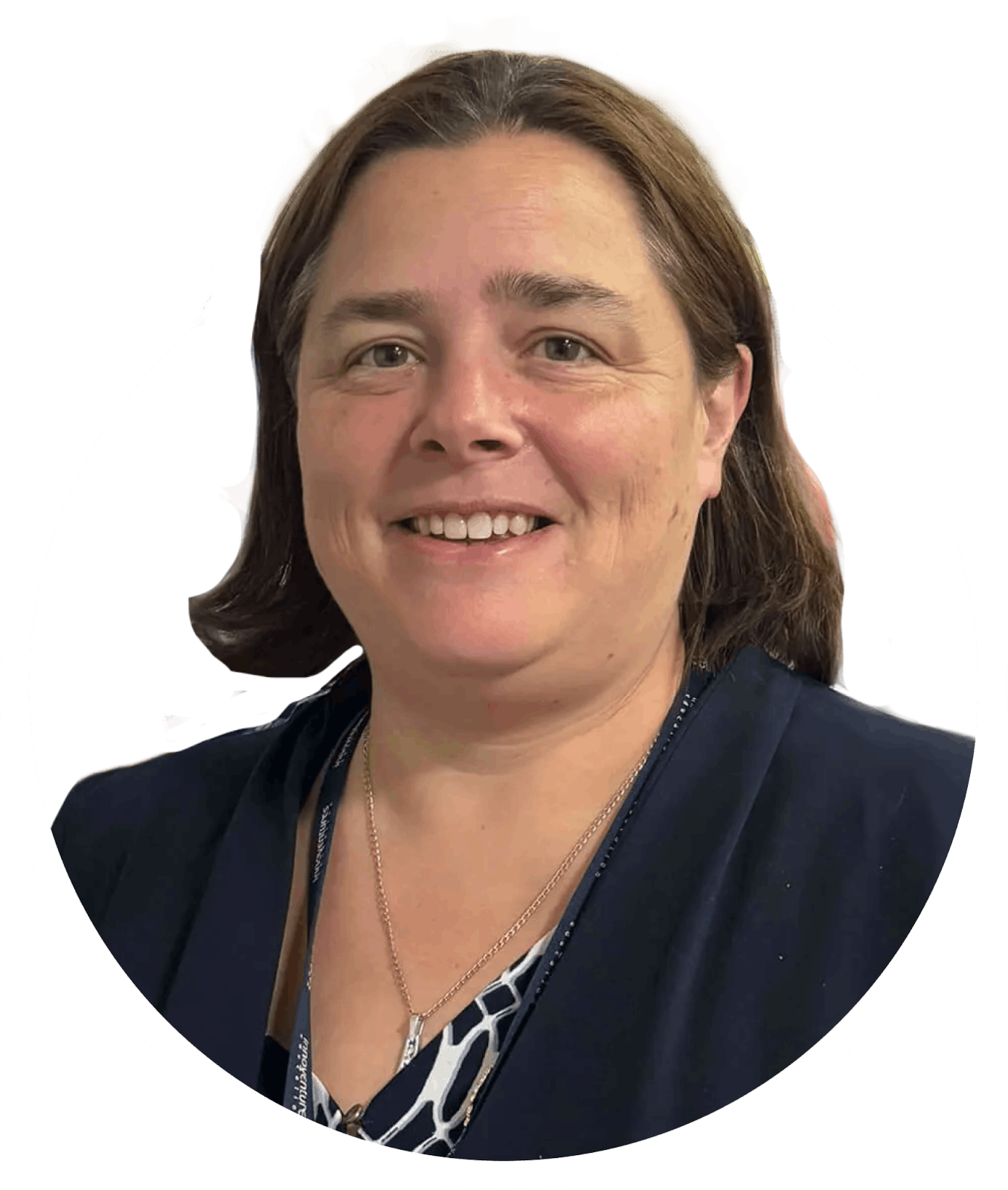

Lesson planning should help educators respond to children, not just fill in a weekly template or repeat last year's activities. In this session, part of our nursery toolkit series, Lara Hudson, Early Years Leader and Education Strategist, and Elizabeth Fields, VP of Curriculum and Professional Learning at Learning Beyond Paper, joined Purva Goyal, Co-Founder and Chief Product Officer of illumine, to look at how nurseries can plan with purpose without adding to teachers' paperwork. This is the written recap. The full recording is at the top of this page.
Speakers
Lara Hudson, Early Years Leader and Education Strategist; Elizabeth Fields, VP of Curriculum and Professional Learning, Learning Beyond Paper; host Purva Goyal, Co-Founder and CPO, illumine
Best for
Nursery owners, heads of early years, curriculum leads and teachers
Session length
62 minutes
In this recap
Why planning gets stuck, the planning cycle, long, medium and short-term plans, balancing child-led and adult-led learning, the environment, planning for every child, involving families, what a structured curriculum offers, a product walkthrough and the questions answered live
Key takeaways
- Start planning from what you observe in children, not from themes and calendar dates alone.
- Assess each area of learning separately. A two-year-old may be ahead in language and behind in personal and social development.
- A plan should be a living document, full of notes and reflections, not something filed away and never seen again.
- Plan at three levels: a long-term plan for the year, a medium-term curriculum map and short-term weekly or daily plans.
- Keep a balance of child-led, adult-guided and adult-led learning. Too much of any one loses the richness.
- Change your environment as children change, but change one aspect at a time so they still feel secure.
- Share a curriculum map with families at the start of the year, with ideas for supporting learning at home.
- Build reflection into every plan. It is where you see what is really working for your children.
Where planning starts
An opening poll asked where attendees' weekly planning usually starts. The results were almost an even split between children's observations and themes and calendar dates. Elizabeth said themes and dates are often a comfortable starting point, especially in the US, but for her, planning starts with observations. Lara agreed, and added a concern: many settings reuse the same plans year after year on the basis that if it is not broken, there is no need to fix it, even though the children change every year.
Why planning gets stuck
Every setting plans differently, Lara said, so it helps to start with why we plan at all:
Meeting every child's needs
And their interests too. Know your children well enough to know what they enjoy and what they do not.
Progression
Build on the skills children already have and keep moving them forward, rather than letting them stand still.
Making learning visible
For children, for your teaching teams and for parents, who Lara said should see it almost as a return on their investment.
Where it goes wrong, she said, is when plans are written, put in a folder and never looked at again, when every class has the same plan even though the children are different, and when teachers are left guessing because nobody showed them how the setting expects them to plan. She recommended building planning into staff induction, so everyone works to the same expectations even if each class does things slightly differently.
The gap is not what your team knows, it is what the week allows.
What good planning looks like
Lara took attendees back to the planning cycle most teachers learn in training but are rarely reminded of:
- Observe
- Assess
- Plan around needs and interests
- Bring it to life
- Reflect
- Observe. Give yourself time just to watch children play and interact. Continuous provision is a fantastic time to see children at their most natural.
- Assess. Ask what children know and what their natural next steps are. Look at each area of learning separately, because a child can be at different stages in different areas.
- Plan. Bring together the needs and interests you have identified. It will never be one size fits all.
- Bring it to life. Make learning interactive, so children live and breathe what is happening in the classroom.
- Reflect. Note on the plan what worked, what did not and why. This is the step most often forgotten.
Tailoring matters more than ever, Lara said, because the new age cutoffs mean a much wider range of ages in a single class. Starting with the 2026-27 academic year, according to Gulf News, the UAE moved the age cutoff for kindergarten (KG) and Grade 1 admissions from August 31 to December 31 of the admission year, for schools starting in September.
On reflection, she shared a recent example. A teacher had put out an activity for measuring, and the children tied knots instead. It was not what the teacher planned, but it was still great learning, and that is exactly what reflection should capture.
Plan at three levels
Long-term plan
The whole year: calendar dates, events and deadlines such as when progress reports are due and when teachers should start writing them. If you use themes, keep them abstract, such as up in the air, so teachers can take them their own way.
Medium-term plan
Half-termly, monthly or termly, often as a curriculum map. Set out the learning areas and milestones you will focus on, the books you will use and the experiences that take learning beyond the classroom.
Short-term plan
Weekly, daily or by topic. Document it and make sure your team knows what you expect from your planning templates.
Leave room to go off script
As much as she likes to plan, Lara said, teachers should know it is fine to drop the plan when children are not interested or find something better. Her favorite example was a dead bee a child found in the play area. The class dropped the theme, asked how bees live and whether they have friends, visited an apiary, and then asked whether honey tastes different when it comes from different flowers. None of it could have been planned.
That kind of in-the-moment planning is magical, she said, but it puts a lot of pressure on new practitioners. It takes experience to pivot quickly and follow children's interests, so build your team up to it gradually rather than starting it from the first term.
Balance child-led and adult-led learning
Lara described planning as a continuum of play, and a balancing act:
Child-led
Where much of the richest learning happens.
Adult-guided
Gently focusing children where you want them to go, so learning stays holistic.
Adult-led
Usually where programmed teaching such as phonics sits, so children move forward.
Curricula that are only adult-led, or only child-led, lose that richness and layering, she said. Elizabeth called it almost a dance: knowing when to step in, when to lead and when to follow. It does not happen naturally, she said, and Lara suggested watching how a colleague does it, because it is a skill teachers build over years.
Your environment is a third teacher
We know the value of the environment, Lara said, yet it is often overlooked. She recently visited a classroom that had not changed since the start of term and asked the teachers whether their children had changed. In another, a teacher noticed a child struggling and immediately changed something in the room. Her advice:
- Change it as children change. But not so often that children feel unsettled. Look for when they are bored or leaving an area, and often change one aspect rather than everything.
- Reflect children's interests. If a child loves fairies, put fairies somewhere in the provision, perhaps mixed with numeracy or patterns.
- Layer your resources. Do not order the same things every year. Build on a base kit, and make sure a three-to-four-year-old room offers more challenge than a one-to-two room.
- Try parking play. When something cannot move, such as a fixed lesson or lunch, leave a sign on what children were playing with so they can come back to it and continue their thinking.
- Use outdoors whenever you can. Children learn different things outside, so make the most of the months when it is cool enough, even for snack time.
- See the room at the children's level. Lara described a specialist who photographed every room from children's height. Often, all children could see was cubbies.
Ask yourself what children can do independently in each area every day, she said.
Planning for every child
Every child needs their own profile across the areas of learning, linked to age-appropriate next steps, Lara said. She also highlighted:
Additional needs
All children have needs, but where a child could benefit from support or outside help, act as early as possible and build partnerships with specialists.
Home languages
Recognize multilingual and bilingual pathways. Lara said she values that illumine can translate updates, so parents receive information in a language they fully understand.
Culture and identity
Make sure every child sees a sense of belonging in the room. In diverse settings, that has to be embedded in practice, not treated as a checklist.
Purva noted that this matters just as much in the UAE as in Florida, where Elizabeth is based, because both have such diverse communities.
Bringing families into planning
Many parents work long hours, Lara said, and some settings mostly see nannies at pickup, so information has to be easy for families to reach. Her recommendations:
- Share a curriculum map, not your plans. At the start of the year, show what children will learn each term, the milestones and, most importantly, how parents can support at home. Parents often want to help but do not know how.
- Give families a voice. Invite parents to respond to what you share, even if they cannot come into the setting often.
- Send daily snapshots. So families can talk with their child at home about real things that happened, which especially helps children who are still developing language.
- Agree on next steps together. Share what the child does well, then what you will work on in partnership. For Lara, that is often independence and resilience.
A second poll asked how many hours a week attendees spend on planning. The most common answer was two to five hours, with some spending five to ten. Lara added that planning often involves several people, not just one teacher.
What a structured curriculum can offer
Elizabeth explained the thinking behind Learning Beyond Paper. It is inspired by Vygotsky's social constructivist approach: children do not simply absorb knowledge, they build understanding through exchanges with peers, teachers and families. A curriculum sets the goals, she said, but teachers' responsive interactions bring them to life. She described what that looks like in practice:
A full year of lessons
Elizabeth said it includes 52 weeks of lessons and more than 4,000 ready-to-use activities across age groups, replacing binders and PDFs and using materials you already have.
Interactions built in
Each activity sets out its objective and the teacher talk to use: serve and return with infants, self talk with toddlers, parallel talk as they grow, and open-ended questions as they near school.
A developmental progression
Activities increase in complexity through the year, so children stay in their zone of proximal development, with scaffolding tips for individual needs in every activity.
Skills revisited in new ways
For example, counting through song one day and one-to-one correspondence while handing out snack another, with teacher reflections after each activity.
Home connections
Each week summarizes for parents the skills children are building, with conversation starters and tips for extending them at home.
Professional learning
On-demand training, plus guidance in each lesson that new teachers and assistants can follow.
The curriculum also covers every area of development and the four Cs of critical thinking, creativity, collaboration and communication, Elizabeth said, along with literature and activities that honor different celebrations and languages, and support for children with additional needs. A virtual instructional coach can suggest alternatives if you do not have the right materials, or adapt an activity that is too easy or too hard. She said the goal is to bring planning time down from around five hours a week to under two, so teachers can put that time back into relationships with children and families and into observation.
See it in action
Purva showed how lessons work inside illumine:
Your lessons in one place
In the learning and assessment section, see all the lessons in your curriculum, organized by area of learning.
Explore the lesson repository
From the same section, open the Learning Beyond Paper repository, organized by age group and area of learning, such as STEAM (science, technology, engineering, arts and math), language and literacy, physical development and music and movement, with lessons sequenced across the weeks.
Lesson details
Each lesson shows its topic, activity, objective and procedure, plus home connections and teacher reflections.
Add to your curriculum
Add lessons to your existing curriculum and build up your own lesson library.
Purva said a 30-day free trial of the repository is available from inside illumine. Learn more about nursery management software, assessment and teacher-parent communication.
Lara pointed out that summer is a good time for teachers to get ahead on planning, and Elizabeth encouraged attendees to try a lesson or two, because it is hard to see how much time you save until you do.
Questions from the session
How can we make this easier for teachers with around 20 children in a class?
Lara suggested taking your foot off the accelerator and building more time for play into the day. You are not observing all 20 children at once. Observe a few at a time, divide the class, and use your assistants, many of whom are very capable but underused. Rotate who observes which children, so you get different perspectives. Lara's guideline for the first term, about 16 weeks, is five to seven holistic observations and assessments per child, which she said is not a huge ask across a term, especially with a qualified teacher and support staff in most classrooms.
How do we align planning with observation and assessment when children join at different times?
An attendee asked because their setting does not run by terms. Lara said it is fine to acknowledge when a child who joined midterm does not have enough information yet for a full progress report. Use shorter snapshots, build each child's picture over time and make sure everyone who works with that child can contribute.
What does home voice in planning look like?
It can be as simple as a parent responding to an observation to say their child has never done that at home, or telling you they bought a book because their child loved it at nursery. You can also share a child's next steps and ask parents whether they agree and how they could support them at home. Every parent will contribute differently, Lara said, so offer as many ways as possible, and tell families during induction that you welcome their input.
Does the lesson repository need to be purchased after the trial?
Yes. Purva said the free trial lets you explore the repository, and continuing to use it as part of your curriculum in illumine requires a purchase. The illumine team can walk you through the options.
What is one material you never have enough of?
Elizabeth asked attendees this in the chat. Answers included sand, cotton, cars, glue sticks and glitter. For Elizabeth it was always sensory materials such as play dough and sand. Lara's is shaving foam, and she recently discovered psyllium husk, which can be colored and mixed with water to make a gloopy sensory material.
Resources mentioned
- The Nursery Lesson Planning Toolkit, emailed to attendees with the recording.
- A December webinar with Lara, the next session in the series.
- Earlier sessions in this series, recapped in The Nursery Observation Toolkit and The Nursery Assessment Toolkit.
Remember children don't always go in a straight line in one direction.
As Lara put it, learning is often a winding path, and teachers have to revisit, reinforce and repeat. For more, read our guide to preschool lesson planning, how childcare centers can use AI for lesson planning, teacher observations for nurseries in the UAE or how to write meaningful observations. To see how illumine supports planning and observation in your nursery, book a live demo.