

Lesson Plan for Preschool: A Practical Guide for Ages 2-6
Unlike in traditional classrooms, early educators are often managing children at different developmental stages, even within the same age group. That's where a strong lesson plan for preschool makes a real difference.
Some children may be just learning to express themselves verbally, while others are already forming friendships or recognizing letters. Add to that differing nap schedules, picky eaters, and the daily whirlwind of toddler energy. Improvising a teaching plan simply isn't an option.
Planning ahead gives teachers the structure they need to stay calm amid the chaos. It allows for flexibility, intentionality, and a child-centered approach that meets every learner where they are.
The crucial role of preschool lesson plans
The Important Role of Preschool Lesson Plans
Imagine it's circle time, and the children are restless. You planned a fun sing-along activity, but it falls flat because the lyrics are too complex. Frustration sets in, for both you and the children.
This scenario, unfortunately, is a common pitfall of unplanned lessons.
Here's why that well-worn preschool or pre k lesson plan deserves a place of honour in your early education toolkit:
- They set a clear direction: Lesson plans act as a roadmap, aligning daily activities with learning objectives to guide the development of social, emotional, cognitive, and physical skills.
- Keep preschoolers engaged: By channeling natural curiosity through songs, stories, and hands-on exploration, lesson plans transform the energy that kids have into focused learning.
- Individualize learning: They provide the structure to differentiate instruction and offer choices, ensuring each child is both challenged and supported at their own pace.
This article acts as a step-by-step guide to help you create lesson plans that suit every child's needs in an engaging way.
To Summarize
- Start with clear goals (physical, social, cognitive, language) and match activities to children's current levels.
- Plan around routines, use simple themes, and build in choice.
- Keep activities simple, interest-led, and age-appropriate.
- Use an approach that fits your classroom (Montessori, play-based, project-based) and a reusable template.
- Observe, reflect, and adjust your plan regularly.
- Use AI tools like illumine to draft engaging lesson plans faster and align them with early learning standards.
How to make a lesson plan for preschool: 7 simple steps
Preschool or pre k lesson planning can feel overwhelming. Here is a step-by-step guide to help you achieve the best results:
1. Define the goals of the pre k lesson plan
Clear goals keep your lesson plan focused and make it easier for teachers and parents to spot progress over time. Most preschool goals fit into four buckets:
- Physical goals: Fine and gross motor skills, like pencil grip, painting, climbing, cutting, buttoning, and tying shoes.
- Social and interpersonal goals: Skills like listening, following directions, turn-taking, patience, teamwork, and problem-solving during group play.
- Cognitive goals: Thinking and reasoning skills, built through puzzles, sorting, matching, simple math games, and quick "why do you think that?" moments during play.
- Language goals: Vocabulary and conversation skills through stories, songs, role play, skits, and everyday classroom talk.
2. Know your students
Capacity for learning and development changes rapidly across age groups. Hence, lesson plans should meet their specific needs at each stage. Here's a breakdown to help you understand your early learners and plan effectively:
| Age Group | Focus | Imagine Them | Lesson Plan Ideas |
|---|---|---|---|
| Nursery School (Ages 2–4) | Play-based learning with a focus on socialisation and basic skills | Busy little explorers learning through play. They are absorbing the world around them, experimenting with communication, and developing early social cues. | Sensory activities, circle time with songs and rhymes, simple art projects, dramatic play with dress-up clothes, and gross motor activities like climbing and running. |
| Preschool / Pre-K (Ages 3–5) | Building on early foundations while introducing basic learning concepts through play | Curious learners eager to explore. They begin recognising letters, numbers, and shapes, express themselves creatively, and build basic self-help skills. | Themed units (animals, seasons), counting games, letter recognition activities, creative art projects, pretend play, and simple science exploration. |
| Kindergarten (Ages 4–6) | Gradual transition to structured learning while supporting social and emotional growth | Energetic and enthusiastic learners refining fine motor skills, forming friendships, and grasping early reading, writing, and math concepts. | Reading readiness activities (phonemic awareness, sight words), basic math (addition, subtraction), hands-on science experiments, creative writing, and cooperative games. |
3. Choose routines over schedules
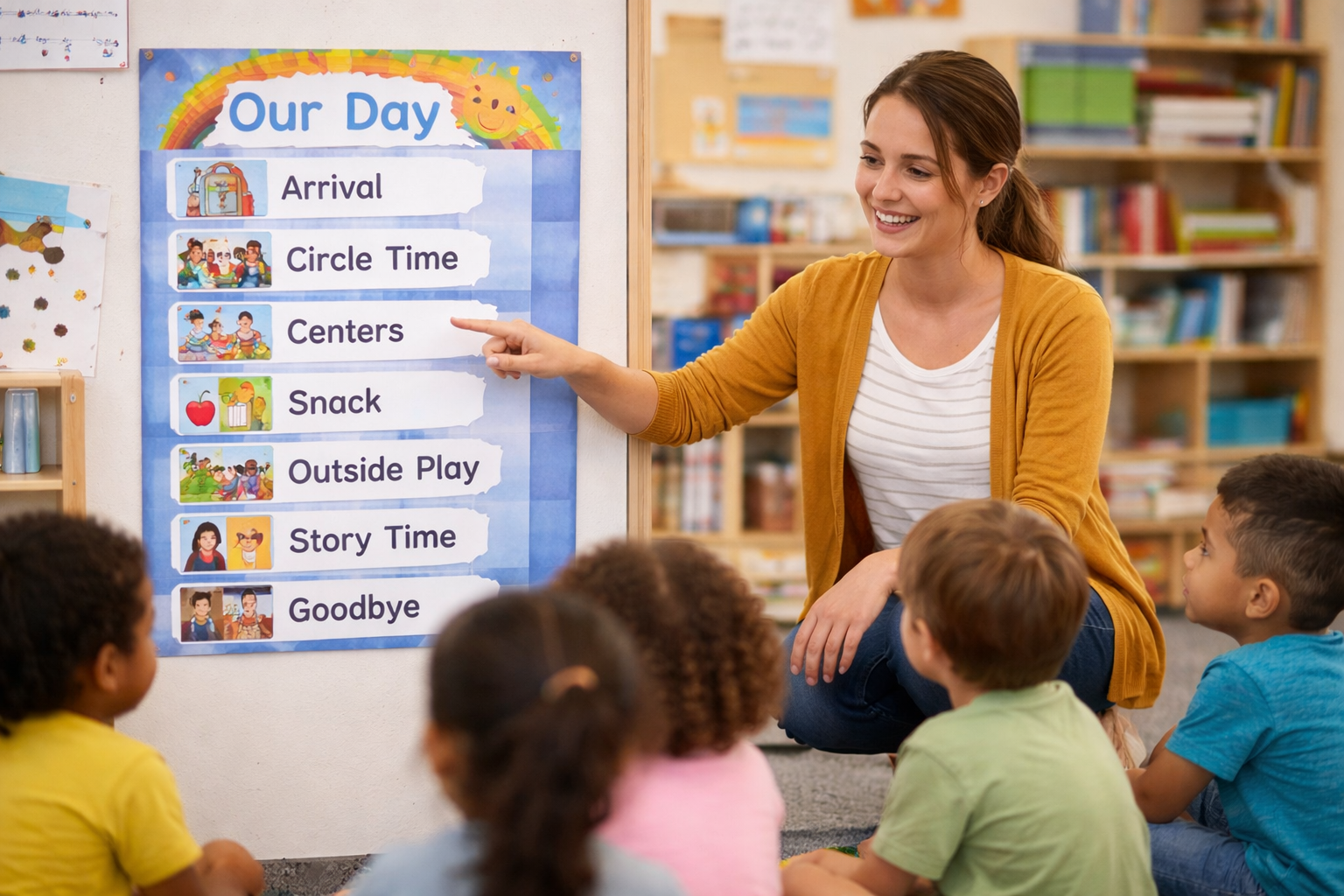
Preschoolers do better when they know what comes next. That doesn't mean every activity needs a fixed time.
A schedule plans the day by the clock.
A routine plans the day by order.
Schedule:
9:00–09:15 Circle time
9:15–09:45 Centers
Routine:
Arrival → Circle time → Centers → Snack → Outdoor play → Story time
With a routine, the order stays the same each day, but the timing can change. If children are deeply engaged in centers, you let it run longer. If energy is low, you move on sooner.
This keeps the day predictable for children while giving teachers the flexibility they need in a real preschool classroom.
4. Give children the freedom to choose
When children make choices, they build independence and learn to think for themselves. That's why it's important to include choice when planning lessons for preschoolers.
One simple way to do this is through free choice centers. These are lightly structured areas where children choose activities from a teacher-approved set of options.
As children play, they develop academic, creative, and thinking skills. Free play also gives you time to observe, step in where support is needed, and work more closely with individual children.
5. Match lessons to each child's development
Children in the same classroom learn in different ways and at different speeds. Some focus for long stretches, others need to move often. Some enjoy books, while others need more support with social interaction.
When planning preschool lessons, focus on what children are ready for right now. Identify the key learning goals for each child and adjust activities so everyone can participate and make progress.
Plan faster with AI
If you're short on time, illumine's AI can help you create a lesson plan based on age group, theme, and learning goals in less than 5 seconds. You can, of course, still review and adjust it, but you avoid the time consuming work.
CTA:
Create the best preschool lesson plans effortlessly
Button: Get a demo now
6. Use themes to connect learning
Themes help you group activities in a way that feels natural and engaging for young children. A single theme can connect literacy, math, art, movement, and play, making learning easier to follow and more meaningful.
Common preschool themes include:
- Animals
- Seasons
- Colors
- Shapes
- Nature.
When choosing a theme, think about children's interests, their developmental stage, and what materials you already have available.
Themes also support different skill areas.
An animal theme might include drawing or cutting to build fine motor skills.
A seasons theme can include nature walks or movement games to support gross motor development.
Color themes work well for painting, sorting, and early language use.
7. Choose a lesson planning approach + free example templates
Choosing the right preschool lesson planning approach helps you design lessons that actually work in your classroom. The approach you use should match your teaching style, the children's needs, and your program goals.
Here are a few common approaches teachers use:
- Thematic approach: Plans learning around a central theme (seasons, animals, community helpers) and connects activities across subjects like art, language, and math.
- Play-based approach: Uses open-ended play to support creativity, problem-solving, and social development.
- Montessori method: Focuses on self-directed learning with hands-on materials and individual pacing.
- Project-based learning: Explores one topic in depth over several days through group projects and investigation.
- Reggio Emilia approach: Encourages child-led exploration and creative expression, with the environment playing an active role in learning.
- Academic or skills-based approach: Uses structured activities to build early literacy, numeracy, and cognitive skills.
No matter which approach you choose, using a simple template helps you repeat what works and reduce planning time. At a minimum, your template should include the goal, materials, activity outline, routine block, and what you plan to observe.
Free preschool lesson plan templates
Template 1: Daily Preschool Lesson Plan
[Template placeholder]
Template 2: Preschool Weekly Lesson Plan
[Template placeholder]
CTA: These were created in less than 5 seconds!
Button: Explore How
6 Tips for Writing Effective Preschool Lesson Plan Ideas
- Define the purpose
Every activity in your lesson plan should serve a clear purpose. Before adding something, ask yourself what skill it supports and why it matters. Along with academic skills, make space for social and emotional learning, since these play a big role in early development.
- Keep activities simple
Simple activities often work best with young children. They give kids room to explore, repeat, and build skills at their own pace. When children are ready for more challenges, you'll usually see it through their play. Overly complex tasks can confuse them and reduce engagement.
- Plan around student interests
Lesson plans work better when they reflect what children care about. Choose themes that spark curiosity and look for ways to build learning around their favourite toys, stories, or activities. Interest-driven planning keeps children more focused and involved.
- Prioritise play-based learning
Play is how young children learn best. Make sure your pre-kindergarten lesson plans include plenty of uninterrupted playtime. Set up your classroom with open-ended materials like blocks, art supplies, musical instruments, and sensory tools so children can explore and learn through play.
- Write it in a way that works for you
There's no single right way to write lesson plans. Some teachers plan by time blocks, others by subject or activity type. Some prefer bullet points, others short paragraphs. Choose a format that feels easy to use and review.
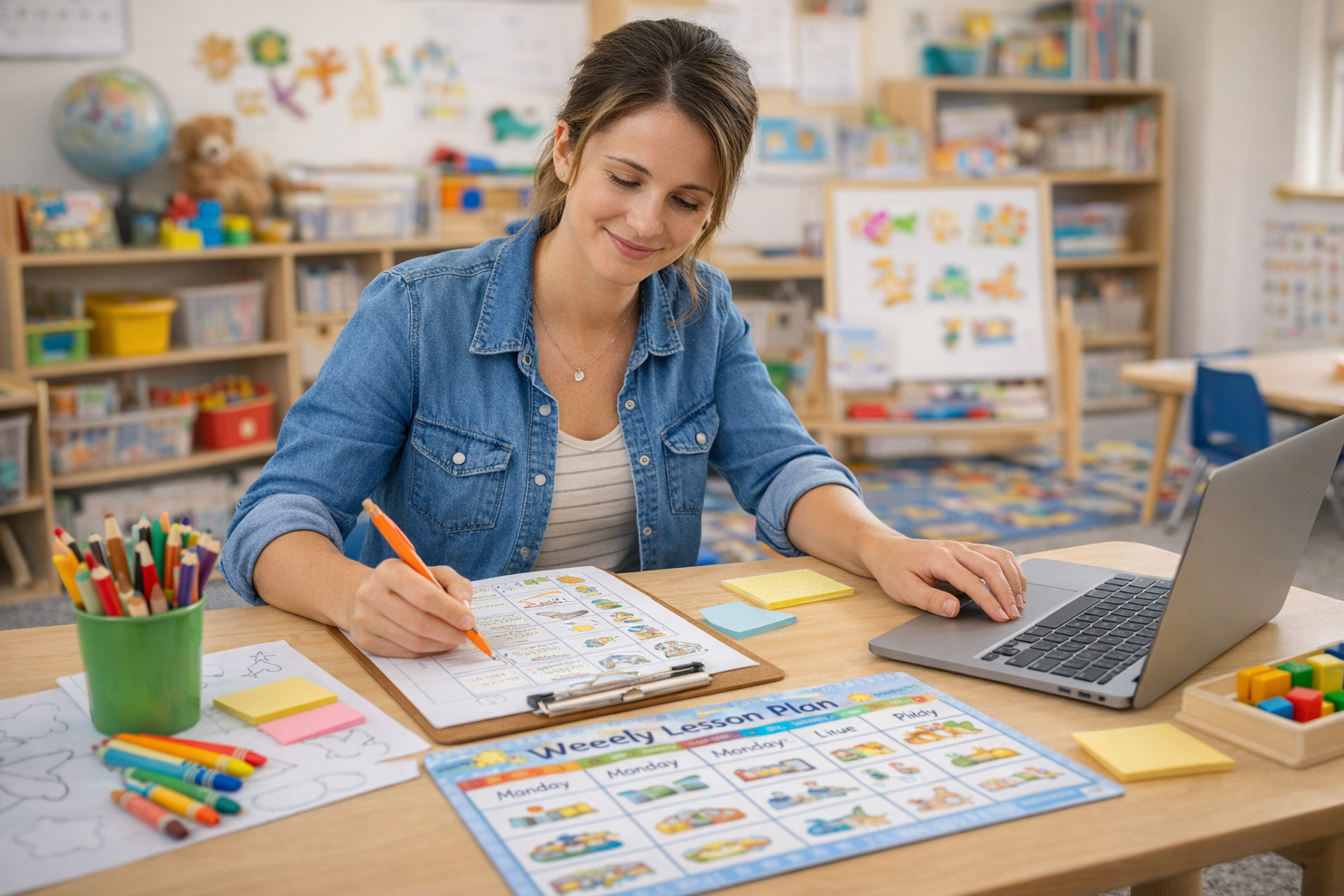
Using a preschool lesson plan template can help you stay organised. A good template saves time and keeps your daily and weekly plans consistent. Always include the basics: materials, activity outline, and learning goal. Knowing the "why" behind each activity helps you stay focused and make better adjustments.
- Assess and adjust regularly
Assessment helps you understand what children are learning and where they may need more support. In preschool, this often looks like observation during play, simple play-based checks, and reviewing work samples or projects.
Watch how children engage, take note of strengths or challenges, and adjust future lessons as needed. Keep individual needs in mind and use what you observe to guide your planning. This helps every child continue to grow and progress at their own pace.
Final Thoughts
Preschool lesson plans are essential for providing young children with a solid foundation for future learning. By incorporating themes, assessing and evaluating children's progress, and considering their individual needs and abilities, preschool teachers can create effective lesson plans for preschools that promote engagement, motivation, and learning.
With the right tools and resources, preschool teachers can help children develop the skills and knowledge they need to succeed in school and beyond. By leveraging AI-driven lesson planning tools, teachers can ensure that lesson plans are structured, personalized, and aligned with early learning standards, making early childhood education more efficient and impactful.