




Compliance is always on the back burner.
For many Florida directors, the day is spent putting out fires — managing staff, comforting families, covering classrooms, and troubleshooting ratios. As a result, DCF or VPK compliance often becomes a last-minute scramble when deadlines creep up.
But something shifts when you stop seeing compliance as a checklist to avoid penalties and start viewing it as a growth lever for your school. Centers that consistently earn trust in their communities, maintain strong enrollment, and run smoother operations all have one thing in common: compliance isn't an event. It's part of their everyday rhythm.
And that only happens when compliance tasks are woven into the systems and procedures of the school — clear routines, predictable cadences, and a shared sense of responsibility across the entire team.
Which brings us to the heart of the challenge: even the best system fails if new teachers don't know how to operate within it.
This guide breaks down how to coach your staff and teachers so that VPK compliance is stress-free:
How to Encourage a Culture of Compliance Through Training
Clear systems turn compliance from "something directors chase" into "something the whole team carries." A simple attendance workflow, a weekly documentation check, or a monthly curriculum review can remove hours of stress later.
That's why training is the engine of consistency. To build a team that supports your compliance rhythm, you need two coaching approaches: one for new teachers and one for VPK-certified instructors.
Let's break down what works for each.
How to Coach New Teachers for VPK Compliance
New teachers often enter childcare enthusiastic and eager to help, but they may not yet understand the specific expectations that come with working in a Florida preschool — especially when it comes to VPK and DCF compliance. They need clarity, structure, and patient guidance to feel confident in their roles. Most importantly, they need coaching that helps them translate regulations into consistent daily habits.
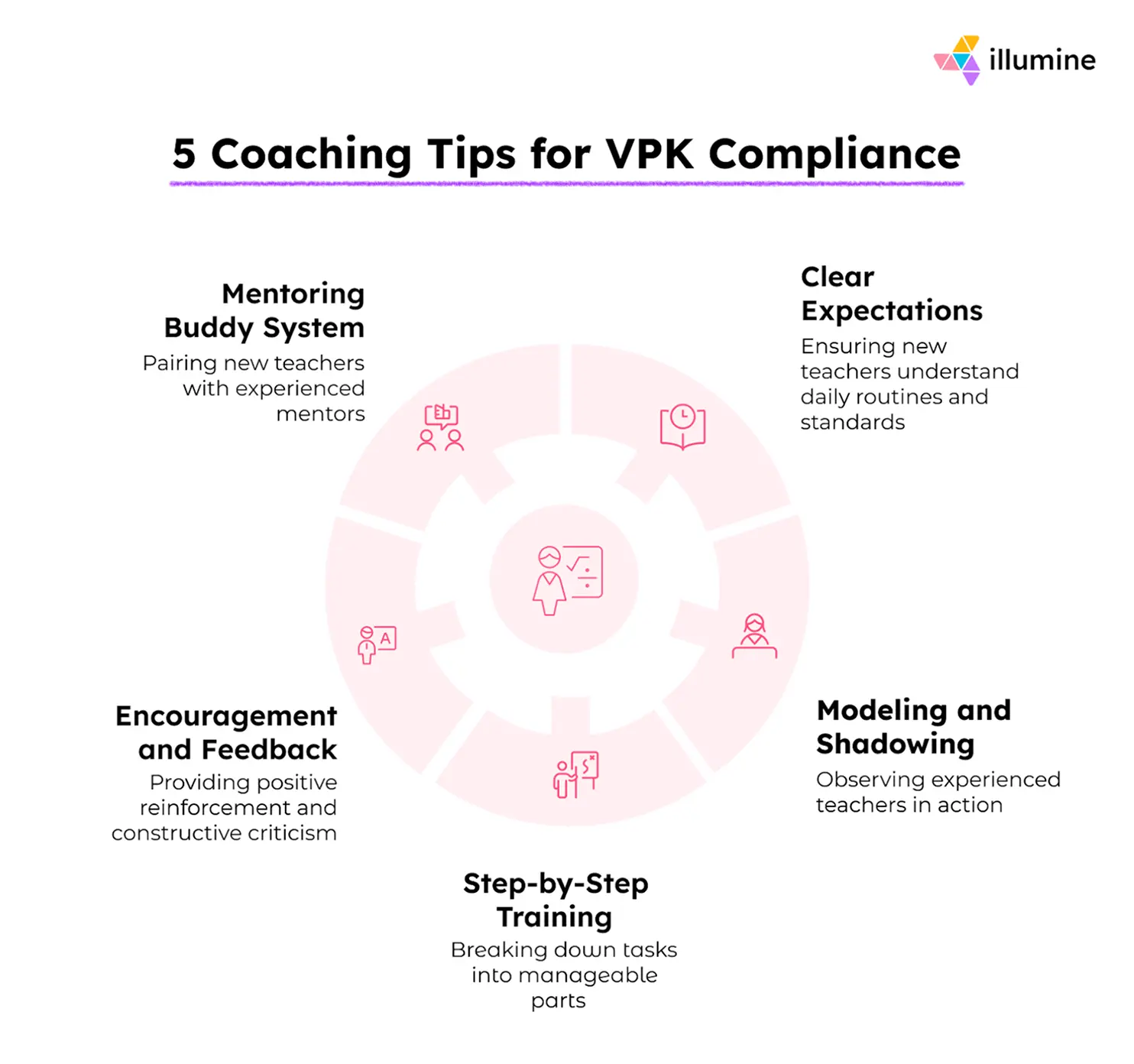
1. Clear expectations
New teachers thrive when they know exactly what's expected of them. From the very beginning, they should be introduced to your center's daily routines, ratio requirements, safety procedures, and documentation standards. Many compliance issues arise simply because a new teacher isn't yet aware of the small but important rules that shape supervision, attendance, or classroom management. When expectations are stated clearly — and repeated often — new staff feel more grounded and make fewer missteps.
2. Modeling and shadowing
Observation is one of the most effective training tools you can offer. Allow new teachers to shadow seasoned staff during circle time, transitions, outdoor play, and other high-movement periods. Watching an experienced teacher manage ratios, monitor multiple small groups, or complete documentation smoothly gives new staff a sense of what "right" looks like in real time. Modeling removes guesswork, reduces anxiety, and speeds up skill development.
3. Step-by-step training
Many essential tasks in childcare — such as diapering, handwashing routines, lesson setup, or VPK documentation — have detailed steps tied directly to compliance. Break each of these responsibilities into manageable parts and demonstrate them slowly, explaining the "why" behind each step. Then allow the new teacher to practice alongside you before trying independently. This hands-on, incremental approach builds confidence and creates the consistency your systems rely on.
4. Encouragement and feedback
The early weeks can feel overwhelming for new teachers, and many worry they're "getting it wrong." Frequent, gentle feedback helps them understand where they're improving and where they need support. Celebrate small wins, such as a smooth transition or accurately completed attendance sheet, and offer corrections in a calm, supportive tone. This not only strengthens performance but also builds trust — a key ingredient in successful coaching relationships.
5. Mentoring buddy system
Pairing new staff with a more experienced teacher accelerates onboarding tremendously. A mentor can explain the nuances of your center's culture, paperwork routines, classroom strategies, and compliance expectations far more effectively than a manual or orientation checklist. Mentorship also gives new teachers a safe person to ask questions, observe in action, and learn from — reducing turnover and helping your systems stick.
Tip Box
💡Tip:
Short, frequent coaching check-ins — even 10 to 15 minutes daily at first — reinforce learning and prevent misunderstandings from turning into compliance issues.
How to Coach VPK-Certified Teachers
VPK-certified teachers enter your program with deeper training, formal credentials, and a strong understanding of child development. Their coaching needs differ significantly from those of new staff. Instead of learning the basics, they benefit most from opportunities that refine their practice, strengthen leadership skills, and support high-quality, data-informed instruction. When coached well, VPK teachers become anchors of stability across your center — raising professionalism and helping newer staff learn the culture of compliance and consistency.
.webp)
1. Respect for expertise
Coaching experienced VPK teachers begins with acknowledging the knowledge and experience they bring. These teachers already understand classroom management, developmentally appropriate practice, and Florida's VPK performance standards. They need a collaborative coaching approach — one where their insights are valued, and their judgment is trusted. When they feel respected, they become more open to feedback and more invested in improving the overall quality of your program.
2. Professional growth opportunities
VPK-certified teachers thrive when they are challenged in meaningful ways. Offering opportunities to attend workshops, join curriculum committees, or participate in conferences keeps them engaged and motivated. They appreciate coaching conversations that stretch their thinking, deepen their instructional strategies, and help them grow beyond day-to-day responsibilities. Investing in their professional growth not only strengthens classroom quality but also signals that you see them as long-term contributors.
3. Data-driven reflection
Unlike new teachers, VPK instructors are ready for reflective coaching grounded in data. Using child assessments, observation notes, and VPK readiness scores allows them to identify patterns and refine their instructional approach. These conversations help teachers connect their daily practice with measurable child outcomes. They also build a habit of reflective teaching — an essential skill for maintaining VPK quality standards and preparing children for kindergarten.
4. Collaboration on curriculum
Experienced teachers appreciate having a voice in shaping classroom experiences. Inviting them to co-design lesson plans, enrichment activities, or parent education nights gives them ownership and helps align the curriculum with VPK standards. This collaborative approach also raises the overall quality of instruction and models strong professionalism for the rest of the staff.
5. Leadership pathways
Many VPK-certified teachers are natural leaders who want opportunities to mentor others, share best practices, and influence the program. Encouraging them to lead team meetings, support onboarding for new staff, or take on roles such as lead teacher or program coordinator helps develop leadership capacity within your center. This not only supports succession planning but also strengthens culture and consistency.
Tip Box
💡Tip:
: Longer, less frequent coaching sessions — such as biweekly or monthly meetings — are ideal for experienced teachers. These sessions should focus on reflection, goal-setting, and growth, rather than the daily basics they already manage well.
Bringing Both Coaching Approaches Together
Effective coaching isn't about choosing one type of teacher to invest in. A strong Florida childcare center grows when both new teachers and VPK-certified educators receive the support they need at the right level. New teachers bring enthusiasm and fresh energy, but they often require structure, modeling, and reassurance. VPK-certified teachers bring depth, experience, and a solid understanding of child development, but they need space for leadership, reflection, and professional growth. These two groups complement each other — and when coached intentionally, they strengthen each other.
The key is recognizing that coaching should not look the same across your staff. New teachers benefit from frequent touchpoints and hands-on practice, while experienced VPK instructors thrive with deeper, less frequent sessions grounded in data, curriculum work, and leadership opportunities. When directors tailor their approach rather than applying a one-size-fits-all model, they create a culture where every teacher feels supported in ways that match their experience and responsibilities.
This balance also reinforces your compliance systems. New teachers learn how to protect ratios, record attendance accurately, and follow safety routines without hesitation. VPK educators support the program's instructional quality, collaborate on lesson planning, and help uphold documentation standards tied directly to VPK outcomes. Together, the two groups create a cycle: experienced teachers elevate the standard, and new teachers learn to meet it. Over time, this shared consistency becomes the backbone of your center's daily operations.
A healthy center is one where new teachers feel safe to grow and where certified teachers feel trusted to lead. When both groups receive coaching that reflects their needs, the result is a stronger team, more predictable compliance, and a classroom environment that benefits the children you serve.