





Today, Montessori schools are competing not only with other educational options but with a cultural shift in how parents think about education.
The difference between a family that stays and one that leaves isn't just about your program's quality—it's about whether they feel that value every single day. In a landscape where parents are informed, connected customers, steady and strategic communication is what builds the engagement that drives retention.
Apathy is the real danger. We cannot afford to let families drift because they don't feel connected or inspired. Your communication isn't just sharing news; it's your primary tool for delivering value, proving your difference, and securing their commitment.
Here, we outline the communication practices that strengthen trust, build genuine partnership, and ensure families remain proud members of your community.
8 Ways to Communicate With Families and Keep Them Engaged
1. Build Trust From the First Conversation
.png)
A family begins forming opinions about your school long before the first day of class. The tour, the enrollment conversation, and the welcome meeting—all shape how they feel.
Many schools think that once the paperwork is complete, the relationship will take care of itself. It rarely does, as strong relationships grow from careful and respectful onboarding.
During the onboarding process, explain your values and expectations to families. Also, help them understand what Montessori education truly means.
You might share:
- Why Montessori does not rely on homework or grades
- How children learn through purposeful activity and freedom within limits
- What it means for the teacher to guide rather than lecture
- How parents can support independence and concentration at home
Speak openly about your expectations for families. This includes:
- Punctuality
- Limits on screen time
- Participation in school life
- Respect for the child’s growing independence.
These ideas should not be hidden in a handbook; they should be part of the first conversations.
When parents understand the “why” behind your decisions, they feel respected. They settle into the community with more trust and comfort.
2. Close the Gap With Consistent, Personal Outreach
Retention depends on more than tuition or program quality. It depends, more than anything, on how connected parents feel to their child’s experience.
Parents rarely leave over one issue; they leave when they feel distant. Disconnected information due to multiple disconnected teachers at a center can make families feel even more distant.
The solution is consistent communication that keeps them emotionally invested and proud to belong.
This means a rhythm of communication that builds trust, not just more information. Here are key ways to communicate with parents that make a real difference:
- Monthly teacher check-ins: A brief personal message highlighting a child's progress makes a family feel seen.
- Narrative reports: Share a story of what a child is mastering, helping parents see the real value of the work.
- Frequent parent gatherings: Offer short sessions on topics like supporting independence at home.
- Two-way communication: Ensure parents have an easy way to ask questions and get thoughtful responses.
Parents do not expect perfection. They crave partnership. When they feel known and supported, their loyalty remains steady.
3. Positive Communication With Parents to Build Trust
Good communication is not only about formal updates. It also comes from everyday habits that show parents they are respected partners in their child’s education. This positive communication with parents builds the foundation of a lasting relationship.
These everyday habits create trust. Trust keeps families close to the school.
4. Use Research to Strengthen Your Communication
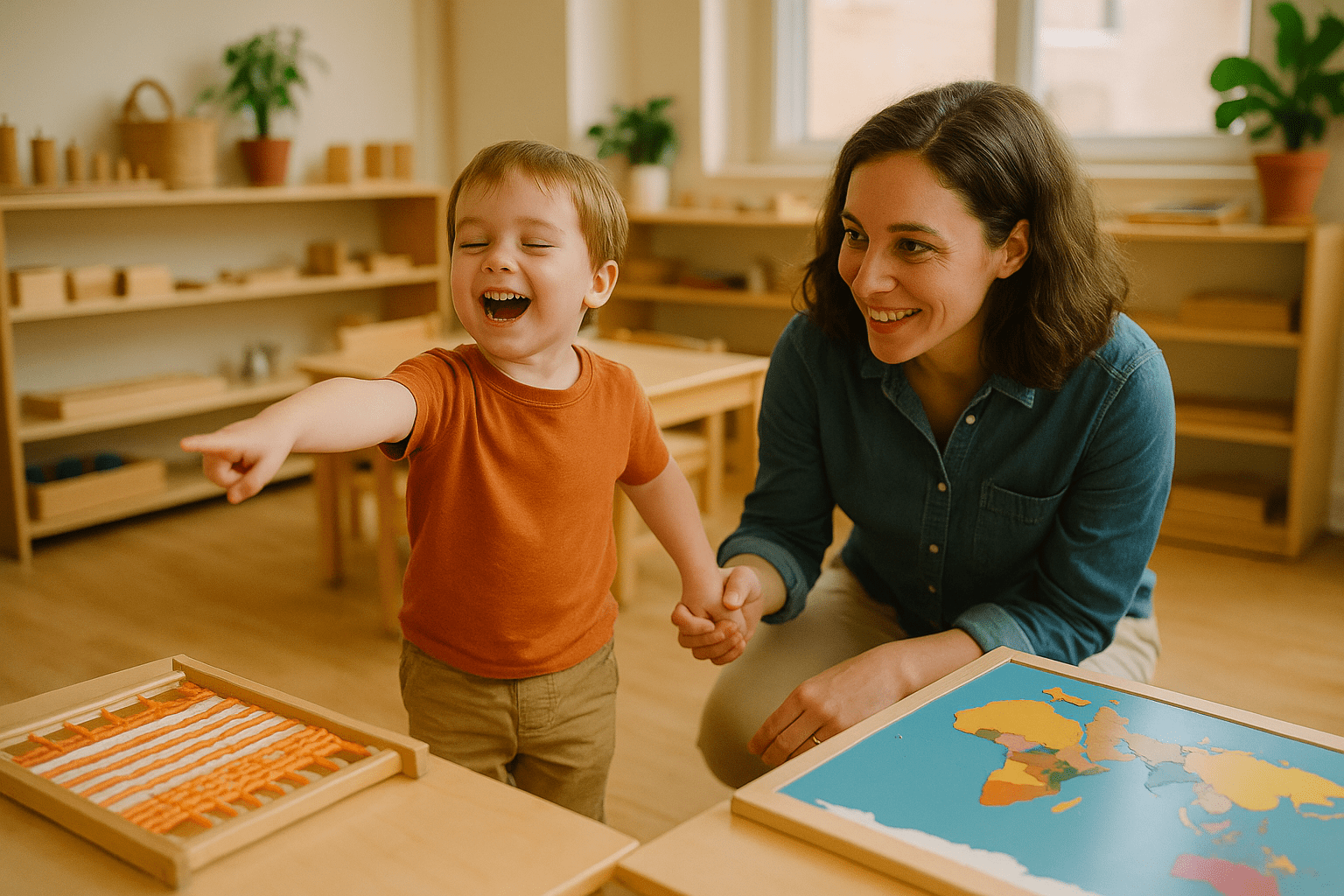
Educational research confirms what we already know in our hearts: parent engagement is one of the strongest predictors of student success.
Research and observations over the years have found that children show higher motivation, stronger executive function skills, and more consistent academic growth when their parents receive regular, detailed feedback and understand the learning process.
Narrative-style communication is especially powerful. It shifts the parent’s attention from outcomes to growth. It helps them see why independence, concentration, and curiosity matter so much at this age.
When we share these insights, parents realize that their investment in a Montessori education goes far beyond early academics. It touches the whole development of the child.
5. Articulate Your Montessori Difference with Confidence
Many public and private schools are working hard to attract families of young children. Their message is often simple. They promise strong early academics.
Montessori schools should take this seriously. Not by copying conventional methods, but by explaining our approach with confidence and clarity.
Parents should never have to guess what their children are learning. They should hear often about:
- The problem-solving skills and emotional awareness we nurture.
- The deep confidence that comes from self-directed learning.
- The advanced academics mastered through hands-on materials.
- The strong ethical character and global perspective we foster.
When we tell this story with real examples from our classrooms, families understand the true depth of Montessori education.
6. Adapt Your Communication for Today's Families
Today’s parents live busy lives. Many are digital natives. They want updates that feel personal and easy to access. They appreciate short messages, photos of daily work, and opportunities to ask questions.
Offer information in simple formats.
- A few photos with short captions
- A brief note explaining a new skill
- A short video clip from a parent evening
- A recorded session they can watch later
The goal is not to overwhelm parents. The goal is to welcome them into the child’s learning journey in a natural, friendly way.
Schools that blend Montessori authenticity with modern communication will continue to thrive.
7. Create Shareable Moments That Build Pride
Parents love to share what their children are doing. Give them moments worth sharing.
- Photos of children collaborating on projects.
- Videos of a child giving a lesson or reading to a younger friend.
- Updates about special cultural or environmental initiatives.
These small stories build pride. Families begin to speak about the school with warmth. They become your strongest ambassadors.
Belonging does not appear by chance. It grows from thoughtful communication, shared experiences, and steady kindness.
8. Lead with Your Values in Every Interaction
In Montessori education, communication is never just administrative work. It reflects our values. Every conversation, message, and meeting is a chance to model clarity, respect, and grace.
When communication is regular and sincere, families feel part of a caring community. Children thrive. Teachers feel supported. The school’s reputation grows naturally.
In a world that often feels rushed and uncertain, steady communication builds the trust that families need most.
Montessori education has always been forward thinking. Today, clear and compassionate communication is one of our most important tools for helping families stay connected and confident in their choice of school.
Conclusion
Over the years, I have learned that the most powerful strategy for improving student retention is mastering effective communication with parents.
It does not need to be complicated. It simply needs to be steady, sincere, and rooted in respect. When parents feel informed and welcomed into the learning process, they stay connected to the school and to the people who guide their children each day.
A closing reflection
Montessori education is built on partnership. It asks all of us to work together with patience, clarity, and kindness. When communication reflects these values, families feel anchored. They see the school as a place where their child is known and supported. With that sense of trust, they remain part of the community year after year. Thoughtful communication keeps that bond strong and helps every child flourish.


.webp)