


Most childcare centers are run on goodwill and improvisation. The director juggles licensing paperwork, a teacher follows up on an unpaid invoice, and someone else chases down a missing immunization record. It works until it doesn't.
The programs that grow without breaking, retain staff without burning them out, and keep families without constantly hunting for new ones share one thing in common: they have stopped running on effort alone and started running on systems. This is not about losing the warmth that makes a childcare program worth choosing. It is about protecting that warmth by building the operational infrastructure that makes it sustainable.
This guide breaks down what effective childcare center management looks like across six domains - and what separates programs that thrive from those that stay permanently reactive.
Why Most Childcare Centers Stay Stuck in Reactive Mode
The operational model at most childcare centers is informal by design. Systems grow organically - a spreadsheet here, a WhatsApp group there, a paper sign-in sheet that has worked fine for years. No single piece of this is wrong. The problem is that the whole structure depends on specific people knowing where things are, remembering what needs to happen, and having the bandwidth to do it.
When enrollment dips, the instinct is to increase social media posting. When a parent complains about communication, a reminder goes out to teachers. When a compliance audit hits, the week before is chaos. These are not isolated problems. They are symptoms of the same root cause: the program is being managed by memory and effort rather than by process.
The result: decisions get made late, revenue leaks quietly, staff burn out, and families leave for reasons that were visible weeks before they gave notice. Most of these show up on any list of the most common childcare mistakes and how to avoid them.
Building a strong childcare center management is not about working harder. It is about replacing the parts of the operation that depend on heroics with parts that run reliably, whether or not the right person is in the room.
6 Ways to Improve Childcare Center Management and Stop Running on Reaction
The shift from reactive to proactive management comes down to two things working together: stringent implementation of documented procedures, and the right software to make those procedures repeatable without adding to anyone's workload.
Documented procedures on how enrollment is tracked, how parents are updated, how billing is handled, and how compliance records are maintained set the standard. Software makes those standards executable at scale, removing the dependency on individual memory and effort. Neither works without the other. A great process that lives in someone's head breaks the moment that person is unavailable. A great platform with no clear process behind it becomes another tool that nobody uses consistently.
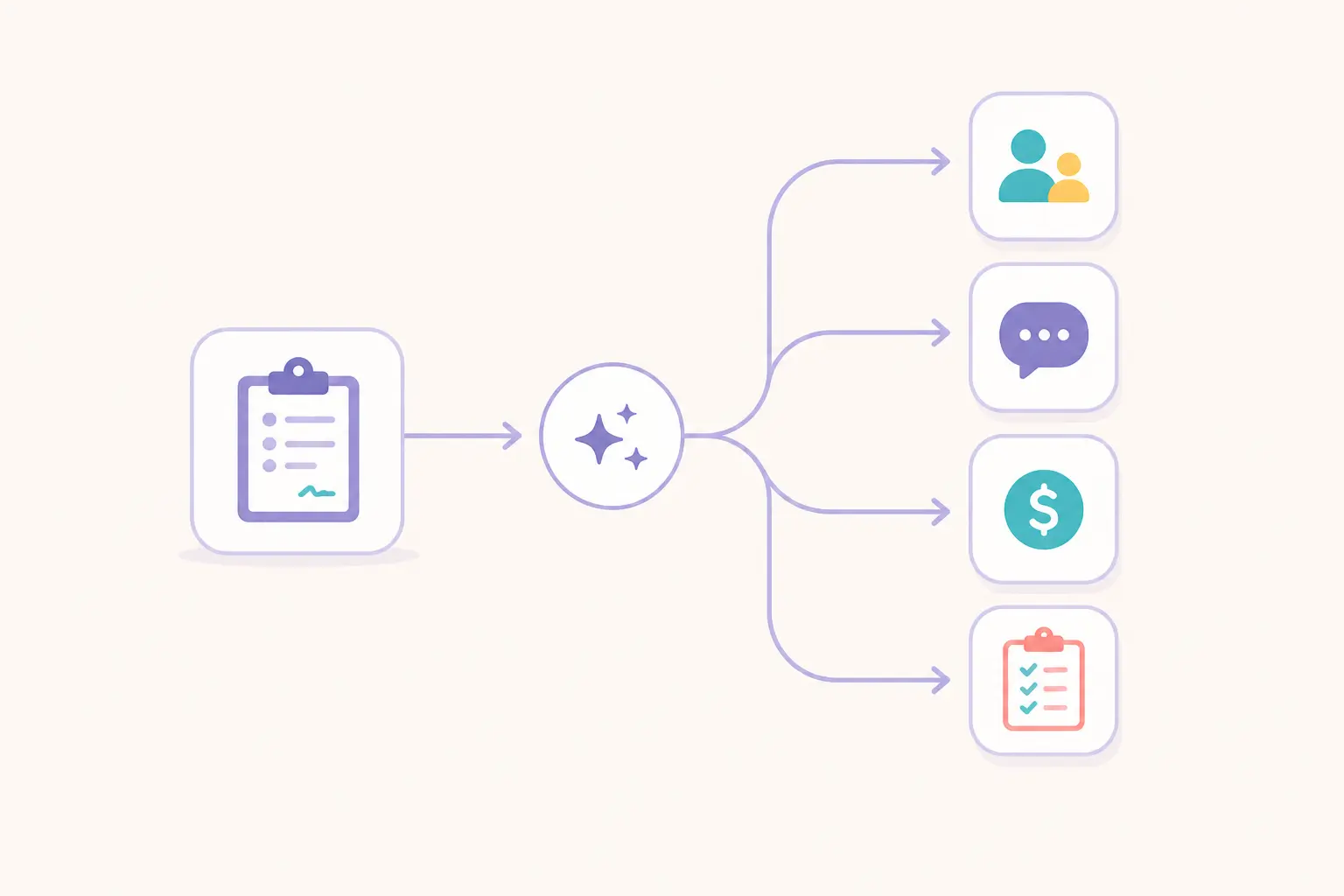
There are six domains where small, deliberate changes in both procedure and tooling compound into a materially stronger operation. Each one is addressable independently - but together, they create a program that is genuinely built to last.
.webp)
1. Building a childcare enrollment process that attracts the right families
Most enrollment processes are built for speed. Inquiry comes in, tour gets scheduled, family signs the contract, spot is filled. That works until you notice that a third of new families disengage within six months, never refer anyone, and leave without warning.
The families who stay for years, refer friends, and become the core of your community are not random. They are aligned with what the program does and why. Attracting more of them requires treating enrollment as a structured process rather than an ad hoc series of conversations.
A structured enrollment pipeline has five stages: Inquiry, Tour Scheduled, Follow-Up, Waitlist, and Enrolled. What matters is the visibility. At any point, a director should be able to answer: how many families are in each stage, how long have they been there, and what action is pending?
Without that visibility, a family that toured three weeks ago and never heard back has already enrolled somewhere else. With it, that follow-up happens within 48 hours, automatically.
“Whoever is really responsive is the most likely to develop a relationship with people — and most likely to see if you and them are the right fit.”

Tim Seldin
President, The Montessori Foundation
The enrollment experience itself sends a signal before a family ever sees a classroom. A slow email response, a PDF that has to be printed and scanned, a welcome packet that arrives two weeks late, tell a story about how the program is run. Online registration, digital document upload, and automated confirmation are not differentiators anymore. They are the baseline expectation.
2. Using parent communication as a childcare retention strategy
The most common reason families leave a childcare program is not curriculum, cost, or location. It is the feeling that the program does not really know their child. That feeling is built or destroyed through communication.
There is a meaningful difference between the two types of daily updates. The first: 'Priya had a great day and enjoyed painting.' The second: 'Priya spent 20 minutes at the easel today - she has been gravitating toward art activities this week, which connects well to our fine motor development focus this month.' The first is a report. The second builds a parent's understanding of what the program is actually doing for their child.
That understanding is what justifies the tuition, builds genuine loyalty, and produces the word-of-mouth referrals that no marketing campaign can replicate. The parent who tells a colleague, "I can actually see what my daughter is learning every week' is more valuable than any ad.
The barrier is that end-of-day communication gets compressed or skipped entirely when the day is difficult. AI-assisted tools that help teachers write stronger, faster observations remove that friction without replacing the teacher's voice.
For multilingual families, translation features close a gap that generic daily reports never address. For directors, the ability to review communication quality across all classrooms catches inconsistencies before they become parent complaints.
3. Using childcare financial management to protect revenue
Revenue leakage in childcare is rarely dramatic. The damage accumulates quietly: a few tuition payments are delayed each month, subsidy reimbursements are short because documentation was incomplete, and a classroom is running at 80% capacity because nobody noticed the open spots in time.
The programs that protect their revenue are not necessarily the ones with the highest tuition rates. They are the ones with financial clarity - directors who know exactly what was expected, what was collected, where the gaps are, and why.
“It's not just about sending out bills and collecting money. It's about building trust and relationship between you, your staff, and your families.”
Tim Seldin
President, The Montessori Foundation
A practical test: if a director cannot see revenue collected versus expected, outstanding balances, and enrollment capacity in under 30 seconds, they are managing finances reactively. By the time a problem is visible, it has already compounded.
Automated tuition collection, recurring billing, late fee enforcement, and subsidy tracking solve two problems simultaneously. The first is consistency. Manual billing produces errors, errors create disputes, disputes create delays. The second is awkwardness. A director who has to personally call a family about an overdue balance has a harder conversation than an automated reminder does. Automation keeps the financial relationship systematic, which protects the human relationship.
Retention is also a financial strategy. Replacing a family that leaves requires months of marketing, conversion effort, and onboarding before the new enrollment contributes meaningfully to revenue. Keeping the family already enrolled requires consistent communication and genuine responsiveness. The math is not close.
4. Reduce staff administrative burden in a childcare center
Staff turnover in childcare is not primarily a pay problem, though pay matters. It is an administrative burden problem. Teachers who entered the profession to work with children spend a significant portion of each day on paperwork, documentation, attendance logging, and communication tasks that have nothing to do with the children in front of them.
Every hour a teacher spends on administrative tasks is an hour not spent in the classroom. That trade-off compounds. Teachers burn out, and staff leave. Quality drops. Families notice.
The instinct is to add technology - a new app for this, a new platform for that. The result is often the opposite of what was intended. When a teacher is managing five separate logins for billing, communication, attendance, lesson planning, and incident reports, the administrative load increases rather than decreases.
The better question is not 'what tool can we add?' It is 'what can we consolidate?' A single platform that handles attendance, parent communication, learning documentation, and billing means information entered once is accessible everywhere - and teachers log in once to do everything.
Standardized documentation templates embedded in daily workflows also matter. When teachers do not have to figure out what format an observation or incident report should take, they spend less time on it and produce better results. When directors can see documentation quality across all classrooms from a single view, coaching conversations become specific and actionable.
5. Childcare compliance management that eliminates the constant scramble
Compliance in childcare is genuinely demanding. A single center can manage hundreds of required forms annually: emergency contacts, immunization records, physician reports, medication consent, staff certifications, and incident logs. For programs serving subsidized families, the documentation burden increases further.
The difference between directors who find compliance stressful and those who find it manageable is almost entirely a systems question. Both groups deal with the same requirements. One scrambles to assemble documentation when a licensing inspector arrives. The other is a few clicks away from any record they need.
The goal is not to minimize compliance work. It is to make compliance a background process rather than a foreground emergency. Compliance should be something the system handles continuously rather than something the director manages in crisis mode twice a year.
Programs that digitize attendance, store documents centrally in a searchable system, maintain automatic audit trails, and track staff-to-child ratios in real time are not thinking about compliance less. They are spending less time scrambling on it.
“You should be ready all through the day — even at 6:30 at night when the last child goes home and an inspector shows up, you ought to have every single thing right at your fingertips.”
Tim Seldin
President, The Montessori Foundation
6. Managing multiple childcare centers without losing quality control
A director who is the compliance system, the quality control function, and the culture carrier at one location cannot perform those roles simultaneously across two or three. The moment a second location opens, the systems have to carry what the director was carrying personally.
The programs that scale successfully share one characteristic: they built systems before they needed them. The ones that struggle built a great single location and then tried to replicate it manually, which means the quality of each new site depends on how much of the founding director's time it can absorb.
Growth without systems creates chaos. Growth with systems creates scale. The difference is almost always visible before the second location opens.
For programs operating or planning multiple sites, the operational requirements are specific: a central dashboard that shows performance across every location without manual reporting, standardized processes that ensure consistent quality, and location-level visibility that surfaces where attention is needed before problems compound.
Where to Start With Childcare Center Management
The six domains in this guide are not a sequential checklist. You do not need to fix enrollment before working on billing, or complete your compliance infrastructure before investing in staff experience. They reinforce each other. Stronger parent communication improves retention. Better retention stabilizes revenue. Stable revenue funds better staff investment. Better staff investment improves program quality. Better quality attracts more aligned families.
Start where the program is most fragile. Find the specific thing costing the most - in revenue, in staff capacity, in family trust, or in compliance risk - and fix that first. Then build from there.
Tools like illumine are built specifically for this kind of consolidation - bringing enrollment, parent communication, billing, attendance, learning documentation, and compliance into a single platform so that the information directors need is always visible, and the work teachers do is never duplicated. But the platform is the tool. The discipline is the strategy.
Programs that get the discipline right build something that lasts.