



In every strong early years setting, there is something you can feel right away. A sense of calm. A shared understanding of what matters. A team that knows what to do, even on the busiest days. That confidence does not appear on its own. It grows from clear, lived policies and procedures that guide daily practice.
Many daycares view policies as paperwork. Something to complete for compliance or inspection. Yet, when written with clarity and lived with intention, they become the backbone of a thriving childcare culture. They give staff the confidence to act, they reassure parents that their child is safe, and they help children feel secure.
Imagine a new educator who has only been in the room for three days. A child has an asthma flare-up during outdoor play. Because the medication policy and procedure were clear, and because the team had practised it together, the educator knew exactly who to call, where the inhaler was stored, and what steps to take.
The situation was handled calmly. The child felt safe, the family felt reassured, and the educator felt supported. This is how policies move from the page into the heart of the setting.
Defining the Elements: What Are Daycare Policies, Procedures, and Practices?
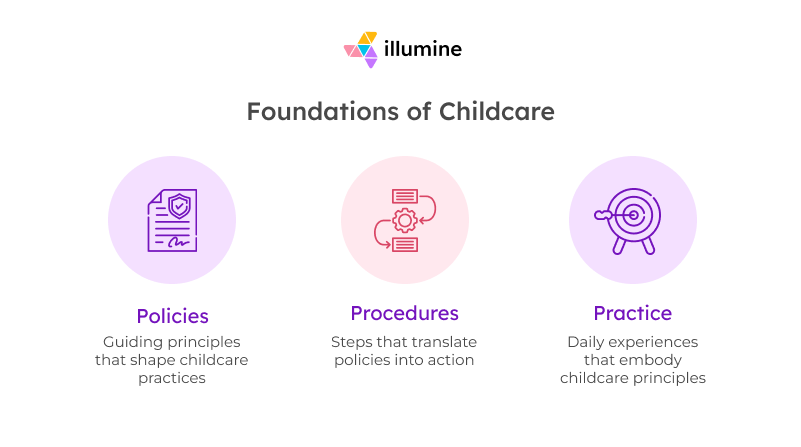
The three elements work together, but each has its own role.
Policies: The guiding principles
Policies set out your intentions. They describe what you believe in and what you say you will do as a nursery.
Example: Policy: Ensure safe and authorised pick-up for every child.
Procedures: The steps that bring a policy to life
Procedures explain how the policy works in practice. They outline who is responsible, what they must do, and when they must do it.
Example: Procedure: Staff verify the authorised adult, check photo identification, record the handover time, and report any concern to the room lead or manager. .
Practice: The daily lived experience
Practice is what happens in the room every day. It is the real behaviour of staff and the consistency of their actions.
Example: Practice: Every afternoon, staff check the authorised list before dismissing children and follow the same steps regardless of how busy the end of day may be.
When these three elements align, a nursery becomes predictable, safe, and emotionally secure for everyone involved.
Why They Matter in EYFS and UAE Settings
According to the EYFS statutory framework (September 2025), nurseries must maintain clear and up-to-date policies and procedures. Their purpose is to keep children safe and support their well-being. They’re not static paperwork, but living tools that shape the everyday culture of your setting.
Strong policies and procedures:
- Build trust with families because parents know what to expect.
- Give staff a shared roadmap, which reduces stress and turnover.
- Provide children with consistent routines which support emotional development.
- Remove confusion by setting out exactly how to handle situations.
The Consequence of Non-Compliance: Why a Roadmap is Non-Negotiable
Policies and the regulations are not static. They evolve. Having a clear roadmap in your procedures for adopting these changes prevents critical updates from slipping through the cracks. When intention is not matched by a defined process, the gap is not just procedural. It carries real risk.
Failing to comply with legal and regulatory standards can lead to significant consequences. At a minimum, centres may face warnings, official notices, or financial penalties.
More serious breaches can result in the suspension of activities or, in severe cases, the revocation of the operating licence itself. Beyond formal sanctions, centres may face legal liability for issues related to safety or child protection.
The resulting damage to trust and reputation can be the most lasting cost of all. A well defined procedure for review and adoption is your strongest defence. It ensures your practice never accidentally drifts into non-compliance.
What Should Be Included in an Effective Childcare Policy?
When drafting or reviewing policies, it helps to follow a clear structure. Each element exists for a reason.
This anchors the policy in purpose. It helps staff understand what the policy intends to achieve and reminds parents what your setting values.
Procedures prevent guesswork. They give everyone the same steps to follow which strengthens consistency and reduces risk.
Referencing EYFS, UAE guidance, or other national standards shows that your practice is aligned with regulatory expectations. It also helps new staff understand why certain actions are required.
Linking to best practice documents supports professional development. It reminds the team that quality is always evolving.
Signatures, dates, and review timelines show that leadership stands behind the policy. This adds accountability and ensures regular updates.
It also helps to keep documents concise, accessible, and inclusive. A policy is only useful if every staff member can understand it and use it.
Principles to Help You Write the Best Daycare Policies
As you write or refine policies, pause and reflect on a few guiding questions:
- Are we delivering a child centred, high quality service?
- Can staff, parents, and children understand and contribute to what is written?
- Does this reflect our ethos and philosophy?
- Are equality and diversity confidently embedded?
Policies should express your values just as much as your compliance responsibilities.
Making Policies Work in Practice
A policy only becomes meaningful when people know it, understand it, and live it. Here are some ways to embed policies into daily life.
Inductions
Use both staff and parent inductions to introduce key policies from the very beginning.
For staff, induction is where clarity and confidence start. A new colleague should know on day one how safeguarding, health procedures, handovers, and communication expectations work.
For parents, induction helps build trust. When families understand your policies from the start, they feel more secure, more aligned with your routines, and better prepared to partner with you in daily practic
Refresher sessions
A policy of the week in staff meetings or a policy of the month on noticeboards keeps important content fresh. It also gives space for questions and shared reflections.
Handbooks
Parent and staff handbooks help summarise essential information while pointing to the full documents for deeper reference.
Visibility
Keep policies where people can actually find them. A printed set in reception or the staff room, and an online version on your internal platform or parent portal, ensures access is never an issue.
The Best Tips for Writing Childcare Policies
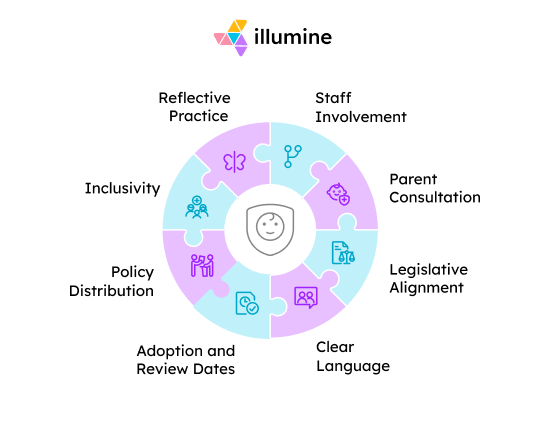
Each of these tips strengthens clarity, confidence, and consistency.
Involve staff in drafting and reviewing
When staff help shape the policy, they are more likely to understand it, trust it, and apply it consistently.
Consult parents and families
Families and children experience the impact of policies every day. Their feedback ensures your documents reflect real needs and perspectives.
Link to legislation and guidance
It gives staff a clear sense of purpose. When they see how a policy links to EYFS or UAE guidance, they understand why consistency matters and feel more confident in their decisions.
Keep language simple and jargon-free
A policy is only effective if everyone can understand it, including new staff and parents with varying levels of English.
Include adoption and review dates
Regular reviews keep policies aligned with best practice and prevent outdated procedures from drifting into daily work.
Provide copies to staff and explain them to parents
Clarity builds trust. Transparency helps families feel included in your approach to care and safety.
Ensure inclusivity and equality for all families
Policies that reflect diverse experiences support fair practice and help every child and family feel respected.
Reflect practice in policy and prevent drift
When policy and practice move apart, quality slips. A regular check keeps your written intention aligned with the daily experience of children. This kind of drift sits alongside the other common childcare mistakes worth avoiding.
Final Thoughts
Clear and thoughtful policies are far more than compliance documents. They shape culture, strengthen trust, and guide confident practice across your setting. When policies, procedures, and daily actions align, staff feel supported, parents feel reassured, and children feel safe.
The most successful nurseries treat policies as living tools. They review them regularly, discuss them openly, and involve the whole community in shaping them. When your team understands not just what to do, but why it matters, policies become part of the fabric of daily life.
In the end, strong policies help you offer children the stable, nurturing environment they deserve. They bring clarity, consistency, and purpose to every decision, which is the foundation of high-quality early years care.