

In childcare, burnout is treated as part of the job. The reasoning is that teachers and directors simply have too much to carry: lesson plans, daily reports, parent messages, enrollment calls, licensing paperwork. The list never ends, so exhaustion starts to feel built in.
It doesn't have to be. Most of that load is repetitive work, and repetitive work is exactly what AI is good at. Used well, an AI tool acts like an assistant for the parts of the day that don't need a human touch. It drafts the plan, writes the first version of the report, translates the message, and answers the routine call. The teacher stays the teacher and gets back the hours that used to go to typing.
What Does An AI Tool for Preschool Do?
An AI tool for preschool educators is software that uses generative AI to take over repetitive teaching or center tasks, such as drafting a plan, turning a note into a parent update, translating a message, or answering an enrollment call, while leaving the teaching judgment to the educator.
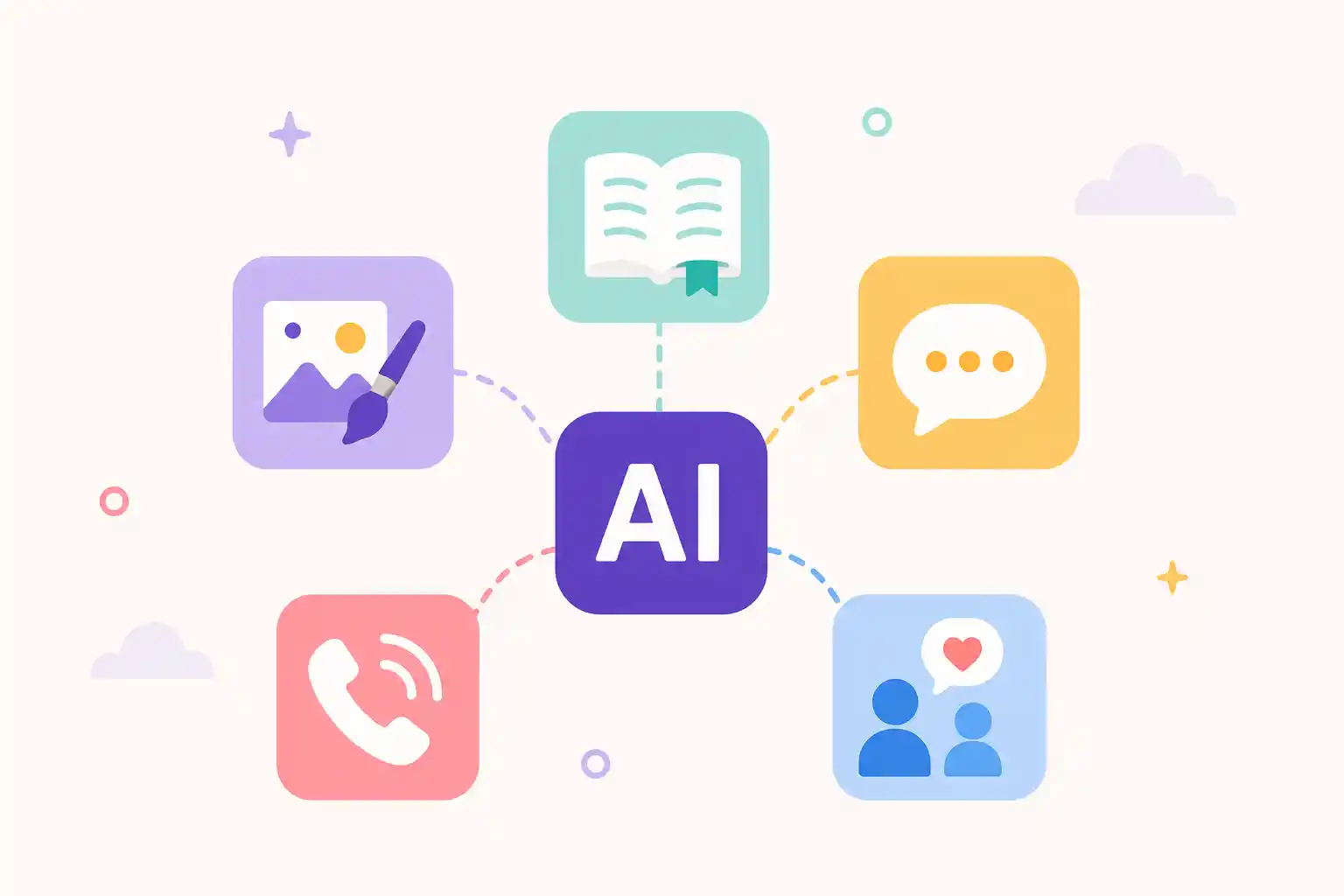
Having said that, no single AI tool does it all for a preschool. The best 2026 setup pairs the right tool to each job: Canva for newsletters and forms, Curriculum Genie for lesson planning, ChatGPT or Claude for prioritizing leads, Playground's Camber for parent calls, and an early-childhood platform like illumine for documentation and parent communication.
The catch with that stack is five logins, five bills, and five places your data lives. That is the case for consolidating into one ECE-native platform. This guide walks through both: the tool for each job, and when one connected platform beats the stack.
Why General AI Chatbots Aren't Enough for Preschool Teachers
You’ve got 20 pending tasks due by the end of the day.
So you reach for ChatGPT first, and that is the right instinct, but the wrong stopping point.
Ask a preschool teacher which AI tool they use, and most will say ChatGPT, Claude, or Gemini. It makes sense. The tools are free, they are already open in a tab, and they will draft a newsletter, a sensory-bin idea, or a parent email in seconds.
The trouble isn't that general chatbots are bad. It's that a preschool day isn't one task? It is lesson planning, documentation, parent messaging, chasing enrollment, and making the room look nice for Friday. Lean only on a chatbot, and you become the integration layer.
You copy things out of one system, paste them into another, and type in everything the AI can't see.
So instead of ranking tools one to six, this guide does two things. First, it lays out the AI stack a modern preschool runs on, job by job, and names the best tool for each. Then it shows you, with real prompts, where a general chatbot is enough and where a purpose-built tool closes a gap the chatbot can't.
Let’s look at these more closely:
Can ChatGPT or Claude do preschool tasks?
We ran a few prompts on the most popular AI tools used by preschool teachers- ChatGPT and Claude. Here's what we noticed when we analysed the output and the process:
1. Can AI write a parent's daily update?
The prompt (typed into a general chatbot):
"Write a warm, 3-sentence daily update for a parent. Today their 3-year-old painted with sponges, had seconds at lunch, and napped from 1:00 to 2:30."
ChatGPT returns a polished, warm three-sentence note that frames the sponge painting as creative play and reassures about lunch and nap. It is genuinely good.
Claude returns much the same, with a slightly more observational tone. It tends to frame the painting as fine-motor and sensory development. Also good.
The gap a purpose-built tool closes: Both wrote a lovely note, but only because you typed in the whole day. Now do that 18 times, every afternoon. To make it real, you would paste actual observations and photos, and a child's name, activities, and image should never go into a consumer chatbot. The chatbot also has no memory of this child's week, developmental goals, or your center's voice. An ECE tool like illumine generates the same note from the observation you already logged, ties it to the child's record, and translates it. No retyping, no privacy exposure, no tab-switching.
2. Can AI help prioritize leads?
The prompt:
"Here are six enrollment inquiries with notes [toured last week; asked about the infant room; hasn't replied to two emails; referred by a current family; etc.]. Rank them by likelihood to enroll, and tell me who to follow up with first and what to say.
ChatGPT ranks the six, explains the reasoning (recency, intent signals, referral strength), and drafts a first follow-up message. It is genuinely useful and a real strength of free chatbots.
Claude gives a similar ranking with a tight overview and well-justified reasoning.
The gap a purpose-built tool closes: Nothing is wrong with either answer. But it is a snapshot. Tomorrow, a lead tours or replies, and the ranking is stale, so you re-paste everything. The chatbot doesn't live in your inquiry list, doesn't fire the follow-up, and doesn't log that you sent it. You are the integration layer. illumine scores and re-scores leads inside the enrollment pipeline as stages change, and the follow-up it suggests can actually run on its own.
The pattern holds across both demos. The general chatbot gives a good answer to a question you fully spell out, every single time. The purpose-built tool already knows the context and connects the answer to the next step.
Evidently, this is the general theme that emerges when you use general AI chatbots for childcare operations. A dedicated software is not only a central hub to store information, but also works with more context, clarity, and personalizations as compared to general tools.
Using AI tools for Different Preschool Admin and Teaching Tasks
Unless you are using paid childcare management tools like illumine, you will need different AI tools for preschools to perform different functions. Here's a combination of different tools you can use for time-consuming, redundant tasks:
1. Newsletters, forms, and classroom visuals: Canva
Two things eat up most of the time on these tasks.
The first is finding the information. Some of it sits in your email, some in chat threads, some on WhatsApp. Before you build anything, you are hunting it down. A childcare platform fixes this part by keeping center information in one place.
The second is building the asset. This is the step where a general chatbot slows you down. You describe the layout in words, go back and forth, and still export nothing a parent can actually open. Canva is built for this job. Magic Write drafts the newsletter copy, the image tools generate illustrations, and there are thousands of child-friendly templates plus AI form creation. The free tier covers most of what a single center needs.
Canva is a great conversational AI tool that converts text to image. For certain visuals like posters or social graphics, Canva has a wide use case and is the great tool for the job.
However, Canva does not solve for the lack of centralized data and streamlining the processes. Since the main burden of your childcare staff is switching context and tabs between tasks, Canva only scratches the surface of that problem.
A management platform like illumine closes both gaps at once. The information already lives in the app, and illumine has an AI form builder and a drag-and-drop newsletter builder built in. So you skip the hunt and the rebuild. This eliminates the need to switch tabs and helps teachers or staff save precious hours.
2. Lesson planning: illumine
For early-childhood-native planning, Curriculum Genie (by Learning Genie) leads. It is built for early learning, supports the Desired Results Developmental Profile (DRDP) and state early-learning standards, and generates standards-aligned plans in minutes. It has a real free tier. MagicSchool (80+ teacher generators) and Eduaide (110+ resource types, a free tier of 15 generations a month, 50+ language translation) are the broad alternatives. Both are excellent, but both are built K-12-first, so you will prompt them to drop the reading level for preschool.
If you want a step after generation (and not just the plan on paper), Edcafe lets you turn that content into student-facing activities (quizzes, flashcards, reading tasks, preschool-safe chatbots) you can share by link or QR, then collect and review responses in one place.
illumine offers the same flexibility across curricula and languages, built for preschools specifically. What is better is that its AI tools build lesson plans from the curriculum documents you upload. That keeps you aligned to the recognized curriculum, and it saves real planning time.

3. Prioritizing leads and drafting a marketing plan: a general chatbot (Claude / ChatGPT free)
For prioritizing leads, a childcare management app like illumine or playground is super beneficial. Playground has an inbuilt lead scoridng system that allows child care providers to prioritize which prospects and leads they should reach out to first, or follow up with. With illumine, you get an AI-powered evaluation that helps you understand if your lead is hot or cold. This makes sure no prospect is left unattended and you can ensure timely follow ups for parents that reach out.
For drafting plans, a free chatbot like Claude or ChatGPT is the best tool, and often all you need. Paste in your week's inquiries, and it will rank them and suggest next steps. Ask for a term's marketing plan, and it will give you a credible draft. For thinking and drafting that doesn't touch sensitive child data, the free plans are hard to beat.
4. Answering parent calls and forecasting enrollment: Playground (Camber) / illumine
For answering parent calls and forecasting enrollment, Playground's Camber leads. This is the newest, most childcare-specific lane. Camber is an AI voice agent that acts as a 24/7 receptionist. It answers inbound parent calls, qualifies leads, schedules tours, and logs everything to the CRM, and Playground adds predictive enrollment forecasting.
illumine now runs a new AI agent of its own, in early rollout, that covers the same ground as Camber. It picks up routine parent calls, qualifies the inquiry, and books the tour. On forecasting, illumine already gives operators enrollment and occupancy reports, and so does Camber, so predictive forecasting is not much of a standout on its own. That earns Procare's RoomRunner an honorary mention here, since capacity forecasting is the job it is built around. If lost calls and empty seats are your real problem, this lane matters more than lesson-planning AI.
5. Documentation, observations, and parent communication: an ECE-native platform
This is where early-childhood platforms lead, because the work is tied to a child's real record. illumine turns a teacher's quick note into a structured daily report or observation, connects it to the child's developmental record, and translates the parent-facing version into 20+ languages. The parent-facing view works like a social media feed, and that familiar feel is a big reason families actually adopt it.
One real distinction sits in the AI. illumine recognises a child's face in a photo, so you do not have to tag who is who. It also drafts the update for you, so a report reads as detailed without you spending the afternoon writing it. Brightwheel is a strong all-in-one alternative. It logs observations against 50-state standards and builds portfolios, though its curriculum and observation tools are curated and digital rather than generative AI.

The Stack at a Glance
What an AI Tool Stack Actually Costs a Preschool
Build the stack above, and you've solved every job. You have also signed up for five tools, five logins, five bills, and five places your center's information lives. The newsletter in Canva doesn't know what happened in the classroom. The lead ranking in ChatGPT doesn't know the family enrolled. The observation never becomes the parent update unless someone retypes it. Every seam between those tools is a person's job, usually the director's.
That is the case for consolidating. illumine runs all of these jobs in one place: lesson planning, documentation, parent communication, enrollment, and billing. The AI is woven across them, so work moves between jobs without copy-paste. Teachers and staff using illumine report saving up to 10 hours a week (illumine internal data, 2026). <!-- Editor: strengthen attribution if possible by adding a sample size or source, e.g., "across N centers surveyed" or a case-study link. A specific, sourced figure is far more citable than "internal data." --> illumine won't beat Canva at design or beat Claude at open-ended thinking. The point is that a single connected system removes the integration work; the stack quietly hands it back to you.
See illumine's AI in action. Plan, document, message families, and manage enrollment in one place. Start a free trial or book a 30-minute demo.
How to Choose: Stack or Consolidate?
- How many of the five jobs are actually painful for you? If it is just one, like planning or visuals, a single free tool is the right call. Don't buy a platform to solve one problem.
- Where does your data need to stay together? Once documentation, parent comms, and enrollment all matter, a stack starts losing more time in copy-paste than it saves. That is the consolidation tipping point.
- How sensitive is the data involved? Anything with a child's identifying information belongs in a purpose-built, compliant ECE tool, never a consumer chatbot.
Are AI Tools Safe to Use With Children's Data?
AI tools are safe for preschool use when they are purpose-built for education and handle data responsibly. Teacher-facing tools that do not require student logins are lower-risk, as are ECE platforms that comply with FERPA and state privacy laws. Look for SOC 2 compliance too. illumine is SOC 2 certified at the Type II level, which gives you independent proof that a vendor handles child data to a recognised security standard. The real exposure comes from pasting identifiable child information into general consumer chatbots. That is the one practice to avoid, no matter which tools you use.
The Bottom Line
The best AI setup for a preschool is the right tool for each job, and as few of them as possible. Start free where you can: Curriculum Genie for planning, Canva for visuals, and a chatbot for thinking. But the more of the five jobs that matter to you, the more the seams between separate tools cost you. That is when one early-childhood platform earns its place.