
.png)



For many childcares in the USA, the financial pressure has become intense.
- Facilities and maintenance costs have climbed.
- Insurance premiums are escalating at alarming rates.
- Programs are struggling to raise salaries enough to retain teachers.
Some programs are running deficits for the first time in decades. Others are raising tuition only to see families leave because they simply cannot afford the increases. Many directors find themselves caught between two realities: families already feel tuition is too high, yet the true cost of childcare and quality early childhood education is even higher.
If you lead a school or early childhood program, you may feel squeezed from every direction.
But while the financial pressures are real, there are also strategic steps program leaders can take to navigate the rising childcare costs in the USA.
Understanding Childcare Cost and the Real Economics of Early Childhood
The first step is to recognize and accept the fundamental economics of early childhood education.
Quality early childhood programs are labor-intensive by design. Young children require close supervision, thoughtful guidance, and meaningful relationships with adults. State regulations mandate specific teacher-child ratios, which exist to protect children and support healthy development.
This means that staffing costs will always account for the largest share of a program’s budget.
There is no technological shortcut that allows us to safely supervise twice as many three-year-olds with half as many teachers.
Because of this reality, many early childhood programs operate with extremely narrow margins. Directors often attempt to keep tuition as low as possible to support families, but over time, this can create a dangerous imbalance between income and expenses.
One of the most important responsibilities of school leadership is to understand the true childcare cost of operating the program and to build a financial structure that supports sustainability.
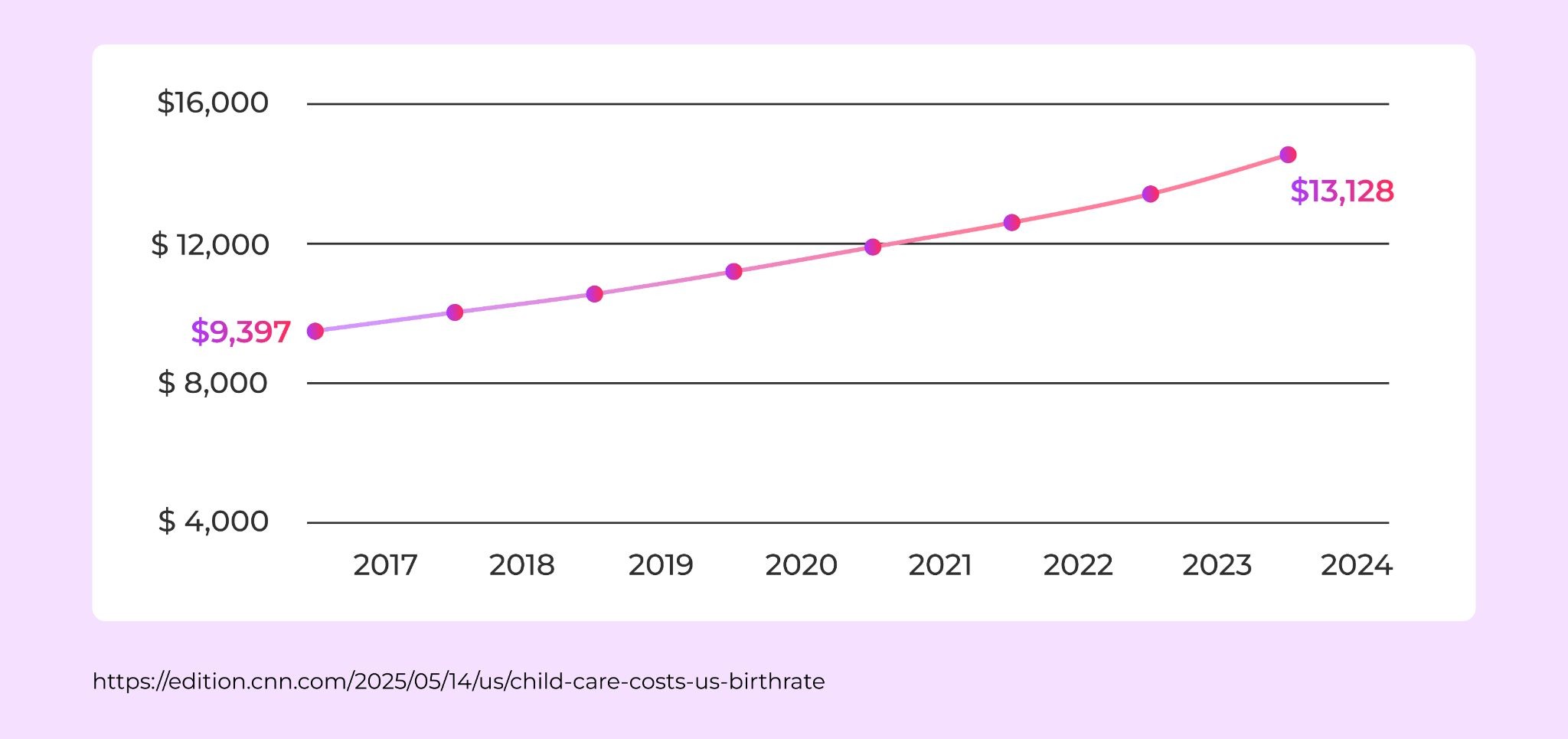
How to Control Childcare Costs Without Sacrificing Quality
Directors should also carefully examine operational efficiencies, but with one important caution: cost-cutting must never compromise the program's developmental quality.
Reducing staffing ratios or increasing class sizes beyond healthy levels may appear to solve short-term financial problems, but often damages the program’s reputation and long-term stability. Here are some steps you can take to manage rising childcare costs:
1. Stop apologizing for the cost of quality childcare
One of the most common patterns I see in early childhood programs is a reluctance to charge tuition that truly reflects the cost of providing a high-quality experience.
Program leaders often feel uncomfortable raising tuition because they know families are already struggling. But when tuition is set too low, programs slowly erode their own stability.
Teachers remain underpaid. Facilities deteriorate. Programs cannot invest in professional development or additional classroom support. Eventually, the quality families value becomes harder to maintain.
Early childhood programs must begin to talk more openly and honestly about the true cost of quality.
Parents are far more understanding than many directors assume—especially when schools explain clearly what goes into providing an excellent early learning environment. In a time when many families are already aware of rising daycare costs and the average cost of daycare per month, clear communication matters more than ever.
2. Examine your financial model carefully
Many early childhood programs simply inherit tuition structures from previous years without ever conducting a thorough financial analysis.
Program leaders know what it actually cost to operate each classroom. Do you know:
• What is the real cost per child once salaries, benefits, facilities, insurance, and administrative support are included?
• If you are fully enrolled in our early childhood classrooms?
• If you are unintentionally subsidizing some programs with others?
In many schools, early childhood programs carry a disproportionate share of the institution’s financial load because they enroll more students and operate year-round. In others, the opposite is true: early childhood programs are underpriced and quietly draining resources.
Clarity about these numbers allows school leaders to make thoughtful decisions rather than reacting to financial stress year after year. It also helps them better understand the real cost of childcare and whether tuition aligns with long-term sustainability.
3. Protect and invest in your teachers
Staffing remains the most critical challenge facing early childhood education today.
Teacher turnover is costly in ways that go far beyond recruiting and training replacements. Children depend on stable relationships with trusted adults. Families value continuity. And programs with frequent staff turnover struggle to maintain quality.
Even when budgets are tight, programs should prioritize teacher retention.
That may mean rethinking benefits packages, offering clearer professional growth pathways, or adjusting schedules to support work-life balance.
Some programs are also exploring creative approaches such as shared teaching roles, mentoring structures, and career ladders that allow experienced teachers to grow professionally while remaining in the classroom.
Investing in teachers is not simply a personnel decision—it is a strategic investment in program stability.
4. Build enrollment stability
Enrollment stability plays a major role in controlling childcare cost, since even a few unfilled seats can put pressure on staffing and operating margins.
Because staffing levels must be maintained to meet ratio requirements, even a small number of empty seats in a classroom can significantly impact the budget. So one of the greatest financial vulnerabilities for early childhood programs is under-enrollment.
Strong admissions and marketing practices are therefore essential.
Many schools still rely primarily on word-of-mouth referrals, which remain powerful but may not be sufficient in a competitive environment. Schools should ensure that prospective families can easily understand the program, schedule visits, and experience the school in person.
Clear messaging about the program’s philosophy, approach to learning, and classroom experience helps families see the program's value.
5. Expand revenue beyond tuition
Another important strategy is to reduce reliance on tuition as the sole source of revenue.
Some schools successfully supplement tuition through:
• summer programs
• extended day programs
• enrichment classes
• parent education workshops
• community partnerships
• fundraising initiatives

Independent schools and nonprofit early childhood programs may also explore philanthropic support for teacher salaries, financial aid, or classroom improvements.
While fundraising cannot replace tuition as the primary revenue source, it can provide meaningful support for strategic priorities.
6. Reduce administrative waste without lowering program quality
Instead, focus on areas such as purchasing systems, shared services, facility maintenance planning, and administrative efficiency.
Many schools discover that thoughtful operational improvements can reduce costs without affecting the classroom experience. Better visibility into the average childcare cost per month can also help leaders make more informed decisions without compromising quality.
7. Strengthen the early childhood program as the foundation of the school
For many independent schools and Montessori schools, early childhood programs are not only educationally important—they are strategically vital.
Preschool and kindergarten classrooms are often the entry point for families who may remain in the school for many years. When early childhood programs are vibrant and fully enrolled, they help sustain the entire institution.
This means that investing in early childhood quality, teacher development, and admissions outreach is not merely a preschool issue—it is a long-term enrollment strategy.
Schools that recognize this often build stronger communities and more stable financial foundations.
Leadership Matters More Than Ever
The pressures facing early childhood education today are real, and they are unlikely to disappear quickly. Rising costs, teacher shortages, and affordability concerns will continue to challenge program leaders across the country.
But strong leadership can make an enormous difference.
Directors who understand their financial model, communicate clearly with families, invest in their teachers, and think strategically about enrollment and program development can navigate these challenges far more successfully.
Early childhood education remains one of the most meaningful and important fields in education. The work you and your teachers do every day shapes children’s development in profound ways.
The task ahead is to ensure that the programs serving these children are not only inspiring places to learn, but also financially sustainable institutions capable of thriving for years to come.