


Childcare compliance is about running a center where safety, documentation, and accountability are always in place, even when things get busy.
But for most providers, that is easier said than done.
Between licensing requirements, staff-to-child ratios, health and safety regulations, incident reporting, and record keeping, compliance quickly becomes a moving target. What looks manageable on paper often becomes difficult to sustain in daily operations.
Why Childcare Regulations Feel So Hard to Manage
Childcare compliance involves multiple layers:
- Licensing requirements that vary by state
- Staff certifications and background checks
- Daily operational rules like attendance and ratios
- Health and safety regulations
- Ongoing documentation and record keepin
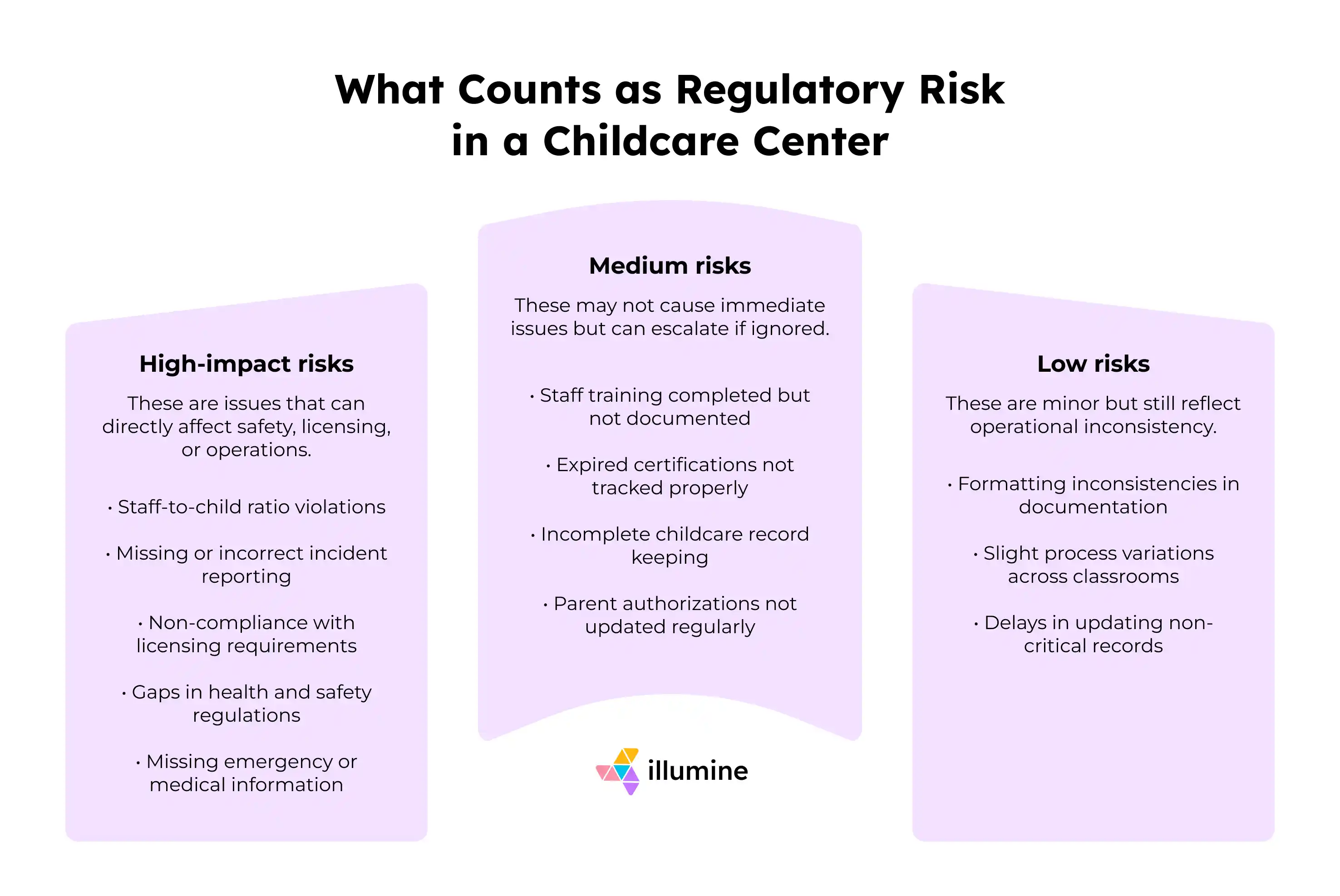
Individually, each of these is manageable. Together, they create a system that is difficult to control without structure:
- Information is spread across paper files, emails, and folders
- Different staff members handle compliance tasks differently
- Gaps between what is done and what is documented
- Difficulty tracking whether records are complete and up to date
As centers grow, this complexity increases. More students, more staff, more classrooms, and more regulatory requirements mean more room for error.
That is why compliance often feels reactive instead of controlled.
Inspection and Audit Readiness Starts With Daily Systems
Inspections usually focus on the same few things: staff-to-child ratios, attendance records, health and safety practices, incident logs, staff certifications, and proper childcare record keeping. The problem is keeping all of it current, accurate, and easy to retrieve.
That is why audit readiness is less about last-minute prep and more about daily consistency. Centers that stay prepared usually do three things well:
- keep records updated
- fix gaps early
- make documents easy to access
When those basics are handled consistently, inspections become much less stressful.
And that is exactly where technology helps. A strong childcare compliance management system makes it easier to maintain records, track what is missing, and ensure documentation reflects what is actually happening across the center.
Common Childcare Compliance Failure Points and How Technology Helps Fix Them
Most compliance failures happen because childcare centers are trying to manage too many moving parts through paper files, spreadsheets, email threads, and manual follow-ups.
That is where things start slipping.
Childcare compliance management software makes a real difference here. Instead of relying on memory and scattered records, teams can collect information digitally, track compliance in real time, and access the right documentation when needed.
Here are some of the most common failure points and how technology helps reduce the risk.
- Ratio gaps during transitions and breaks
When ratio tracking depends on manual headcounts or verbal coordination, these small gaps are easy to miss.
Technology helps by giving administrators and staff better visibility into where students and teachers are throughout the day. Instead of relying on paper-based attendance or static room rosters, a digital system can help staff schedule, track room movement, and give a clearer picture of staffing coverage at any given time. That makes it much easier to spot risks before they turn into compliance issues.
- Training completed but not documented
This is one of the most common compliance problems in childcare centers. A staff member may complete required training, attend a workshop, or renew an internal requirement, but if that completion is not properly recorded, it may as well not exist during an audit. The issue is that documentation lives in too many places- inboxes, shared folders, paper files, or with the employee directly.
A software-based system helps centralize records so training documentation is easier to store, retrieve, and update. Instead of chasing proof across different channels, administrators can maintain a more complete compliance trail in one place. That reduces risk during inspections and saves time during renewals or internal reviews.
- Incident logs are incomplete or inconsistent
Incident reporting for childcare teams that need to be timely, detailed, and properly documented.
Teachers are managing children first, which is exactly what they should do. But that can delay documentation. If the reporting process is manual, details may be missed, timelines may be unclear, and parent communication may not happen as quickly as it should.
Technology makes this process more reliable. A digital system can standardize what information must be captured, create an immediate log, and send parent notifications in real time. It is creating a stronger record of communication and follow-up, which matters for both compliance and trust.
Expired licenses or certifications hidden in email threads
Technology helps by creating one place to maintain important compliance records and track whether documents are current. Instead of hunting through inboxes and shared drives, teams can work from a central source of truth. That improves visibility and makes it easier to stay ahead of renewals instead of reacting at the last minute.
Parent authorizations not updated
Outdated parent permissions can create serious compliance and safety issues. This may include medication consent, allergy details, emergency contact information, pickup authorizations, or approval for certain actions in urgent situations.
The challenge is not just collecting these forms once. It is making sure they stay updated over time, and that staff can access the latest version when needed.
With digital forms, providers can request updated information more easily, track whether it has been submitted, and keep those records linked to the child’s profile instead of buried in a filing cabinet.
How illumine Helps You Stay Compliant Without the Chaos
Managing childcare compliance is not just about collecting documents. It is about making sure everything is accurate, up to date, and easy to access when it matters most.
illumine brings attendance, records, and compliance workflows into one connected system, so teams are not relying on paper trails or scattered information to stay compliant.
1. Attendance, Ratios, and Daily Compliance in One View
Attendance is not just a daily routine. It directly impacts licensing, audits, and even funding in some cases.
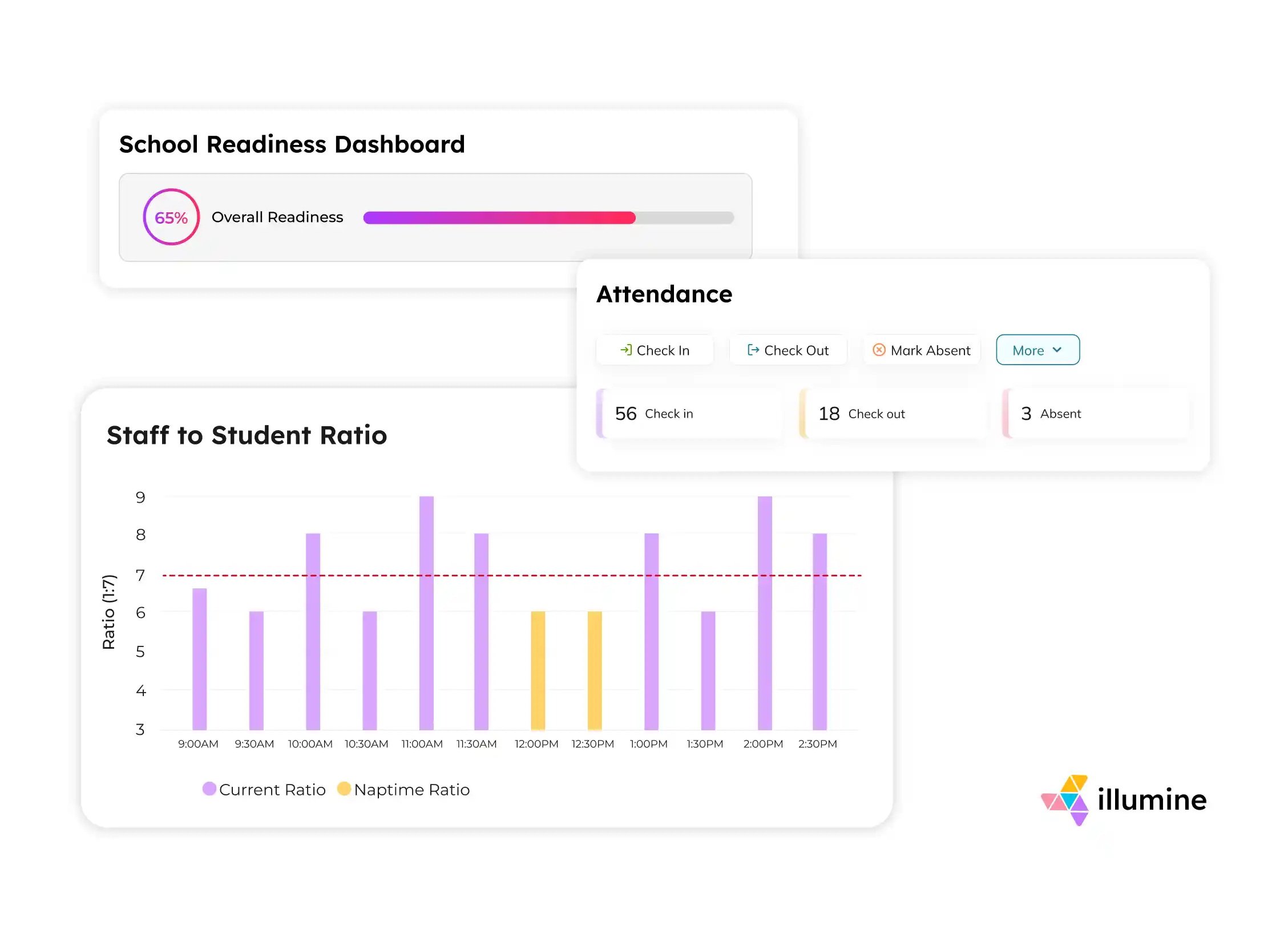
At the same time, maintaining staff-to-child ratio requirements is one of the most critical compliance responsibilities, especially during transitions, breaks, and busy classroom movements.
Instead of managing these through manual registers or separate systems, illumine brings everything together in one place.
With illumine, centers can:
- Record student check-in and check-out digitally
- Maintain accurate attendance logs for audits and reporting
- Use attendance data for subsidy or grant-related requirements
- Monitor staff-to-child ratios across classrooms
- Track room-level movement of students and staff in real time
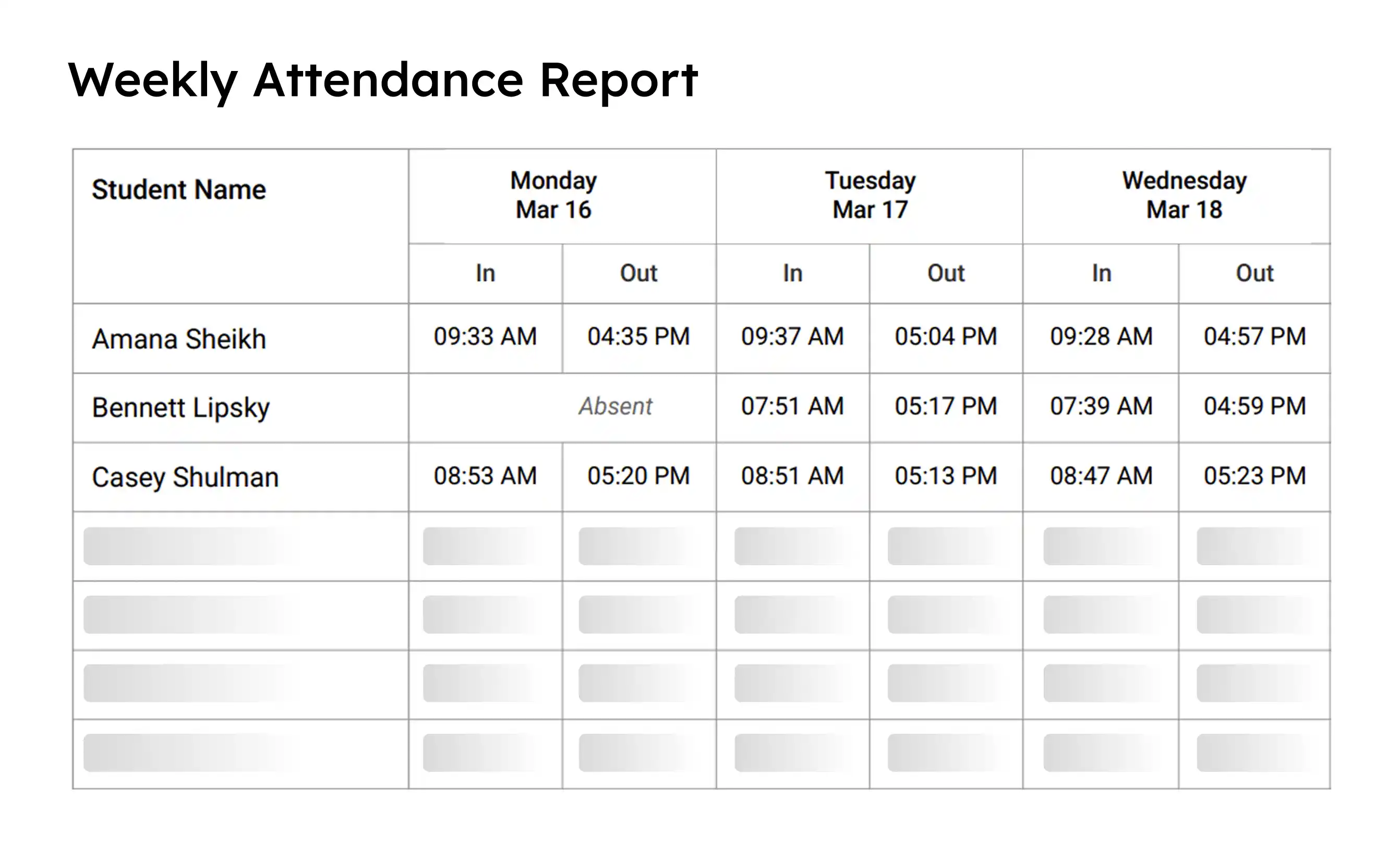
This gives administrators and staff better visibility into what is happening across the center throughout the day, instead of relying on manual headcounts or delayed updates.
The result is simple: fewer gaps, fewer surprises, and stronger day-to-day compliance.
2. Centralized Records for Every Child, and Staff Member
Childcare compliance depends heavily on documentation. Centers are expected to maintain student information, guardian details, allergy and medical records, consent and authorization forms, and staff-related documentation
illumine helps by turning all of this into a structured, digital system instead of scattered paperwork.
Teams can:
- Create digital forms to collect all required information
- Use ready-made templates for common compliance needs
- Build custom forms using a simple drag-and-drop interface
- Convert existing paper forms into digital versions
- Use AI to generate forms faster when needed
All collected data is stored centrally and linked to the relevant student or staff profile, making it much easier to retrieve during audits, inspections, or daily operations.
Instead of searching through files or chasing updates, your team always knows where to find the latest information.
3. Compliance Settings That Adapt to Your Requirements
Childcare regulations are not always the same across regions or situations. Centers often need to adjust their processes based on local licensing rules or temporary health requirements.
illumine allows teams to configure their workflows accordingly.
For example, centers can:
- Make check-in or check-out steps mandatory
- Capture signatures during attendance
- Enable temperature checks when required
- Set staff attendance rules
- Track room movement for better ratio visibility
4. Incident Reporting That Is Logged, Shared, and Tracked
Incident reporting is one area where compliance and parent communication overlap.
When a child requires medical attention or any incident occurs, centers need to:
- Document what happened
- Maintain a proper record
- Notify parents
- Ensure acknowledgment or approval when required
In manual systems, this often leads to delays, missed communication, or incomplete logs.
With illumine:
- Incidents can be recorded immediately
- Parents receive real-time notifications
- Communication is logged within the system
- Records are maintained for future reference
5. Authorized Pickup Verification Without Guesswork
Pickup is one of the highest-risk moments in the childcare day. A new relative may arrive, a custody restriction may apply, or a staff member may simply not know who is authorized. In many centers, this is still managed through paper lists, memory, and last-minute phone calls.
illumine makes this more reliable by giving staff real-time visibility into who is allowed to pick up each child.
With illumine, centers can:
- View authorized pickup details for each child with photo verification
- Let parents update pickup lists directly in the app
- Capture e-signatures at checkout
- Flag custody or court-order restrictions
- Use QR-based verification for approved adults without app access
- Maintain a digital pickup record for every child